Best Tube Receiver for Turntable: Warm, Rich Sound for Vinyl Enthusiasts
Looking for a tube-based receiver to pair with a turntable? This guide highlights five top tube receivers that specialize in warm, natural vinyl sound while offering modern conveniences. Each option fits different needs—compact home listening, multi-room setups, or high-fidelity theater experiences. The best choice depends on your space, connectivity desires, and how hands-on you want to be with tube tones.
Summary Table
| Product | Best For | Key Benefit | Limitations |
|---|---|---|---|
| Rockville BluTube 70W | Compact living rooms and turntable setups | Warm tube sound with solid wireless option | Bluetooth range can vary by environment |
| Douk Audio Tube Phono Amp X1 | Vinyl purists seeking tone shaping | Tomes of control with tube rolling potential | Bluetooth not primary feature; dedicated phono stage needed |
| CrBoke Tube Amplifier | Powerful home stereo with phono preamp | Strong bass and detailed highs | Many tubes and transformers mean larger footprint |
| Douk Audio T9 Preamplifier | Desk setups and headphone listening | Dynamic vintage sound with flexible inputs | Separate power or integration may be needed for full setup |
| Rockville BluTube WD 70W | Home theater plus vinyl playback | Broad connectivity including HDMI and optical | More features mean slightly more complexity to dial in |
Rockville BluTube 70W Tube Amplifier
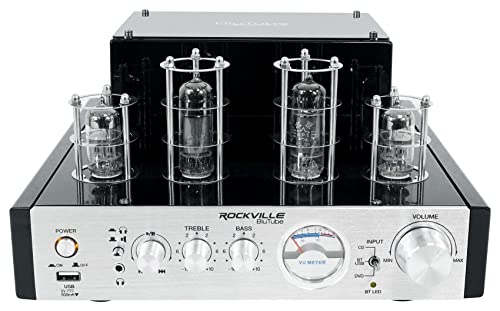
The Rockville BluTube 70W delivers warm tube-assisted power with 70W total output (35W x 2 @ 4 Ohm). This makes it suitable for small-to-medium living rooms paired with a turntable. It includes Bluetooth 2.1+EDR for wireless streaming from phones or laptops and provides RCA and 3.5mm inputs for turntables and other audio sources. Best for listeners who want a compact, all-in-one solution with classic tube warmth and easy wireless music listening.
Best for: Small living spaces, casual vinyl listening with wireless streaming. Why selected: Combines a warm tube character with practical modern inputs and Bluetooth. Caution: Bluetooth performance can vary by room layout and interference.
Douk Audio Tube Phono Amp X1

The Douk Audio Tube Phono Amp X1 is a 2-channel amplifier designed for MM turntables. It uses JAN5725 vacuum tubes to deliver a warm, detailed HiFi sound and includes tube sockets for easy tube rolling to tailor tone. Bluetooth 5.0 with aptX support enables stable streaming from devices, while the dedicated MM phono input boosts turntable signals to line level with reduced noise.
Best for: Vinyl enthusiasts who want tone-shaping flexibility and a robust phono preamp. Why selected: Tube rolling capability and a clear MM phono stage help refine vinyl presentation. Caution: Bluetooth features are secondary to the core analog performance, not always necessary for vinyl-first setups.
CrBoke Tube Amplifier

The CrBoke Tube Amplifier is a powerful integrated stereo amp with a built-in phono preamp and USB DAC. It uses multiple transformers and vacuum tubes (including KT88) to deliver strong bass, clear trebles, and vocal clarity. This is best for larger bookshelf or floor-standing speakers and setups that demand impactful dynamics and a robust low end.
Best for: Larger listening rooms and speakers that need solid dynamic range. Why selected: High-power tube design and integrated features simplify connections. Caution: Taller footprint and more tubes mean more space and warm-up considerations.
Douk Audio T9 Vacuum Tube Preamplifier

The Douk Audio T9 is a versatile preamp with two 6E2 tubes and bright “magic eye” level display, plus two 6A2 tubes for warmth. It supports MM and MC phono cartridges with RCA inputs and converts phono to line level for clean integration with other gear. A dedicated 3.5mm headphone output, independent amp circuit, and adjustable treble and bass controls allow tailored listening experiences without needing additional gear.
Best for: Desk setups and headphone enthusiasts who want a vintage-flavored yet flexible preamp. Why selected: Distinctive tube aesthetics with practical tone controls. Caution: For full stereo receivers, pairing with a separate power amp may be required for larger rooms.
Rockville BluTube WD 70W
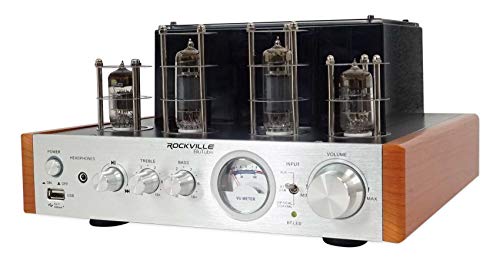
The Rockville BluTube WD 70W offers 25W x 2 RMS at 8 ohms or 35W x 2 RMS at 4 ohms with vacuum tube amplification to deliver a warm, detailed sound. Connectivity includes Bluetooth 2.1+EDR with a 33-foot range, HDMI, optical, coaxial, USB, and RCA inputs, plus a Tiffany RCA input for versatile multimedia connections. A two-band equalizer with a VU meter helps users fine-tune for music, movies, or gaming.
Best for: Home theater setups that want vinyl playback alongside TV or media streaming. Why selected: Broad inputs so you can connect TVs, laptops, USB drives, and more. Caution: The feature set adds complexity; take time to configure for best results in your space.
Buying Guide: Tube Receiver Essentials For Turntable Users
When choosing a tube receiver for a turntable, focus on the core needs: phono input quality, tube character, and system integration. Consider space, budget, and how much control you want over tone and dynamics.
What should I look for in a tube receiver with a turntable?
- Phono stage quality: A clean, low-noise MM/MC stage ensures accurate vinyl signal translation.
- Tone control: A two-band or more robust EQ helps tailor warmth to your room and music style.
- Connectivity: Bluetooth, HDMI, optical, and RCA inputs expand compatibility with modern devices.
- Tube flexibility: Interchangeable tubes or tube rolling options let you shape character over time.
- Power and space: Ensure the unit’s footprint fits your listening area and that power supports your speakers.
Should you choose a dedicated tube amp or a built-in preamp?
A standalone tube amplifier provides maximal tube warmth and power, ideal for larger rooms or demanding speakers. An integrated or preamp approach simplifies connections and reduces gear count, which is great for compact spaces or desk setups. Your choice depends on how hands-on you want to be and how many sources you plan to connect.
How important is Bluetooth versus wired connections?
Bluetooth adds convenience for casual listening across rooms but may introduce latency and compression. Wired connections (RCA, HDMI, optical) generally offer better fidelity and reliability for vinyl playback and home theater use. A combination is common in modern tube receivers to balance convenience and sound quality.
What room and speaker considerations matter?
Tube warmth can mask or exaggerate certain room modes. Pair a tube receiver with properly matched speakers and consider room treatment to reduce reflective surfaces. If space is tight, favor compact designs with sufficient power and built-in inputs for turntables and streaming devices.
What are trade-offs to expect?
- More tubes and transformers can increase size and heat.
- Tube rolling offers tonal customization but requires care and knowledge.
- Some models include many features, which may complicate the initial setup.
FAQ
- Can I use a turntable without a phono preamp?
Many turntables require a dedicated phono input or preamp to boost the signal to line level. If your turntable has no built-in preamp, you’ll need one in the signal chain.
- Is Bluetooth lossless with vinyl playback?
Bluetooth can add compression; for vinyl playback, wired connections are typically preferred to preserve fidelity.
- What is tube rolling?
Tubing rolling means swapping vacuum tubes to alter tonal character. It can adjust warmth, brightness, and vocal forwardness.
- Do I need a high-power tube amp for small rooms?
Not necessarily. A lower-watt tube amp can still provide rich sound in a small room if paired with efficient speakers.
- Which input type should I prioritize?
A sturdy MM/MC phono stage and reliable HDMI/optical inputs are practical for most mixed-media setups.