Best Self-Playing Pianos and Keyboards for Easy Home Music Making
Yes—these pianos and keyboards offer hands-free or assisted play features to support beginners, kids, and casual players. This guide highlights five self-playing or auto-accompaniment options that help learners practice, improvise, or enjoy music without needing perfect technique. The top picks below are best for different situations: beginners seeking guided play, kids exploring music, or homes needing compact, space-saving options. Read on to compare features, ideal users, and practical buying tips.
| Product | Best For | Key Feature |
|---|---|---|
| RockJam 61 Key Keyboard | Beginners who want rhythm and demo songs | 200 rhythms and 30 demo songs |
| UISCOM 88 Key Weighted Digital Piano | Beginners to intermediate players with MIDI | MIDI functionality and multiple tones |
| B. toys Wooden Toy Piano | Young children exploring sound | Color-coded keys and songbook |
| M SANMERSEN Piano Mat | Toddlers and preschoolers | Lightweight floor piano with multiple sounds |
| BEATBIT Piano Notes Guide | Beginner keyboard learners | Silicone note strips—no stickers needed |
RockJam 61 Key Keyboard Piano Kit

The RockJam 5061 kit is a compact digital keyboard with 61 full-size keys that emulate a traditional piano feel while remaining portable. It can be powered by mains or batteries, making it suitable for practice spaces both at home and on the go. The LED panel displays 200 rhythms, 200 tones, a teaching function, and 30 demo songs, aiding self-guided learning. It also supports record and playback for layering ideas and an aux input to play along with favorite tracks.
Best for: Beginners who want built-in rhythms, demos, and recording capability to practice without a teacher. It’s also a good fit for travelers or small spaces due to its portability.
Why selected: The kit combines essential practice aids with an approachable interface and flexible power options, making self-led learning feasible without extra gear.
Caution: Some users may prefer a heavier key action for realism; this model emphasizes accessibility and portability over piano-like weighting.
UISCOM 88 Key Weighted Digital Piano

The UISCOM 88-key digital piano features a progressive hammer-action keyboard and a wooden desk design that doubles as a vanity, making it a compact solution for smaller spaces. It offers MIDI functionality to connect with computers or external gear, plus eight tones and a library of 40 demo songs for ongoing practice. Tone control with reverb and chorus, along with tempo settings, supports personalized sound exploration.
Best for: Players who want more realistic key feel and MIDI capabilities for external setups or software learning tools.
Why selected: It bridges a traditional piano feel with modern digital flexibility, appealing to learners who plan to grow into more advanced performances.
Caution: The weighted action is helpful for technique, but beginners may need a shorter learning curve with simpler options first.
B. toys Wooden Toy Piano For Toddlers

This wooden toy piano for toddlers features 25 color-coded keys and a songbook with six classical tunes. The color-coding helps early note recognition and easy play, making it a friendly introduction to music for preschoolers. It’s a compact, safe option for supervised play and creative exploration.
Best for: Very young children beginning to explore melodies and rhythm in a playful setup.
Why selected: Simple layout and engaging visuals promote early musical exploration without overwhelming new players.
Caution: It’s toy-level in complexity; real keyboard familiarity may require additional later practice with a standard instrument.
M SANMERSEN Piano Mat
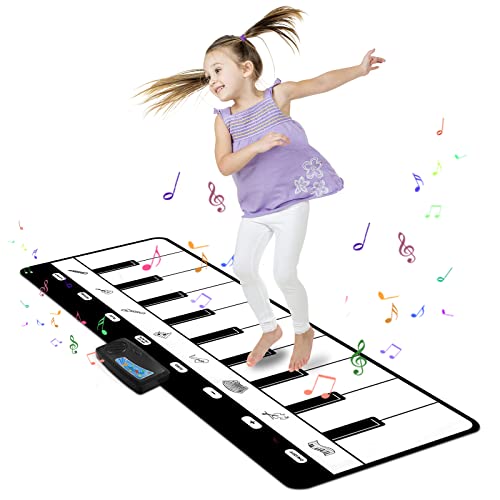
The M SANMERSEN piano mat is a floor keyboard with 10 keys and eight instrument sounds, designed for toddlers and preschools. It includes five play modes and a record/playback option to encourage creative play. The fabric is non-toxic and soft, making it safe for little ones to jump, dance, and press keys.
Best for: Toddlers and early learners who benefit from physical movement and multi-sound play in a soft, safe toy format.
Why selected: Its portability and multi-mode play support early rhythm and coordination skills, ideal for home use and travel.
Caution: It is not a full-size piano and should be viewed as a musical toy rather than an instrument for serious practice.
BEATBIT Piano Notes Guide (Rainbow Silicone)

BEATBIT offers a silicone piano note strip system that adheres without stickers. It displays double-staff notation to help beginners locate keys quickly and gradually learn the layout. The strips are reusable and designed to cleanly remove without residue, keeping the keyboard tidy during practice.
Best for: Beginners who want a non-sticky, reusable note guide and quick key-reference while learning.
Why selected: It reduces the friction of learning notes, enabling smoother transitions from reading to playing on a real keyboard.
Caution: It’s a supportive learning aid and not a standalone instrument; users should still practice with regular keyboards to build familiarity.
Buying Guide: Practical Considerations For Self-Playing Pianos
- Purpose and space: Choose a compact setup for small rooms or a full-size keyboard for advanced technique work. Consider whether you need a desk/vanity option or a floor-mat toy for kids.
- Key action and feel: For beginners, lighter keys are easier to press. If you plan to advance, weighted or hammer-action keys better simulate an acoustic piano.
- Learning aids: Built-in rhythms, demo songs, and recording features support self-guided practice. MIDI compatibility expands learning and composition options.
- Sound and tones: Look for multiple tones, reverb, and chorus to vary practice sessions and explore styles.
- Durability and safety: For children, opt for non-toxic materials, soft edges, and stable stands. Toy instruments require supervision.
- Power options: Battery power adds portability; mains power ensures consistent playtime. USB/MIDI outputs enable connection to apps and computers.
- Maintenance: Removable or silicone-note aids should be easy to clean and reinstall without leaving residues on keys.
FAQ
- What is a self-playing piano good for?
- Should beginners start with weighted keys?
- Are MIDI features important for beginners?
- Is a toy piano useful for early learners?
- What should I consider when buying for a child?
- How important is portability?
Self-playing pianos and keyboards support practice by providing rhythms, demo songs, and playback, helping learners develop timing and technique without constant supervision.
Weighted keys more closely mimic an acoustic piano and are beneficial as skills grow, but lighter keys can reduce initial frustration for absolute beginners.
Yes. MIDI allows practice with software, external keyboards, and digital audio workstations, expanding learning and creative options.
Toy pianos are great for initial exploration of sounds, rhythm, and motor skills, but they should be supplemented with a real instrument for formal practice later.
Choose safety-friendly materials, age-appropriate key count, engaging visuals, and simple features to encourage exploration without overwhelm.
Portability helps with practice locations and travel, but ensure the instrument’s size and weight fit the user’s needs and space.