Best Multi Zone Speaker Control Solutions for Home and Small Offices
Answering the need for flexible, multi-zone audio, these products let you route and control multiple speaker pairs from one or more amplifiers. They’re ideal for home theaters, multi-room setups, outdoor entertainment areas, and small commercial spaces. Best for: homeowners needing independent zone volume, installers coordinating multiple rooms, and users upgrading existing systems without new amps. The following picks cover 4 to 8 zones with independent level control and reliable impedance protection. Below is a quick comparison table of the top five models.
| Product | Zones | Max Power | Independent Volume | Best For |
|---|---|---|---|---|
| PSPVC6 | 6 | 100W per channel (typical) | Yes | Medium-to-large homes with multiple outdoor/indoor rooms |
| PSLSW6 | 6 | 100W per channel | Yes | Home theater and multi-room listening |
| PSLSW4 | 4 | 100W per channel | Yes | Compact setups with four zones |
| SSVC-4.1 | 4 | 100W per channel | Yes | Budget-friendly, impedance protection |
| PSS8 | 8 | High power per channel (typical) | Yes | Large homes or venues with many zones |
Pyle Premium 6 Zone Switch PSPVC6
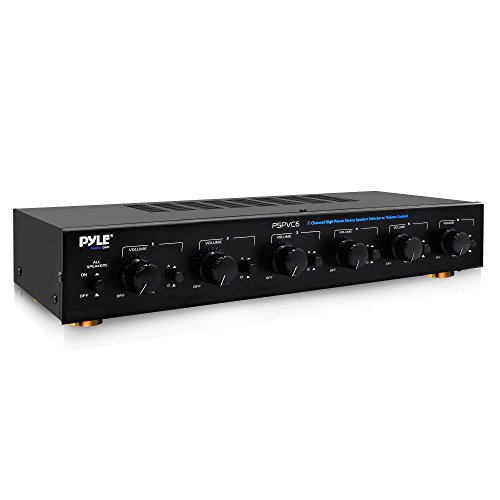
The PSPVC6 enables control of up to six speaker pairs from a single hub, with independent volume and distribution box capabilities. It is best for users who need a central hub to manage multiple rooms or outdoor zones without reconfiguring the amplifier each time. This model suits homes with varied listening areas where routine adjustments are common. One limitation: exact impedance protection details are not listed in the product features, so verify compatibility with your amplifier before installation.
Pyle 6 Channel Speaker Selector PSLSW6

PSLSW6 offers six zones with independent audio source volume control. It’s ideal for home theaters or distributed systems where you want to route six speaker pairs from a single stereo or amplifier. The system uses screw-terminal inputs and supports up to 14 AWG wire, making installation straightforward for typical home runs. Best for: users who want clear, per-zone volume control and a compact table-top footprint. A potential limitation is the lack of detailed impedance protection specifications in the feature list, which may matter for lower-impedance amplifiers.
Pyle 4 Channel PSLSW4
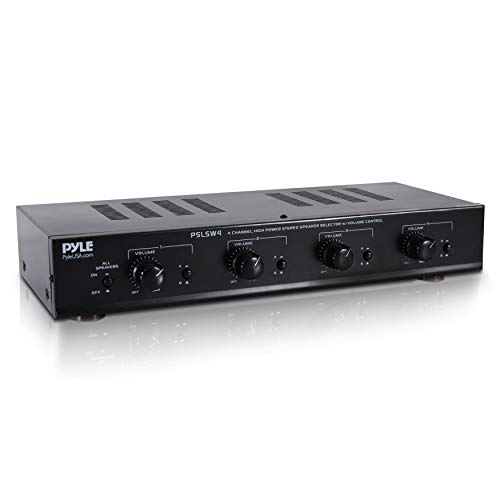
The PSLSW4 provides four independent zones with volume control for each channel. This option is best for compact rooms or smaller homes where four listening zones are enough. It maintains 100W per channel support, uses 8-ohm impedance as standard, and accepts up to 14 AWG wires. Choose this if you want a space-efficient multi-zone solution without sacrificing per-zone control. Limitation to note: fewer zones mean less scalability for expanding audio coverage later.
Monoprice SSVC-4.1 4-Channel Switch
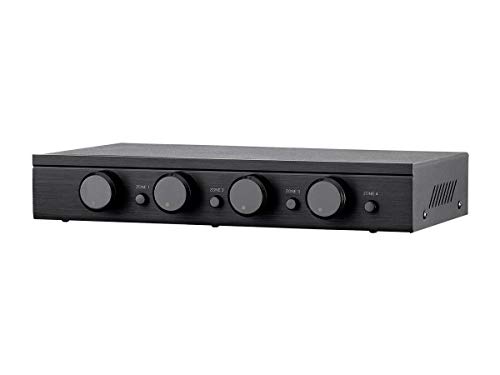
Monoprice SSVC-4.1 is a four-channel selector with impedance protection circuitry. It’s well-suited for installations prioritizing safety and reliability, especially when multiple speakers are connected to a single amplifier. Each zone has its own on/off and volume control, enabling independent listening experiences. Best for: budget-conscious projects requiring dependable impedance protection. A caution: exact maximum wattage per channel is listed as 100W, but real-world performance depends on your amplifier and speaker load.
Pyle Premium 8 Zone PSS8

The PSS8 handles eight zones, making it suitable for larger homes or facilities with many listening areas. It’s designed to support multi-channel high-powered stereo setups with A/B/C/D switching capabilities. Best for: environments needing frequent multi-zone reconfiguration and strong separation between zones. A limitation to consider: the feature list is concise and may not include explicit impedance protection details for every setup, so verify compatibility with your speaker array.
Buying Guide
Key purchase considerations help ensure you pick a multi-zone speaker switch that matches your setup:
- Zones and future expansion: Choose a model with enough zones now and potential for growth if you plan to add rooms later.
- Power handling: Match the per-channel wattage to your amplifier and speaker impedance (typically 8 ohms). Higher power handling provides room for robust outdoor or room-filling audio.
- Independent volume control: Confirm each zone has dedicated volume controls for precise listening experiences across rooms.
- Impedance protection: Look for built-in protection to prevent amplifier stress when multiple speakers are connected.
- Wiring and compatibility: Ensure terminals accept the gauge of wire you plan to use (common is 14 AWG) and confirm compatibility with your amplifier’s impedance.
- Form factor and installation: Tabletop models save space; wall-mount or slim designs may suit aesthetically tight spaces.
- Input/output options: Check the number of input channels and whether you need line-level or speaker-wire connections to integrate with your current amp.
- Reliability and protection: Prefer brands with clear specs on protection circuitry and consistent channel isolation to minimize crosstalk.
Frequently Asked Questions
- What is a multi-zone speaker switch? A device that routes audio from one or more amplifiers to multiple speaker pairs while giving you independent control for each zone.
- Do I need impedance protection for multi-zone setups? Yes, impedance protection helps prevent amplifier damage when multiple speakers are connected. Verify the product includes this feature.
- Can I use these switches with outdoor speakers? Many models support outdoor and indoor speakers, but confirm the impedance and power requirements match your outdoor environment.
- How many zones should I start with? Start with four to six zones for most homes; scale up if you plan to add rooms or outdoor areas later.
- Will these work with any amplifier? Most are designed to work with a wide range of amps, but always check the maximum wattage per channel and impedance requirements to avoid mismatches.
- Are there cable length considerations? Longer runs can introduce signal loss and potential impedance changes; keep runs reasonable and use proper gauge wire.