Best Bluetooth Headphones for Hearing Aids: Clear Voices, Rich Sound, All-Day Comfort
For listeners who rely on hearing aids, choosing Bluetooth headphones that maximize comfort, clarity, and compatibility is essential. This guide highlights top options that work well with hearing aids, focusing on open-ear designs, bone conduction, and advanced noise cancellation. It’s ideal for seniors, active listeners, and anyone seeking seamless streaming without compromising hearing aid performance. The following table summarizes five strong picks and why they fit different needs.
Summary table of selected products:
- Product: Apple AirPods Pro 3 — Best for iPhone users seeking top-tier ANC and health features.
- Product: Viva Hear Open-Fit Bluetooth Hearing Aids — Best for open-ear comfort and easy app control.
- Product: AHA Sound B-1 Bone Conduction — Best for natural hearing with open-ear awareness.
- Product: Viva Hear Touchscreen Rechargeable — Best for seniors wanting a tactile control experience.
- Product: PROHEAR 037 Bluetooth 6.0 — Best for work environments needing strong noise protection.
Apple AirPods Pro 3 Wireless Earbuds
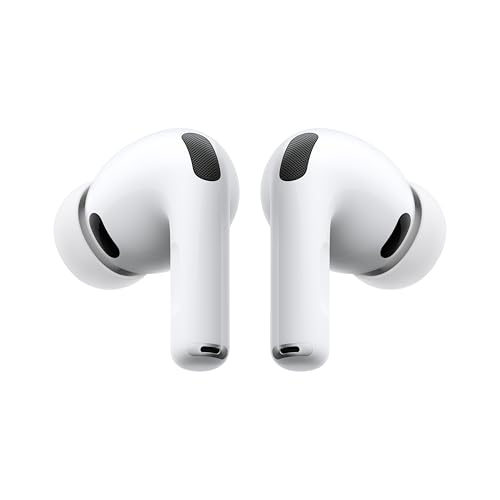
Best for iPhone users who want leading active noise cancellation and immersive audio. These earbuds offer world-class ANC, three-dimensional audio, and a built-in heart rate sensor. The model emphasizes high-fidelity sound and spatial audio, making it a strong pick for those who prioritize music and media clarity while using hearing aids. The integrated features align well with Apple devices for seamless syncing, health insights, and efficient charging via USB-C.
Who it’s best for: iPhone owners who value top-tier noise cancellation and health tracking integrated with their device ecosystem. Why selected: It combines advanced ANC, spatial audio, and heart-rate data in a compact design, supporting clearer voices in noisy environments when paired with hearing aids.
Limitations: The open compatibility with non-Apple devices may be less seamless; some users may prefer open-ear options to minimize feedback with certain hearing aids.
Viva Hear Open-Fit Bluetooth Hearing Aids

Best for open-ear comfort with simple app integration. These devices sit outside the ear canal, providing natural awareness while boosting speech with 43dB±5dB gain. They function as Bluetooth headphones for calls and media, offering seven volume levels and app support. The design minimizes ear canal intrusion, which can help reduce discomfort for long listening sessions and for users wearing hearing aids.
Who it’s best for: Users who prioritize all-day wear without occluding the ear, and who want straightforward phone and media use. Why selected: The open-ear design preserves natural hearing cues while delivering clear conversations and music in a single package.
Limitations: Some listeners may prefer deeper bass or tighter fit for sports activities; the open-ear style may yield less passive noise isolation than in-ear designs.
AHA Sound B-1 Bone Conduction Hearing Aids

Best for natural hearing with bone conduction and open-ear awareness. This model rests outside the ear, keeping canals open while transmitting sound through the cheekbone. It’s designed to support natural conversations and ambient awareness, making it suitable for users who need to stay aware of surroundings. It’s also FDA-registered and Bluetooth 5.3 capable for wireless streaming.
Who it’s best for: Individuals who want minimal occlusion of the ear while maintaining clear voice comprehension. Why selected: It emphasizes natural hearing and comfort in daily environments, reducing fatigue from prolonged wear.
Limitations: Bone conduction may deliver different tonal balance than traditional earphones; some users seeking deep bass may find the profile less suited for music reproduction.
Viva Hear Touchscreen Rechargeable Aids

Best for seniors who want tactile control with an intuitive interface. This model features an LCD touchscreen on the charging case for real-time battery monitoring and independent left/right volume control. It supports indoor, outdoor, and concert hall modes, delivering customized sound while minimizing user friction. It pairs well with hearing aids by offering clear dialogue and adaptive noise management.
Who it’s best for: Seniors or caregivers seeking easy, on-device control without frequent phone interaction. Why selected: The touchscreen simplifies operation, and independent channel control helps tailor sound for each ear’s needs.
Limitations: The touchscreen requires some manual dexterity; smaller users may prefer button-based controls or voice commands.
PROHEAR 037 Bluetooth 6.0 Hearing Protection Headphones

Best for work environments needing strong hearing protection with Bluetooth streaming. This headset combines high noise reduction (SNR 30dB) with smooth music playback and a long battery life thanks to a large 1500mAh cell. The design supports mowing, workshops, snow removal, and other loud settings while keeping conversations audible when paired with hearing aids.
Who it’s best for: Users in loud work or outdoor contexts who need robust noise reduction and reliable wireless connectivity. Why selected: It offers a balance of hearing protection and audio streaming suitable for active environments.
Limitations: It is a headset-style device, which may introduce more bulk than compact earbuds or open-ear options.
Buying Guide: Key Considerations For Hearing-Aid Friendly Bluetooth Headphones
What should you check before buying? Look for open-ear or bone conduction designs to minimize ear canal occlusion, which helps preserve natural hearing cues and comfort when using hearing aids. Consider ease of use, especially for seniors, including one-touch controls, app support, or tactile interfaces. Ensure Bluetooth compatibility with your devices and confirm that audio processing prioritizes speech clarity in noisy environments.
How does open-ear design affect hearing aid users?
Open-ear devices sit outside the ear canal, preserving awareness of surroundings and reducing occlusion that can complicate hearing aid amplification. These designs often pair well with hearing aids, providing clear voice transmission without fully blocking environmental sounds.
What role does noise reduction play?
Noise reduction improves intelligibility in crowds and busy spaces by attenuating background sounds. Look for products with adaptive noise control, speech enhancement, or DSP-based processing that emphasizes human voice frequencies.
Should you prioritize battery life or quick charging?
Long battery life minimizes frequent recharging, which is beneficial for seniors and active users. Quick charging can be a practical feature for travel or long days away from a charger.
Which features help with daily hearing aid use?
Independent left/right volume control, user-friendly controls, and reliable Bluetooth pairing are essential. Some models offer app control, memory modes, or ambient-aware settings that can improve daily listening experiences in diverse environments.
FAQ
- Q: Are bone conduction devices suitable for hearing aid users? A: Yes, bone conduction can reduce ear canal occlusion and preserve ambient awareness, which can complement hearing aid use.
- Q: Do open-ear devices work with all hearing aids? A: They generally do, but results depend on your specific hearing aid and individual comfort. Testing fit is recommended.
- Q: Can these headphones improve speech intelligibility in noisy settings? A: Many options include speech-focused amplification or noise reduction to highlight voices in crowded spaces.
- Q: Is app control important for seniors selecting hearing aids? A: App control can simplify adjustments, but tactile or physical controls are also valuable for ease of use.
- Q: Should I avoid in-ear designs if I wear hearing aids? A: Not necessarily, but some users find open-ear or bone conduction designs more comfortable and better for ambient awareness.
- Q: Do these devices require a specific operating system? A: Most work with both iOS and Android, but feature depth may vary by platform.