Best Pedals for Bass Guitar: Essential Tone Shaping Gear
Finding the right bass pedal setup doesn’t have to be overwhelming. This guide highlights five top bass pedals that cover overdrive, modulation, amp modeling, and chorus, helping you tailor your tone for practice, performances, or studio work. Best for players seeking versatile, compact solutions without extra gear. The selections emphasize clear, compatible options for a wide range of styles—from slap to rock to funk. A quick comparison table follows to help you decide at a glance.
Product Quick Reference
| Product | Best For | Key Benefit | Note |
|---|---|---|---|
| Zoom B1X FOUR Bass Multi-Effects Processor | Selling point: versatile tones | 70+ effects, amp models, looper | Great for practice and on-the-go gigging |
| JOYO Bass Overdrive Pedal | Clean to gritty overdrive | Blend, mid boost, dual switches | Excellent low-end retention |
| LEKATO Bass Multi Effects Pedal (36 Presets) | Customizable rigs | 36 presets, editable modules, IR loading | Strong editing app support |
| Line 6 POD Express Bass | All-in-one portable rig | HX-quality models, pocket-friendly | Solid for quick tone dialing |
| BOSS CEB-3 Bass Chorus | Chorus-centric tones | Low-filter and precise shaping | Simple, musical chorus for bass |
Zoom B1X FOUR Bass Multi-Effects Processor
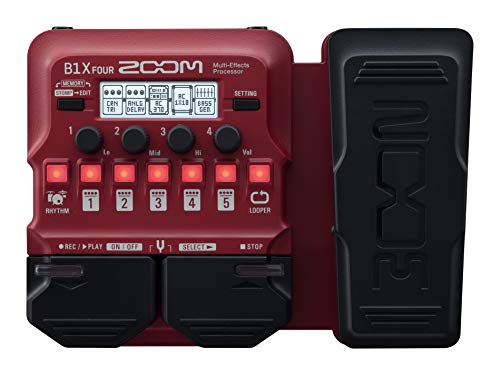
The Zoom B1X FOUR provides 70+ effects and nine amp models, enabling a wide tonal palette from clean to heavy fuzz. It supports looping with a built-in rhythm section for timing practice and can be battery-powered for true portability. Best for players who need a compact, all-in-one solution for practice, rehearsal, and stage setups that don’t require extra gear.
Who it’s best for: bass players seeking a comprehensive, portable unit with a broad sound library and an expression pedal for real-time control. Why selected: wide effect selection and built-in looper reduce the need for external pedals. Caution: the user interface can be dense for absolute beginners; take time to map patches before live use.
JOYO Bass Overdrive Pedal

This pedal centers on blending a clean bass signal with an overdriven signal, preserving low-end punch while adding grit. It also includes dual switches for mid boost and gain boost, offering four distinct voicings. Best for players who want controllable grit without sacrificing bass foundation. Why selected: the Blend control helps maintain core tone while adding harmonic richness. Caution: effect quality can vary with different bass setups and cabinet responses.
LEKATO Bass Multi Effects Pedal (36 Presets)

LEKATO’s multi-effects unit offers 36 presets with modules like NOISE GATE, Compressor, AMP, Mod, Space, and 8 IR CABs for speaker simulations. It supports editing, saving, and sharing presets, plus an app for IR loading and management. Best for players who want deep tone customization and IR loading capabilities. Why selected: strong editing workflow and third-party IR support allow extensive tone shaping. Caution: app-based editing may require a learning curve for some users.
Line 6 POD Express Bass

Line 6 POD Express Bass emphasizes portability with HX-quality bass models and familiar controls for quick tone dialing. It’s designed to be simple yet capable enough for rehearsals or on-the-road sessions. Best for players who want reliable, studio-grade tones in a compact package. Why selected: easy-to-use interface with solid tone models. Caution: fewer hands-on features than larger multi-effects units may limit complex signal chains.
BOSS CEB-3 Bass Chorus

The CEB-3 Bass Chorus adds a lush, musical chorus to bass tones with a dedicated low-filter control to keep low end intact. It also provides precise Control over effect level, rate, and depth for fine tonal shaping. Best for players seeking a classic, studio-ready chorus effect without complicating their signal chain. Why selected: straightforward, musical chorus that sits well in many mixes. Caution: chorus depth can overpower subtle passages if not dialed carefully.
Buying Guide: Key Considerations For Bass Pedals
What should you look for when choosing bass pedals? Start with the core needs: do you want a compact all-in-one unit or individual pedals for a modular setup? Consider whether you need amp modeling, looper functionality, or IR loading. Check how easy the device is to program, and whether it supports updates or companion apps. If you perform live, prioritize reliable power options and a user-friendly interface in demanding situations.
- All-in-one vs. modular: Multi-effects units save space and simplify setup, but dedicated pedals often provide more tweakable controls.
- Tone sources: Amp models, modulation, synth, and delay features expand your sonic palette. Decide which categories are essential.
- Presets and editing: How easy is saving and recalling patches? Look for devices that allow on-device editing or robust companion apps.
- Connectivity: Ensure compatibility with your rig (bypass options, USB/BT for editing, MIDI compatibility if needed).
- Portability and power: Battery-powered options are handy for practice on the go; otherwise, check power requirements and AC adapters.
Frequently Asked Questions
- What is a bass multi-effects pedal good for?
They provide a wide range of sounds in a single unit, reducing pedalboard clutter and enabling quick tone changes during gigs or practice.
- Do I need amp modeling in a bass pedal?
Amp modeling is useful for direct-recording scenarios, practicing with different cabinets, or achieving stage-ready tones without a full rig.
- Can I use IR loading with bass pedals?
Yes, some pedals support IR loading to simulate speaker cabinets, giving you more realistic tones for studio or live use.
- Is a separate looper necessary?
Not always; many multi-effects units include built-in looping, which helps practice timing and layering without extra gear.
- What should I consider for live performance?
Reliability, ease of quick patch changes, robust power options, and a clear signal path are essential for live use.
- Which pedal is best for beginners?
Devices with intuitive controls and solid presets, like compact line-level pedals and beginner-friendly multi-effects units, minimize the learning curve.