Best Car Port to Outlet Inverters for on-the-Go Power
Answering the search intent for “car port to outlet,” this guide highlights in-vehicle power inverters that convert 12V DC from your car into 110V AC and USB charging options. It helps travelers, remote workers, families on road trips, and outdoor enthusiasts pick reliable inverters that fit compact spaces, power needs, and safety considerations.
Overview: The top choices span compact 150–400W inverters with multiple USB ports, built‑in safety features, and portable form factors. The list emphasizes devices best for laptops, CPAP machines, baby gear, or casual gadget charging while on the move. A quick buyer’s table near the start summarizes each featured product for fast comparison.
| Product | Power (W) | USB Ports | Notes |
|---|---|---|---|
| PiSFAU 200W Car Power Inverter | 200 | 4 USB ports | Balanced for laptops and devices; compact design |
| FOVAL 150W Car Power Inverter | 150 | 2 USB ports | Ultra-compact, aluminum shell |
| BESTEK Power Inverter 300W | 300 | 2 USB ports | Dual AC outlets; widely used for travel |
| PiSFAU 150W Power Inverter (Black) | 150 | 2 USB ports | Compact with dual USB charging |
| Pro Chaser 400W Inverter | 400 | 2 USB ports | Higher power for laptops and multiple devices |
| FOVAL 200W Car Power Inverter | 200 | 4 USB ports | Built for multiple USB devices with cooling |
| EPANEE 400W Power Inverter | 400 | 1 PD USB-C, 1 USB-A | Powerful with fast USB-C charging |
PiSFAU 200W Car Power Inverter

This inverter offers 2 AC outlets and 4 USB ports, with 12V input and 110V output. It supports charging laptops, tablets, phones, and other devices, making it suitable for travelers who need a reliable power hub in a car. Best for: commuters or families needing multiple USB charging points along with basic laptop charging. Caution: ensure your vehicle’s fuse and cigarette lighter can handle prolonged high load.
FOVAL 150W Car Power Inverter
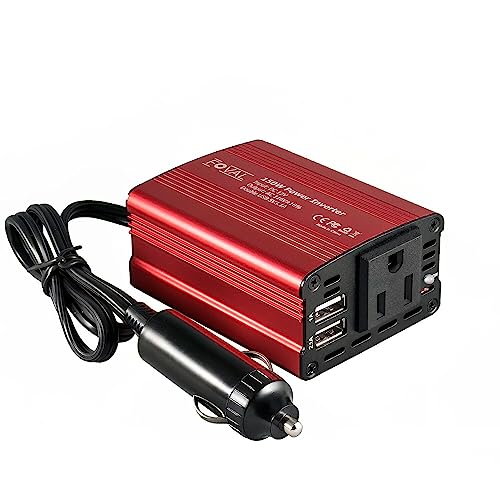
Premium 150W inverter with 2 USB ports and 1 AC outlet. It is compact enough for road trips and can power laptops, tablets, or small appliances. Best for: travelers needing a slim, lightweight unit that fits in a cup-holder space. Limitation: 150W continuous power may be insufficient for larger laptops or high-watage devices.
BESTEK Power Inverter 300W
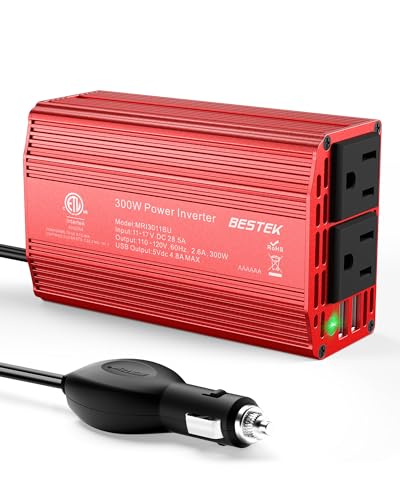
Bestek’s inverter provides 300W continuous power with 700W peak, 2 AC outlets, and 2 USB ports. It’s a solid option for charging laptops and larger devices during trips, especially when multiple gadgets are in use. Best for: families needing more continuous power for laptops and devices. Caution: note that higher loads may require better cooling and ventilation.
PiSFAU 150W Power Inverter (Black)

150W continuous output with 2 USB ports. Slim, portable, and easy to store. Best for: drivers who need a small, reliable inverter for phones and tablets. Limitation: may not support high-wattage devices for extended periods.
Pro Chaser 400W Inverter

Provides 400W continuous power with 800W peak, dual 110V outlets, and two USB ports. It’s suitable for laptops, CPAP machines, or other mid-wattage devices on the road. Best for: families or individuals needing higher power for multiple devices. Caution: a longer power draw can heat the unit; ensure proper ventilation.
FOVAL 200W Car Power Inverter (Gray)
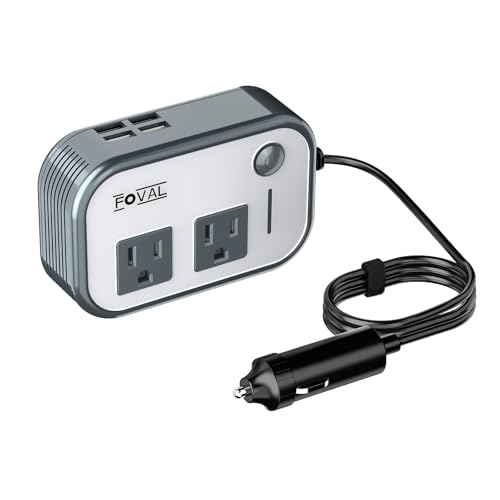
200W with 2 AC outlets and 4 USB ports, plus built-in cooling. It targets multiple device charging while keeping power conversion stable. Best for: users needing more USB ports and a higher total output than ultra-compact models. Limitation: 180W sustained output means high-wattage devices may exceed continuous limits.
EPANEE 400W Power Inverter

400W continuous power with PD 65W USB-C and QC 18W USB-A ports. It supports fast charging for compatible devices and provides dual AC outlets for larger gadgets. Best for: users who need USB-C fast charging and higher overall power for work devices. Caution: PD/USB-C performance depends on device compatibility and load distribution.
Buying Guide: Key Purchase Considerations
What power level do you need? If you only charge phones and tablets, 100–150W units may be enough. For laptops or CPAP machines, aim for 300–400W with dual USB ports and AC outlets. Consider peak vs. continuous power to avoid overloads.
How many USB ports and outlets are essential? More USB ports help when multiple devices charge simultaneously. Dual AC outlets are useful for larger devices; a PD USB-C port adds fast charging for modern laptops and phones.
What about safety features? Look for short-circuit protection, over-voltage, over-temperature protection, built-in fuses, and an automatic shut-off if faults are detected. Cooling fans can reduce heat during heavy use but may add noise.
Portability and form factor matter for vehicle space. Card‑size or small cube shapes fit better in crowded consoles. If you travel with passengers, a quieter unit can improve comfort during long drives.
Vehicle compatibility and installation: Verify that your vehicle’s cigarette lighter socket can sustain the inverter’s continuous draw. If you regularly run high-wattage devices, ensure adequate ventilation and avoid routing cables where they could overheat or obstruct driving controls.
FAQ
- What inverter power do I need for a laptop? Generally, a 150–300W inverter works for most laptops, but check your specific laptop’s wattage and keep total draw under the continuous rating.
- Can I power a CPAP machine in the car? Yes, with an inverter that provides sufficient continuous wattage (usually 100–200W) and a dedicated circuit if required by the device.
- Are car inverters safe for long trips? Modern inverters with built-in protections and cooling are designed for extended use; ensure proper ventilation and avoid blocking air intakes.
- Do USB-C PD ports affect charging speed? Yes, PD ports can provide faster charging for compatible devices, but only up to the port’s wattage limit and device compatibility.
- Should I choose more USB ports or higher AC power? Prioritize your most common devices. If you frequently charge USB devices, extra USB ports help; if you run laptops or high-wattage gadgets, a higher AC power rating is essential.
- Is a cooling fan necessary? A cooling fan helps prevent overheating under load but may add noise; choose based on expected usage and space for ventilation.