Best Home Stereo Head Units for Clear, Powerful Sound at Home
Answering the question “What is the best home stereo head unit for me?” this guide highlights five solid options that fit common needs—from karaoke nights to multi-room setups. Each product is evaluated by best-for scenario, key strengths, and a practical caveat. Ideal buyers include karaoke hosts, small home theaters, apartment dwellers with space constraints, and budget-conscious listeners seeking straightforward Bluetooth connectivity and reliable amplification.
Summary of chosen products:
| Product | Best For | Key Benefit |
|---|---|---|
| Pyle PDA77BU Home Stereo Receiver | Karaoke lovers and party hosts | 800W peak power with dual mics and karaoke controls |
| Daakro AK45 Stereo Audio Amplifier | Compact spaces, HiFi fans | 300W x 2 channels with Bluetooth 5.0 and USB/SD |
| Sony STR-DH190 2-ch Receiver | Simple, reliable all-around | Multiple inputs including phono and Bluetooth |
| Yamaha R-S202BL Stereo Receiver | Two-system speaker setups with streaming | Bluetooth and dual-system speaker support |
| Pyle Bluetooth Wireless Home Amplifier System | Multi-room or multi-speaker setups | 6-channel amp with Bluetooth and multiple inputs |
Pyle Home Stereo Receiver with Bluetooth PDA77BU

The PDA77BU delivers strong 800W peak power for dynamic movie sound, music, and karaoke performances. Its Bluetooth 5.0 enables reliable wireless streaming within 30+ feet. Dual 1/4-inch microphone inputs allow independent control of mic levels, Echo, and other effects, making it a strong pick for small gatherings. Best for: karaoke nights, casual home entertainment, and users who want mic versatility in a single unit.
Limitations: While powerful on paper, the unit’s amplifier efficiency and overall feature balance may vary with room acoustics. Ensure compatible speakers are within the recommended impedance range for optimal performance.
Daakro AK45 Stereo Audio Amplifier

The AK45 is a compact two-channel amplifier with 300W per channel (600W peak total) and Bluetooth 5.0. It supports USB/SD playback, making it suitable for small apartments or bedrooms where space is at a premium. Best for: HiFi enthusiasts who want a discreet, Bluetooth-enabled amp with local media playback.
Limitation: The device targets 4- to 16-inch passive speakers; check your speaker compatibility to avoid under or over-driving components in larger rooms.
Sony STR-DH190 2-ch Home Stereo Receiver

The Sony STR-DH190 provides a straightforward, reliable 2-channel setup with built-in Bluetooth and a phono input for turntables. It is designed for simple, plug-and-play listening with four RCA inputs and a 3.5mm input, plus a line-out. Best for: beginners or listeners who want a no-friction, all-purpose home stereo with classic vinyl support.
Limitation: It is a two-channel system, so it won’t deliver full 5.1 or room-filling surround sound by itself.
YAMAHA R-S202BL Stereo Receiver
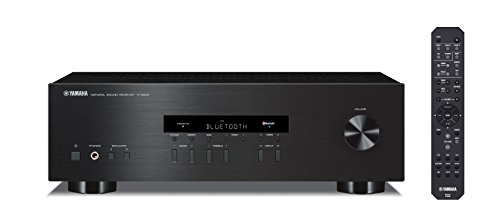
The Yamaha R-S202BL offers advanced circuitry, a two-system speaker setup, and Bluetooth for streaming. It provides a broad frequency response suitable for music lovers who want a robust, balanced sound across zones. Best for: listeners who value clean tone and a flexible two-system configuration for paired rooms or speakers.
Limitation: While feature-rich, the unit’s advanced specs may be overkill for casual listeners who only need a single room setup.
Pyle Bluetooth Wireless Home Amplifier System

This six-channel amplifier system emphasizes multi-speaker setups with Bluetooth streaming, plus multiple inputs including USB/SD and mic inputs with Echo and Talkover features. Best for: larger living spaces or home theaters that require more outputs and flexible audio routing.
Limitation: Power output depends on the speaker impedance and room acoustics; ensure compatibility with your speaker array to avoid distortion at high volumes.
Buying Guide: Key Considerations For Your Home Stereo Head Unit
- Power needs and speaker compatibility — Match amplifier power to your speaker impedance (ohms) and room size to avoid distortion or weak performance.
- Input options — Identify essential inputs (Bluetooth, USB, SD, FM, phono, mic) based on how you plan to source audio.
- Audio processing features — Look for features like Echo, Treble/Bass controls, and Talkover for karaoke or presentations to tailor sound to your space.
- Setup and space — Consider whether a compact unit suits your room or a larger rack-mountable system is preferable for living rooms or dedicated media areas.
- Voice and ease of use — Simple remote control, clear labeling, and stable Bluetooth pairing improve long-term satisfaction.
- Future expansion — If you plan to add more speakers or create zones, choose a multi-channel or two-system model with appropriate outputs.
Buying Questions To Guide Your Choice
- What speaker impedance is compatible with my amplifier? Look for models that clearly specify 4–8 ohms to ensure safe operation with home speakers.
- Is Bluetooth essential, or should I prioritize analog inputs like RCA or phono? Choose based on your current device ecosystem and vinyl usage.
- Do I need karaoke features? If yes, prioritize units with mic inputs and independent mic controls or echo effects.
- Should I buy a two-channel receiver or a multi-channel amplifier? For a simple stereo setup, two-channel is often sufficient; multi-channel suits larger rooms or home theaters.
- Can I expand later? If future expansion is important, pick models with multiple outputs and flexible input options to avoid early replacements.
- What is my budget relative to room size? Higher-watt units benefit larger spaces, while compact units are sufficient for bedrooms or small apartments.
FAQ
- What is a “head unit” in home audio? It generally refers to the central receiver/amplifier that powers speakers and processes audio sources.
- Do I need a dedicated amp or a receiver? A receiver with built-in tuner and inputs is convenient for a simple, all-in-one setup; a separate amp can offer more power for larger systems.
- Can I connect a turntable to these units? Some models include a phono input; if not, you may need a phono preamp or a separate phono-enabled receiver.
- Is Bluetooth 5.0 necessary? It provides stable wireless streaming with a wide range but check for additional inputs if wired sources are important.
- What should I check before buying? Verify speaker compatibility (ohms), the availability of desired inputs, and whether the unit can drive your target speaker configuration.