Best XLR Bluetooth Transmitter and Receiver Sets for Live Sound and Studio Use
Need a reliable XLR Bluetooth transmitter and receiver setup for live sound, PA systems, or studio monitoring? This guide highlights five top options that balance reliability, ease of use, and sound quality. Each pick is suited for different buyer needs, from touring DJs to church venues and small studios. Read on to compare features, best-use scenarios, and potential limitations so you can choose the right system for your setup.
| Product | ||
|---|---|---|
| Aokeo AK-M1 XLR Bluetooth Receiver (2 Pack) | Live events and DJs needing mono/stereo flexibility | Dual receiver option (P3D) for stereo; 16-bit/48kHz DAC |
| ALTO Bluetooth Total 2 XLR | Mixer setups and active PA systems | Mono XLR Bluetooth with easy integration and stereo expansion |
| JOYO MW-2 (2.4GHz) Wireless XLR System | Dynamic mics and quick plug‑and‑play wireless for gigs | 100 ft range; 24-bit/48kHz with LED battery indicators |
| Xvive P3 Bluetooth XLR Receiver | Portable setups needing simple, versatile Bluetooth for mixers | Bluetooth 5.0; range up to 30 m; easy to set up |
| MELONARE MB-1 XLR Bluetooth Receiver | Long-range, high-fidelity wireless for larger venues | Bluetooth 5.3; up to 150 ft; 15-hour battery |
Note: All products enable wireless audio to XLR-based mixers, PA systems, or speakers. Each option has its own strengths and practical limitations, such as potential interference in crowded RF environments or needs for specific mic types.
Aokeo AK-M1 XLR Bluetooth Receiver (2 Pack)
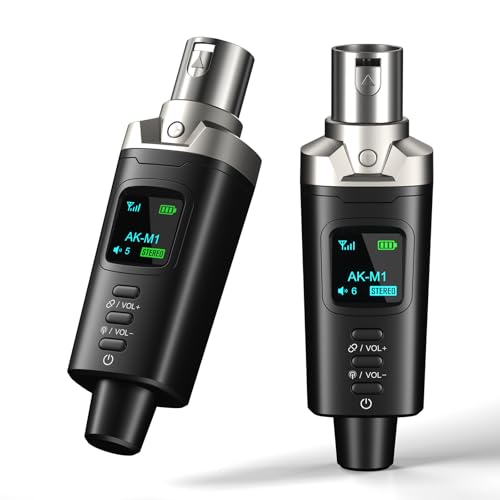
Aiono AK-M1 is a professional XLR Bluetooth audio receiver designed to stream wireless Bluetooth audio from devices like iPhone, iPad, or laptop to active PA speakers, DJs, mixers, and other gear. It favors cable-free music playback and broad compatibility with most music mixers. Best for on-the-go performances or events where quick setup matters. The mono output option is suitable for simple vocal lines, while the dual-P3D mode enables stereo or dual-mono outputs for larger setups. A potential limitation is reliance on Bluetooth quality, which can introduce compression or slight latency in busy venues.
ALTO Bluetooth Total 2 XLR Receiver

ALTO’s Bluetooth Total 2 adds mono XLR Bluetooth input to any mixer or active PA, enabling cable-free playback from phones or tablets. It’s ideal for quick setups where a standard mixer or USB mixer is involved and users want a straightforward Bluetooth link. You can connect two units in stereo for larger systems. Caution: check your mixer’s input compatibility and ensure confidence in Bluetooth stability in your venue to avoid dropouts.
JOYO MW-2 2.4GHz Wireless XLR System

JOYO MW-2 plugs directly into microphones and converts any wired XLR mic to wireless, great for dynamic mics in live performances. It uses 2.4 GHz with auto-pairing and up to 100 ft range, with 24-bit/48kHz studio-grade audio. It supports up to four systems concurrently, making it suitable for small ensembles. Limitation: noise may occur with some condenser mics due to EMI and shielding variations; for critical condenser use, consider testing beforehand or using a dedicated dynamic mic.
Xvive P3 XLR Bluetooth Receiver

Xvive P3 provides a versatile wireless receiver for mixers, PA systems, and DJ setups. It uses Bluetooth 5.0 to deliver low-latency audio with up to 30 meters range. It’s compact and user-friendly, with straightforward pairing that suits quick gig setups. Caution: Bluetooth audio can introduce slight latency or occasional dropouts in RF-dense environments; ensure proper placement and line-of-sight when possible.
MELONARE MB-1 XLR Bluetooth Receiver
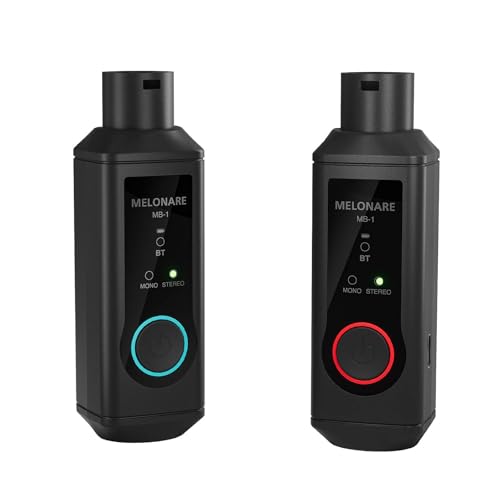
MELONARE MB-1 uses Bluetooth 5.3 for long-range, high-fidelity audio with up to 150 ft range and a substantial 15-hour battery life. It’s designed for speakers, PA systems, mixers, and DJ gear, making it suitable for longer events or outdoor performances. Best for larger venues or needs where extended battery life matters. A potential limitation is the need to manage battery power during multi-set events; monitor the LED indicators to avoid mid-set power loss.
Buying Guide: Key Considerations For XLR Bluetooth Receivers
- Range and environment: Larger venues may require devices with longer range and robust battery life.
- Pairing and setup: Prefer units with auto-pairing and simple one-step connections for quick gigs.
- Mono vs stereo: Decide if you need mono for vocals or stereo for full-band sound; some models offer dual receivers for stereo output.
- Latency and audio quality: Look for 16-bit/48kHz or higher DAC resolution and check for low-latency performance.
- Interference considerations: Some systems use 2.4 GHz or UHF; consider venue RF activity and line-of-sight placement.
- Power management: Battery life matters for long events; choose models with clear battery indicators and long run times.
- Device compatibility: Verify compatibility with your mixer, PA system, or active speakers and whether phantom power is required or supported.
Frequently Asked Questions
- What is the main difference between XLR Bluetooth receivers and transmitters?
– Receivers accept Bluetooth audio and output to XLR-connected gear; transmitters send audio from XLR sources to Bluetooth devices. - Can Bluetooth receivers handle dynamic and condenser mics?
– Many are optimized for dynamic mics; some condenser mics may require phantom power or may introduce noise, so testing with your mic is advised. - Is Bluetooth audio latency a concern for live performances?
– Latency exists but low-latency models (24-bit/48kHz) aim to minimize it; in some cases you may notice a slight delay. - How many devices can be used simultaneously?
– Some systems support multiple units to operate without interference; verify the exact channel capacity with each model. - What should I consider when choosing between mono and stereo Bluetooth receivers?
– Mono is often enough for vocals and speech; stereo is preferred when you need full-bandwidth music from two channels. - Do these systems require special software or drivers?
– Generally no; many are plug-and-play with compatible mixers or PA systems.