Best Cheap Speaker Options for Electronic Drums in 2026
When shopping for an affordable electronic drum monitor, look for compact, reliable amps that deliver clear drum separation, plenty of headroom, and easy connectivity. These picks are ideal for home practice, small jam spaces, or lessons without breaking the bank. The top five products below are chosen for value, portability, and straightforward setup. This guide helps drummers decide which monitor best fits their kit and practice routine.
Product comparison at a glance
| Product | Best For | Key Benefit | Notable Limitation |
|---|---|---|---|
| Coolmusic DM20 20W Monitor | Beginners and budget-conscious players needing Bluetooth | Two- speaker setup with USB interface | BT range and features may be basic |
| Alesis Nitro Amp 70W | Mid-range practice and lessons near a rack | 3″ driver with 70W peak for louder rooms | Rack-mount emphasis; portability is moderate |
| Coolmusic DM80 80-Watt Drum Amp | Sessions with richer headroom and EQ control | 10″ woofer and 3″ tweeter with 3-band EQ | Better value at higher power; not ultra-portable |
| Coolmusic 20W Mini DM20 (Orange) | Compact practice with Bluetooth on budget | Similar spec to DM20 with portable design | Smaller overall presence in large rooms |
| HXW Avatar 20W Edrums Amp | Quiet apartments needing clear, balanced tone | 3-band EQ and Bluetooth 5.3 for modern setup | Smaller form; may lack deep bass for large spaces |
Coolmusic DM20 20W Bluetooth Personal Monitor
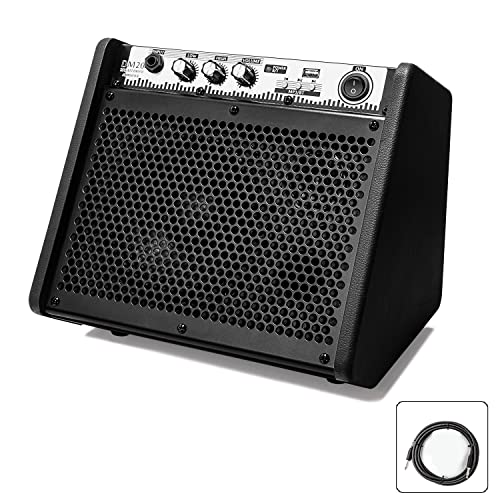
Best for budget-minded players who want simple wireless streaming for practice. The dual speaker setup (6.5-inch woofer and 2-inch tweeter) delivers a respectable balance of bass and clarity, while the USB interface supports computer or device playback. It’s a practical pick for beginners or hobbyists who value Bluetooth music playback alongside drum monitoring. Caution: Bluetooth performance may vary by device, and the unit’s basic EQ means you may need manual adjustments from another source for studio-like accuracy. This model is ideal for small rooms, dorms, or home studios where space and cost matter.
Alesis Nitro Amp 70W Compact Drum Monitor

Best for practice rooms or small studios where a rack-mountable solution is convenient. The 70W peak output with a 3″ full-range driver offers punchy sound and clear mids, making it suitable for lessons or quick jam sessions without headphones. It’s designed to mount directly to a Nitro drum rack for easy ear-level monitoring. Limitation: It’s more of a fixed-setup option; portability is lower than ultra-compact models. Choose this if you want a compact, wall-friendly monitor that you can always position near the kit.
Coolmusic DM80 80-Watt Drum Amplifier

Best for drummers seeking higher headroom and better tone shaping. The 80-watt amp uses an 10-inch woofer and 3-inch tweeter, plus a 3-band EQ for shaping lows, mids, and highs. It supports multiple inputs via Bluetooth and USB, enabling playback from a device while you play. Limitation: Heavier and larger than ultra-compact models, so it’s less portable for quick gigs. This is a solid choice when you need more volume and tonal control without connecting to a full PA system.
Coolmusic Drum Amplifier 20W (Orange)

Best for entry-level players who want Bluetooth streaming and a compact footprint. With a 6.5″ woofer and a 2″ tweeter, this model mirrors the DM20’s core specs in a vibrant orange chassis. The multipurpose amplifier can connect to an electronic drum or keyboard, making it versatile for beginners practicing at home. Caution: The small size limits bass depth at higher volumes; ideal for quiet to moderate practice in small rooms. Best for casual players who value portability and style.
HXW Avatar 20W Edrums Amp

Best for apartment practice with a balanced, controllable sound. It features a two-speaker arrangement (6.5-inch woofer, 2-inch tweeter) and a 3-band EQ for fine-tuning snare, toms, bass, and cymbals. Bluetooth 5.3 supports wireless playback, and a straightforward input design makes setup quick. Limitation: May not deliver deep bass in large rooms; excellent for near-field listening and small spaces. Choose this if you want a compact, modern monitor with easy Bluetooth connectivity.
Buying Guide: How to pick the right cheap speaker for electronic drums
- Power and Headroom: For small rooms, 20–40W is often enough; for shared spaces or lessons, go with 60–80W for cleaner headroom without distortion.
- Speaker Configuration: A two-way setup (woofer + tweeter) provides better frequency balance. Look for at least a 6.5″ woofer for adequate bass reproduction.
- Connectivity: Bluetooth is convenient for playback from phones or tablets. USB or line-in options help integrate backing tracks or other devices.
- EQ and Tone Shaping: A 3-band EQ helps tailor the sound to your room and playing style. Consider models with simple, quick controls for fast adjustments.
- Size and Portability: If you travel between practice spaces, prioritize compact, lighter units with handle or easy mounting options.
- Durability and Warranty: While avoiding specific claims, look for sturdy housings and reasonable warranty terms to cover long-term use.
- Best Use Scenarios: For apartment practice, prioritize lower volume with clear midrange; for small studios, more headroom and EQ control provide flexibility.
Frequently asked questions
- What should I look for in a cheap electronic drum monitor?
– Look for clear mid- and high-frequency response, a reasonable bass extension, and simple connectivity to your drum module and playback devices. - Is Bluetooth enough for practice, or do I need line-in/USB?
– Bluetooth is convenient for playing along with tracks, but line-in or USB ensures reliable, low-latency input from your drum kit and other devices. - Do I need an amp with a built-in EQ?
– A 3-band EQ helps tailor sound to your room. If you can’t find this, pairing a separate EQ pedal or software can help achieve similar results. - Can a 20W monitor handle a small rehearsal space?
– In compact spaces with moderate playback levels, 20W can suffice; for bigger or louder sessions, go higher in wattage to avoid distortion. - Are these monitors suitable for live performances?
– They are best for practice, lessons, and small venues. For larger gigs, consider a dedicated PA system or larger stage monitors.