Best Acoustic Guitar Strings for Bright Tone and Easy Playing
Finding the right strings for your acoustic guitar depends on your playing style, desired tone, and comfort level. This guide highlights five popular options, explains who they’re best for, and why they’re chosen. Whether you’re a beginner seeking easy fretting or a performer needing bright projection, these picks cover common needs for strings on acoustic guitars. The summary below helps compare core traits at a glance.
Quick Product Comparison
| Product | Tone Qualities | Gauges | Best For |
|---|---|---|---|
| D’Addario EJ11 (Light 12-53) | Bold, bright, crisp projection | Light | Players seeking lively top-end and easy playability |
| Elixir 80/20 Bronze with NANOWEB (Light 12-53) | Bright, lasting tone with smooth feel | Light | Live performers and studio players who want long-lasting brightness |
| Belfort 80/20 Phosphor Bronze (Light) | Balanced, versatile with reduced finger fatigue | Light | Beginners and players seeking softer feel |
| Ernie Ball Earthwood Extra Light (10-50) | Bright, balanced with good projection | Extra Light | Comfort-first players and beginners |
| REGIUX Phosphor Bronze (Extra Light 11-52) | Warm, clear for practice and casual playing | Extra Light | Daily practice, students, casual players |
D’Addario EJ11 80/20 Bronze Light 12-53
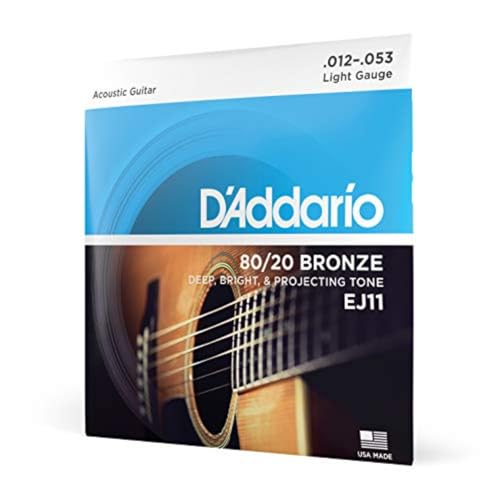
These 80/20 bronze strings are precision wound over a hexagonal high carbon steel core, delivering a bold, bright acoustic voice. They’re among the original acoustic strings, conceived in the 1930s by D’Addario and D’Angelico. Best for players seeking a classic, punchy tone with strong projection. Choose this if you prefer a traditional brightness and easy playability in a light gauge. A potential limitation is that the bright tonal balance can emphasize frets and pickups in some guitars.
D’Addario EJ10 80/20 Bronze Extra Light 10-47

This set mirrors the EJ11’s precision winding and bright 80/20 bronze wrap but in an Extra Light gauge for even easier playability and lower tension. It’s best for beginners, players with lighter picking dynamics, and those who want less string pressure on the fingers. The lighter tension can reduce volume slightly in louder environments, and may require more careful intonation on some instruments.
BELFORT Quality Acoustic Strings 80/20 Phosphor Bronze (Light)

This German-designed set emphasizes durability, tuning stability, and rust protection, with a soft playing feel described as “pain-free.” The 80/20 phosphor-bronze construction yields a bright voice suitable for a wide range of styles. Best for players who want a comfortable feel for long practice sessions or extended jam periods. Note that soft coatings or materials may vary in perceived brightness across guitars.
Ernie Ball Earthwood Medium Light 12-54

This set pairs phosphor bronze windings with a hex-core steel, delivering warm, rich tone with crisp projection. The medium-light gauge offers a balance between playability and volume. It’s better for players who want a versatile, all-around string that works well for fingerstyle and strumming alike. A potential limitation is slightly higher tension compared to lighter sets, which may affect beginners at first.
REGIUX Extra Light 11-52 Phosphor Bronze

REGIUX Extra Light phosphor bronze strings are designed for daily practice and easy fretting. The set includes all six strings with simple identification, making it ideal for students and casual players. Best for comfort-focused players who want minimal finger tension, but the lighter gauge can produce slightly less sustain on louder performances. They are a practical choice for beginners and practice sessions.
Buying Guide: Key Considerations When Choosing Acoustic Guitar Strings
- Gauge and playability: Light and extra-light sets reduce finger pressure and are easier for beginners, but may produce less volume and sustain in some styles. Medium lights balance tension and tone for most playing styles.
- Material and tone: Bronze-based strings (80/20 or phosphor bronze) offer bright, lively tones with strong projection. Phosphor bronze strings tend to be warmer and more balanced, with longer life in some cases.
- Coating vs. uncoated: Coated strings last longer but may feel slicker and slightly mute brightness. Uncoated strings offer classic brightness and feel but wear faster under heavy play or sweat.
- Tuning stability and durability: Some strings are designed for improved tuning stability and rust resistance, which can be beneficial for frequent players or performers.
- Playing style: Fingerstyle players may prefer lighter gauges for easier fretting and dynamic nuance, while strummers may favor brighter tones and moderate gauges for volume.
- Guitar compatibility: The ideal string set depends on guitar type, scale length, and nut/stringing path. It’s wise to test a couple of sets to find the best balance for your instrument.
Frequently Asked Questions
- What strings are best for bright tone? – 80/20 bronze strings, such as EJ11 or EJ10, typically produce a bright, crisp sound with strong projection.
- Which gauge is easiest for beginners? – Extra-light or light gauges (11-52, 10-47, 12-53) are generally easier to press and play for beginners.
- Do coated strings last longer? – Coated strings last longer than uncoated strings but may feel smoother and slightly duller in brightness.
- Are phosphor bronze strings warmer than phosphor bronze? – Phosphor bronze strings and their variants can differ by brand; phosphor bronze generally offers a balanced warmth with good sustain.
- How often should I change acoustic strings? – For regular players, changing every 1-3 months is common; for beginners, every 1-2 months is typical, depending on playing frequency and sweat exposure.
- Can I mix string brands on the same guitar? – Mixing brands is possible but can result in uneven tone across strings; it’s usually better to match gauges and materials for a consistent feel.