Best Guitar to Audio Interface Cable Options for Clear, Noise-Free Signal
Answering the needs of musicians and audio professionals, these guitar-to-audio-interface cables and adapters are designed to minimize noise, maintain signal integrity, and fit a range of setups. The top picks below are best for home studios, live rigs, and stage performances, with different priorities such as durability, shielding, or right-angle designs. This guide highlights who each product is best for and why it stands out.
| Product | Best For | Key Benefit |
|---|---|---|
| Monoprice XLR Male to 1/4-Inch TRS Male Cable | Pro studios and live stages | Excellent shielding and ground-loop prevention |
| Elebase 1/4 Inch TRS Instrument Cable (2-pack) | Durable daily use | Two-layer shielding and robust construction |
| JSAUX 1/4″ Guitar Cable | Stable, long-lasting performance | Thick insulation and high-quality copper |
| New Bee 10ft Guitar Cable | Stage performance | Low-noise design with versatile connectors |
| UGREEN 3.5mm to 1/4″ Cable | Multi-device setups | Gold-plated, durable, good for mixed gear |
Monoprice XLR Male To 1/4-Inch TRS Male Cable

Best for professionals seeking low-noise, balanced connections between XLR and 1/4″ TRS gear. The balanced design features a separate braided shield to resist interference and prevent noise modulation, making it ideal for recording studios and live venues where ground loop issues must be avoided.
- Balanced XLR to 1/4″ TRS connection
- 6 feet length, gold-plated contacts, 16 AWG
- Reduces interference with dedicated shield
Who it’s for: studio engineers and performers who require clean signal transfer with minimal noise. Caution: Balanced cables can be bulkier and require compatible connectors on gear.
Elebase 10ft TRS Instrument Cable (2-Pack)
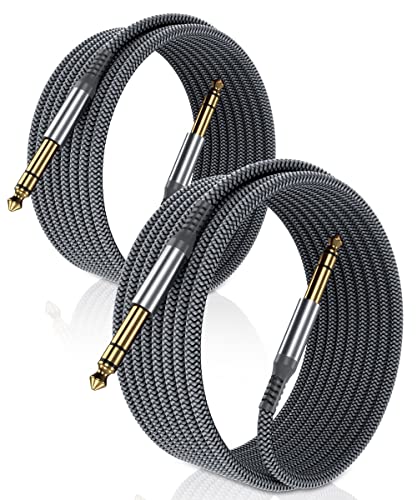
Designed for durability and daily gig use, Elebase offers a thicker build with a solid aluminum shell and nylon braided jacket. It includes two-layer shielding and gold-plated TRS connectors to preserve signal fidelity and reduce noise.
- Two-pack of 10 ft cables
- Premium copper conductor for low loss
- Two-layer shielding and gold-plated connectors
Who it’s for: players needing sturdy cables that resist wear while maintaining clear tone. Caution: The color options are limited if matching an on-stage aesthetic matters.
JSAUX Guitar Cable 10 ft

Known for thick insulation and high-quality copper, JSAUX emphasizes stability and a tangle-free experience. The cable uses multiple insulator shields to minimize static and crackle, providing a clean stage or studio signal.
- Right-angle to straight 1/4″ connectors
- Nylon braided jacket for durability
- Low humming due to oxygen-free copper
Who it’s for: players who value reliability and reduced noise in both practice and performance. Caution: Longer runs may accumulate capacitance effects in sensitive setups.
New Bee 10ft Guitar Cable

A versatile option featuring low-noise, high-fidelity performance with 22 AWG conductors and double shielding. The metal connectors and right-angle/straight options suit on-stage guitar, bass, and keyboard setups.
- Low-noise, high-fidelity design
- 22 AWG center conductors, double shield
- Right-angle to straight connectors
Who it’s for: performers needing dependable cables that minimize hum and noise across multiple instruments. Caution: Ensure compatibility with devices that require longer cable runs to avoid potential signal loss.
UGREEN 1/8 to 1/4 Stereo Cable

Ideal for mixed gear setups, this 3.5 mm to 1/4″ cable uses gold-plated connectors and nylon braid. It delivers a robust signal path for guitars, laptops, home theater systems, and amplifiers.
- 24K gold-plated connectors
- Zinc alloy housing, nylon braid
- Supports stereo processing when compatible
Who it’s for: users who need a versatile adapter-style cable for multiple devices. Caution: It is primarily a line-level connection and may not substitute for balanced XLR when noise is a primary concern.
Jelly Tang 6.35mm Instrument Cable

Professional-grade, gold-plated 6.35 mm plugs with a zinc alloy housing and nylon braid. This unbalanced TS cable is well-suited for connecting guitars to amps, mixers, and other pro audio gear.
- Gold-plated 6.35mm connectors
- Pure copper core
- Zinc alloy housing, durable braid
Who it’s for: players seeking a reliable unbalanced cable with strong shielding for live or studio use. Caution: Not ideal for long cable runs in environments with heavy interference when balanced options are preferable.
Fender Professional Series Instrument Cable 10 ft
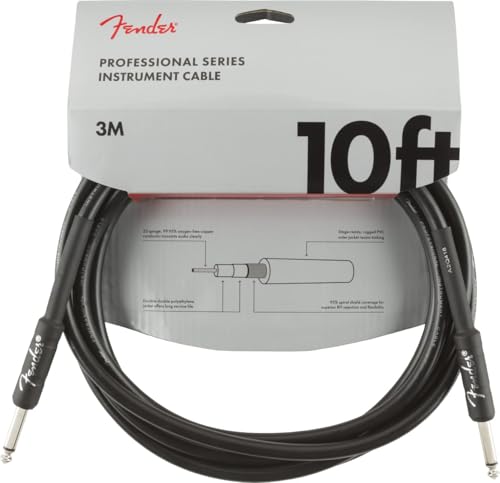
Fender’s professional instrument cable emphasizes durability and reduced handling noise with a resilient 95% oxygen-free spiral shielding and a practical 8 mm jacket. The 22-gauge conductor reinforces signal integrity across stages and studios.
- 10 ft length
- Anti-kinking and low-handling noise design
- Nickel-plated connectors for durability
Who it’s for: players who want a dependable, stage-ready cable with a long lifespan. Caution: The length is mid-range; consider longer options if your setup requires more reach.
Buying Guide
Key considerations when choosing a guitar-to-audio-interface cable include signal type (balanced vs unbalanced), connector compatibility, durability, shielding, and intended use (studio vs live). For noise-sensitive environments, prioritize balanced options like XLR to TRS or high-shielded cables. If your gear uses 1/4″ inputs and unbalanced TS jacks, choose cables with robust copper conductors and shielding to minimize hiss and crackle. Right-angle connectors can save space on crowded pedalboards or stage rigs. Length should balance convenience with signal loss risk; longer runs demand better shielding and conductor quality.
FAQ
- What is the main difference between balanced and unbalanced guitar cables?
- Do I need XLR for guitar to audio interface?
- Is a longer cable always worse for signal quality?
- Should I choose right-angle or straight connectors?
- How important is shielding for home studios?
- Can I use instrument cables for line-level audio interfaces?
Balanced cables use separate shielding and connectors (XLR/TRS) to reduce noise and ground loops, especially useful in pro studios and live stages.
Most guitar setups use 1/4″ TRS or TS cables; XLR is common for mic-level connections or balanced line-level paths. An XLR to TRS cable is used when your interface accepts balanced line inputs.
Longer cables can introduce capacitance and potential signal loss. Higher-quality shielding and conductors mitigate this, but shorter runs are generally safer for pristine tone.
Right-angle connectors reduce stress at the plug and save space on crowded boards, while straight connectors are easier for general use and less prone to accidental bending.
Shielding minimizes interference from power supplies and other devices, which is crucial for clean recordings and quiet monitoring in a home studio.
Yes, but ensure the cable’s impedance and shielding suit line-level signals and your gear’s connectivity. For best results, use cables designed for instrument or line-level applications.