Best Wireless Rear Surround Speaker Options for Immersive Home Theater
If you’re building or upgrading a home theater, wireless rear surround speakers can dramatically expand sound staging without clumsy wiring. This guide highlights five reliable options, outlining who each is best for, plus practical pros and limits. The selections cover budget-friendly kits, full 7.1 configurations, and standalone rear-channel solutions to fit various room sizes and receivers.
| Product | Best For | Notes |
|---|---|---|
| Nodelay S-AIR100-PRO Wireless Rear Speaker Kit | Latex-latency enthusiasts and DIY sound designers | Low latency with high power output; needs compatible transmitter/receiver |
| LG S40TR 4.1 Channel System | Compact, all-in-one setups | Integrated wireless rear speakers and subwoofer |
| Saiyin Surround Sound Speakers | Budget-conscious home theater using existing amps | Passive rear speakers; wired setup required |
| Samsung SWA9250S Wireless Rear Kit | Samsung ecosystem users | Premium wireless rear solution |
| Roku Wireless Speakers (Set of 2) | Roku TV owners seeking simple expansion | Works best with Roku ecosystem |
Nodelay S-AIR100-PRO Wireless Rear Speaker Kit

The Nodelay S-AIR100-PRO kit is designed for users who want ultra-low latency and strong rear-channel performance. Best for audiophiles and home theater builders who already have an AVR and want rear-channel power without long cables. The system uses 5.8G wireless transmission to deliver a stable, interference-free connection with around 20 ms latency and CD-level lossless sound quality restoration. It provides 80W+80W into 4Ω by default and supports upgrade for higher power matching with your speakers.
Who this is for: buyers needing low-latency wireless rear channels that can be tuned to room size and impedance. The model excels when you want precise imaging and can pair with compatible transmitters and receivers in your setup.
Limitations: requires compatible hardware and careful impedance matching to maximize the stated power and bass response; no built-in processing for room calibration is mentioned in the data.
LG S40TR 4.1 Channel System

The LG S40TR offers a compact, all-in-one approach with wireless rear speakers and a wireless subwoofer. This setup is ideal for smaller living rooms or apartments where space and ease of installation matter. Dolby Audio and DTS Digital support ensure enhanced clarity for dialogue and effects, while the wireless rear speakers simplify placement away from the main unit.
Who this is for: consumers seeking a complete, space-saving surround solution with minimal wiring, suitable for living rooms and bedrooms. It’s better for viewers who prioritize simple setup and integration with Dolby/DTS audio profiles.
Limitations: internal processing and configurations may be less flexible than standalone components; performance depends on room acoustics and the strength of the wireless link between the main unit and rear speakers.
Saiyin Surround Sound Speakers

Saiyin’s package presents rear surround speakers that are compact and designed to work with a dedicated receiver or amplifier. It is positioned as a value option for users who already own a compatible AV setup or want to add rear channels without purchasing a dedicated wireless kit. The speakers have a 6 Ω impedance and 3″ drivers, delivering solid midrange and high-frequency performance for a natural rear sound presence.
Who this is for: buyers with an existing receiver or amplifier looking to add rear channels on a budget. It’s especially suitable for those who value a decorative, wall-mounted design to blend with room aesthetics.
Limitations: wired connection is required; there is no Bluetooth function, and the package does not include speaker wires or a wireless module, so wiring complexity increases with setup.
Samsung SWA9250S Wireless Rear Kit

The Samsung SWA9250S kit targets users within the Samsung ecosystem seeking a premium wireless surround experience. It’s designed to provide rear-channel expansion with minimal cabling and a clean aesthetic. The kit emphasizes a cohesive wireless solution that integrates with Samsung soundbars and TVs, offering practical setup for living rooms and home theaters where Samsung components are prevalent.
Who this is for: buyers invested in Samsung devices or those who prefer a seamless, walled-garden wireless surround experience. Choose this if you want straightforward pairing and minimal configuration.
Limitations: may be most compatible with Samsung hardware; non-Samsung interoperability could be limited depending on the AVR or receiver in use.
Roku Wireless Speakers
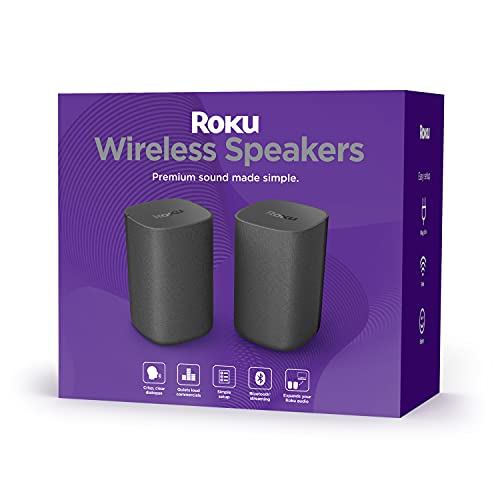
The Roku Wireless Speakers are designed for Roku TV ecosystems, delivering room-filling audio with clear dialogue and strong vertical integration with Roku devices. They’re an excellent choice for Roku owners who want a simple expansion path to surround sound and immersive TV audio without complex wiring or third-party hardware. Sound is tuned to complement streaming content and built-in apps.
Who this is for: Roku TV or Roku Streambar owners seeking an easy, compatible way to extend audio to a second room or larger viewing area. Avoid this if you do not use Roku devices or require broader compatibility with non-Roku AV receivers.
Buying Guide
What should you consider when choosing wireless rear surround speakers?
- Compatibility: Ensure the system matches your AVR or streaming device. Some kits require a dedicated transmitter/receiver pair or specific brand ecosystems.
- Latency and audio quality: Look for low latency (ideally under 25 ms) and lossless or high-quality audio transmission to preserve surround imaging.
- Power and room size: Check the wattage per channel and the impedance recommendations to suit your room and speaker configuration.
- Wiring and placement: Wired rear speakers may require speaker wires and mounting, while wireless options simplify placement but depend on reliable wireless performance.
- Setup simplicity vs. flexibility: All-in-one systems offer easy setup; modular kits provide more customization, but may require more tuning.
- Future-proofing: Consider whether the solution can scale with a larger system or additional channels, especially for future 7.1 or 9.1 configurations.
FAQ
- What makes wireless rear surround speakers different from traditional wired ones?
They provide rear-channel audio without long speaker wires, using wireless transmission. Performance depends on latency, interference avoidance, and compatibility with your AVR or soundbar. - Do wireless rear speakers require a subwoofer for immersive sound?
Not necessarily, but most home theater setups include a subwoofer for low-frequency reinforcement that anchors the surround sound stage. - Can I mix wireless rear speakers with a wired system?
Yes, if the system supports mixed configurations or if you have a common AVR that handles both wired and wireless channels. Check compatibility before pairing. - Is installation easier with a full system like LG S40TR or Samsung SWA9250S?
Yes, all-in-one packages typically offer streamlined setup and guaranteed compatibility among components, reducing configuration time. - What should I do if the rear wireless signal is unstable?
Verify line-of-sight placement where possible, minimize interference from other wireless devices, and ensure firmware is up to date on the transmitter and receivers. - Are these options suitable for small rooms?
Many options are designed to work in compact spaces, but you should verify wattage, enclosure size, and wireless range to ensure adequate coverage.