Best Electric Car Power Bank for on-the-Go Charging
When you need reliable portable power for travel, camping, or emergencies, an electric car power bank offers a compact generator alternative with multiple outlets. This guide presents five standout options, each suited for different use cases—from light laptop work to outdoor camping and vehicle-powered setups. The selections emphasize LiFePO4 or high-capacity lithium packs, multiple output ports, and fast charging capabilities. Use the buyer table to compare core specs at a glance, then read detailed notes to choose the right fit for your needs and power requirements.
| Product | Estimated Capacity | Key Ports | Best For |
|---|---|---|---|
| DARAN Portable Power Station | 89.6Wh | 2× AC, 2× USB-C, 2× USB-A, DC5521 | |
| EnginStar Portable Power Station | 296Wh | 2× 110V AC, 2× DC, 2× USB, USB-C | |
| Tenlike Portable Power Station | 99.9Wh | 1× AC, 2× USB-C, 2× USB-A, DC | |
| powkey Portable Power Bank | 146Wh | 2× 110V AC, 4× USB, DC | |
| ZeroKor Portable Power Station | 97.6Wh | 2× AC, DC, USB-C, USB-A |
DARAN Portable Power Station 89.6Wh Review

The DARAN power station features a LiFePO4 battery for stable performance and a compact form factor (about the size of a smartphone) at 2.54 pounds. It provides 89.6Wh capacity and seven output ports, including two AC sockets (100W total), two USB-C ports, two USB-A ports, and DC5521 ports. An LED display shows status and remaining power. It supports fast charging, with multiple charging methods including AC, USB-C PD, car charging, and solar panel charging (panel sold separately). This model is best for light home backup, camping kits, and users who need portable power with multiple ports without significant bulk. A limitation is that the solar panel is not included, so integrating solar charging requires additional gear.
EnginStar Portable Power Station 300W
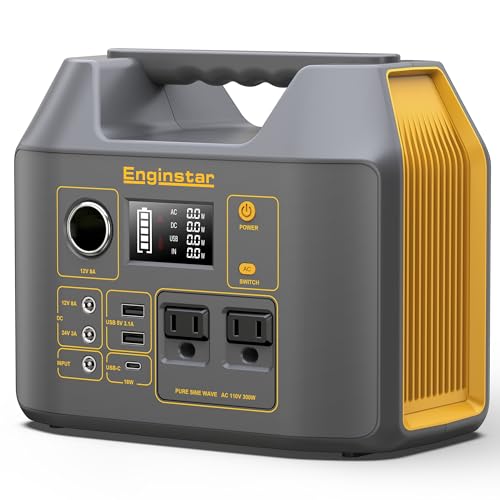
The EnginStar model provides 296Wh of capacity with two 110V pure sine wave AC outlets, plus DC outputs, USB ports, and a USB-C fast charge port. Its multiple output ports support charging a variety of devices, from laptops to small appliances. It is well-suited for weekend camping, RV use, or as an emergency home backup where higher power is needed. A consideration is the weight and size relative to smaller units, which makes it less ideal for ultra-portable daily carry. It is best for users who require reliable AC power on the go and multiple charging options.
Tenlike 99.9Wh Portable Power Station

Tenlike offers a 99.9Wh battery with a mix of ports: one AC outlet (2/3-prong), Type-C PD up to 60W, and multiple USB ports, including USB-C and USB-A. It also supports a maximum output of 120W. The unit is suitable for trips where you need to power laptops, tablets, and small appliances without carrying heavy gear. A caution is that high-wattage appliances should be avoided to stay within the 120W limit. It’s best for travelers who want a compact, airline-friendly capacity with flexible outputs.
powkey 200W Portable Power Bank

The powkey unit provides a total of 200W pure sine wave AC output across two outlets, plus USB and DC ports for versatile charging. It is designed for emergencies, outdoor trips, and home office use where multiple devices need power at once. It charges via a 15V/2A DC input, enabling a recharge time of roughly 5–6 hours. Choose this if you need a relatively high AC capacity in a portable package and you regularly power devices such as lamps, laptops, or small appliances. A limitation is the heating risk if you exceed the 200W total or run high-load devices for long periods.
RoyPow 86.58Wh PD Portable Charger

The RoyPow model combines a total of 86.58Wh with a 30W USB-C PD output, 18W QC USB, and a 12V DC/outlet option. It also includes a 12V cigarette lighter socket for car use. It is suitable for dash cams, mobile devices, and light peripherals while traveling. It charges to a 55% level in about 35 minutes and can be fully charged in roughly four hours. Best for quick-topups and car-related charging needs. A potential drawback is its lower total wattage for power-hungry appliances compared with larger packs.
Buying Guide: What To Consider When Choosing an Electric Car Power Bank
Power capacity matters, but it’s not the only factor. Consider the following when choosing a unit for automotive, camping, or travel use:
- Output options: Look for a mix of AC outlets, USB-C PD, USB-A, and car or DC outputs to cover laptops, phones, cameras, and small appliances.
- Battery chemistry: LiFePO4 batteries offer longer cycle life and stability; lithium-ion units can save weight but may have shorter lifespans.
- Weight and portability: If you plan to carry the unit by hand or in a bag, lighter models with robust handles are preferable.
- Charging methods and speed: Multiple input options (AC, USB-C PD, car, solar) improve versatility. Fast charging can reduce downtime between uses.
- Display and usability: An LED or LCD display showing remaining power helps manage usage and planning.
- Air travel restrictions: Units under airline limits are generally easier to bring on trips; confirm airline rules about watt-hour ratings.
- Overload protection and safety features: Look for protections against short circuits, overvoltage, and overheating for safer operation.
- Expansion potential: Some models support solar panels or car-charging compatibility, increasing resilience in outdoor use.
Frequently Asked Questions
- What capacity is enough for casual travel? For light device charging (phones, tablets, small laptops), a unit around 80–100Wh often suffices, with additional capacity for longer trips.
- Can these power banks be recharged by solar panels? Many models support solar charging as an option. Check compatibility with your solar panel and weather conditions.
- Are there any safety concerns when using car outlets? Ensure the total wattage stays below the available output, and avoid running high-wattage devices for extended periods in a car setup.
- How do I estimate which unit fits my laptop or device? Check the device’s wattage and ensure the power bank’s AC/USB outputs meet or exceed that requirement, keeping in mind continuous load limits.
- Do these units require special batteries? Most listed options use LiFePO4 or lithium-ion packs. LiFePO4 generally offers longer life and stability for frequent use.
- Is it better to choose a higher wattage for camping? If you need to power small appliances or power-hungry devices, a higher-wattage unit with multiple outlets provides more flexibility. For basic charging, lighter models are more portable.