
Best Passive Bookshelf Speakers for a Small Room
Five passive speaker pairs for a smaller room, with a practical focus on amplifier compatibility, cabinet space and a setup you can live with.
In this guide
- Plan a small-room system, not just a speaker purchase
- Five pairs to compare with your amplifier and room
- KEF Q1 Meta: check the amplifier's supported load
- Polk Signature Elite ES15: use the actual cabinet measurements
- ELAC Debut 3.0 DB53: a clearly identified generation
- Q Acoustics 3020c: cabinet depth is part of compactness
- Klipsch RP-500M II: audition the design without assuming a result
- Build a practical listening triangle
- Match the amplifier as a complete component
- Judge the system at your normal volume
- Budget for the whole setup
- Common questions
Plan a small-room system, not just a speaker purchase
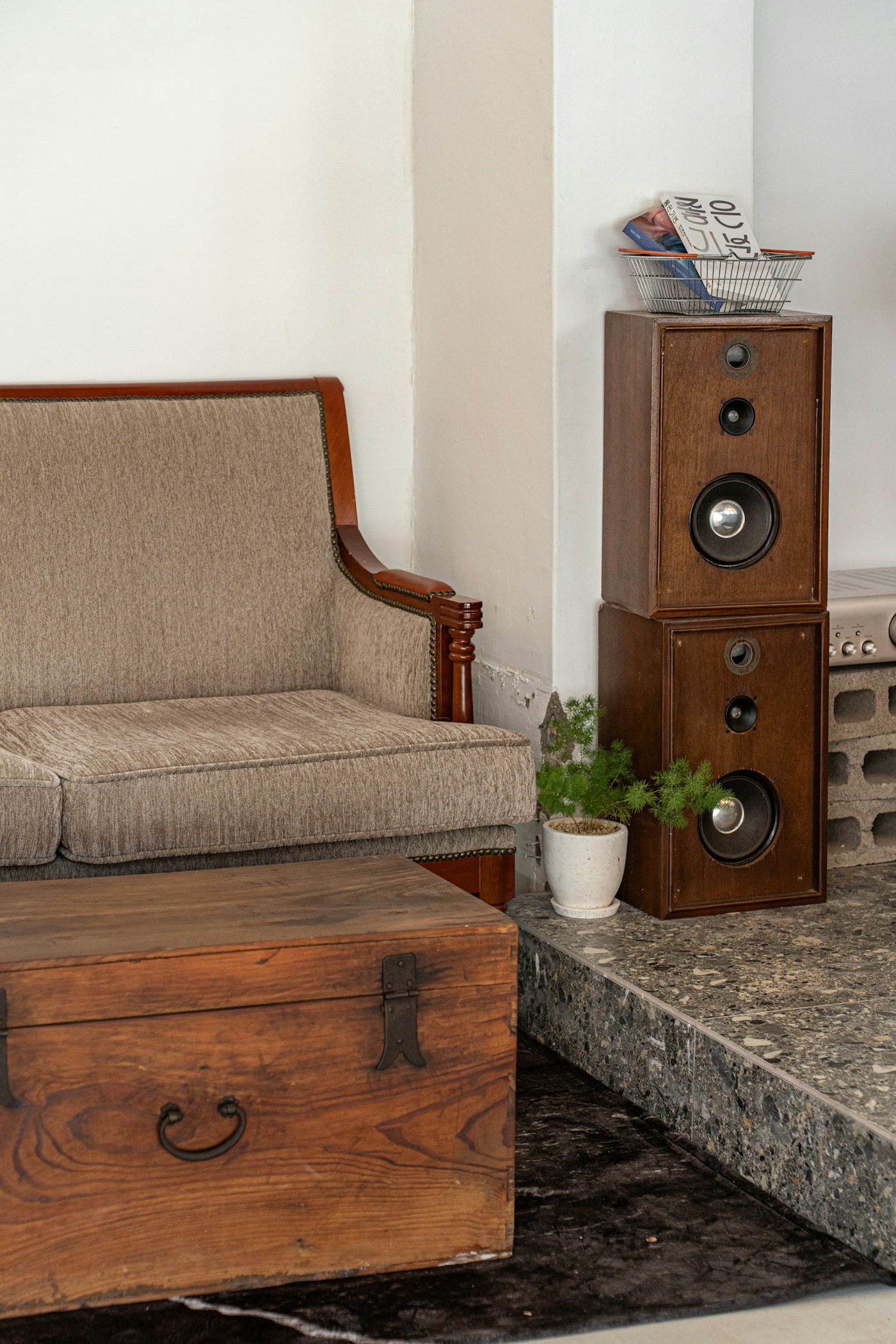
The best passive bookshelf speakers for a small room need to work with your amplifier, fit in sensible positions, and suit the volume you actually use. A pair that looks compact in a product photo can still need more room than your shelf provides once the connections and placement are included.
Our shortlist covers KEF Q1 Meta, Polk Signature Elite ES15, ELAC Debut 3.0 DB53, Q Acoustics 3020c, and Klipsch RP-500M II. Each linked listing was checked as a pair, and each model still requires an appropriate separate amplifier.
Audio Talk Editorial researched official specifications and instructions. We have not measured these speakers in a room, compared their sound in a controlled audition, or established that a particular tweeter or cabinet design wins every listening test.
Start with a sketch of your room and the amplifier you intend to use. Identify the seat, the two speaker positions, the available depth, and the cable route before deciding that a pair is the right size for the system.
Five pairs to compare with your amplifier and room
| Model | Cabinet H × W × D, per speaker | Load wording |
|---|---|---|
| KEF Q1 Meta | 11.9 ×7.1 ×10.9 in (with terminals) | 4 Ohm nominal;3.2 minimum |
| Polk Signature Elite ES15 | 12 ×7.5 ×10.2 in | 8 Ohm outputs compatible |
| ELAC Debut 3.0 DB53 | 12.2 ×6.8 ×10.5 in | 6 Ohm nominal |
| Q Acoustics 3020c | 11.0 ×6.9 ×11.1 in | 6 Ohm nominal;3.7 minimum |
| Klipsch RP-500M II | 13.56 ×6.81 ×10.65 in | 8 Ohms Compatible |
The cabinet dimensions below follow the manufacturers' stated measurements; they do not include an arbitrary placement allowance. Keep additional space for connections and follow each speaker's instructions when choosing the distance from nearby surfaces.
Impedance descriptions also need care. A nominal number, a minimum number, and an “8 Ohms compatible” statement are not interchangeable measurements, so we retain the manufacturer's wording rather than turning them into a simple quality ranking.
KEF Q1 Meta: check the amplifier's supported load
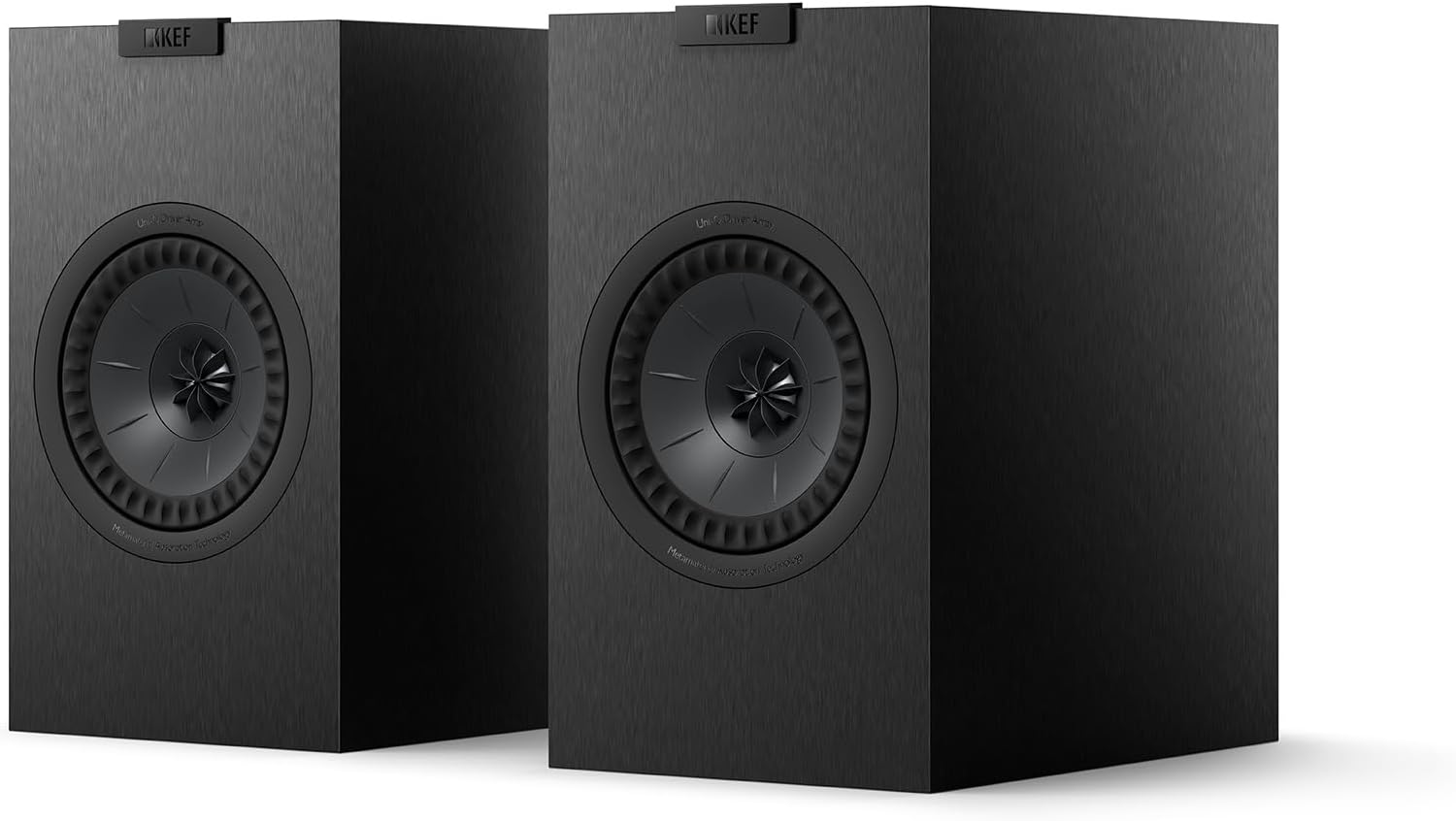
KEF specifies a Uni-Q driver arrangement, a 4 Ohm nominal impedance with a 3.2 Ohm minimum, and dimensions of 11.9 by 7.1 by 10.9 inches per speaker, including terminals. Those details make both the amplifier and the available shelf depth part of the buying decision.
We would shortlist Q1 Meta when you want to evaluate this compact design and can confirm that your amplifier supports the documented load. Check the amplifier's instructions or ask its manufacturer about the actual combination rather than relying on a generic wattage headline.
The driver design is a reason to audition the speaker, not proof that we have found better imaging than the other picks. Try familiar music from your normal seat and notice whether the setup remains practical as you move around the room.
If the amplifier question is unresolved, settle it before ordering a pair and accessories. A good small-room system should have a clear connection plan from the beginning.
Polk Signature Elite ES15: use the actual cabinet measurements
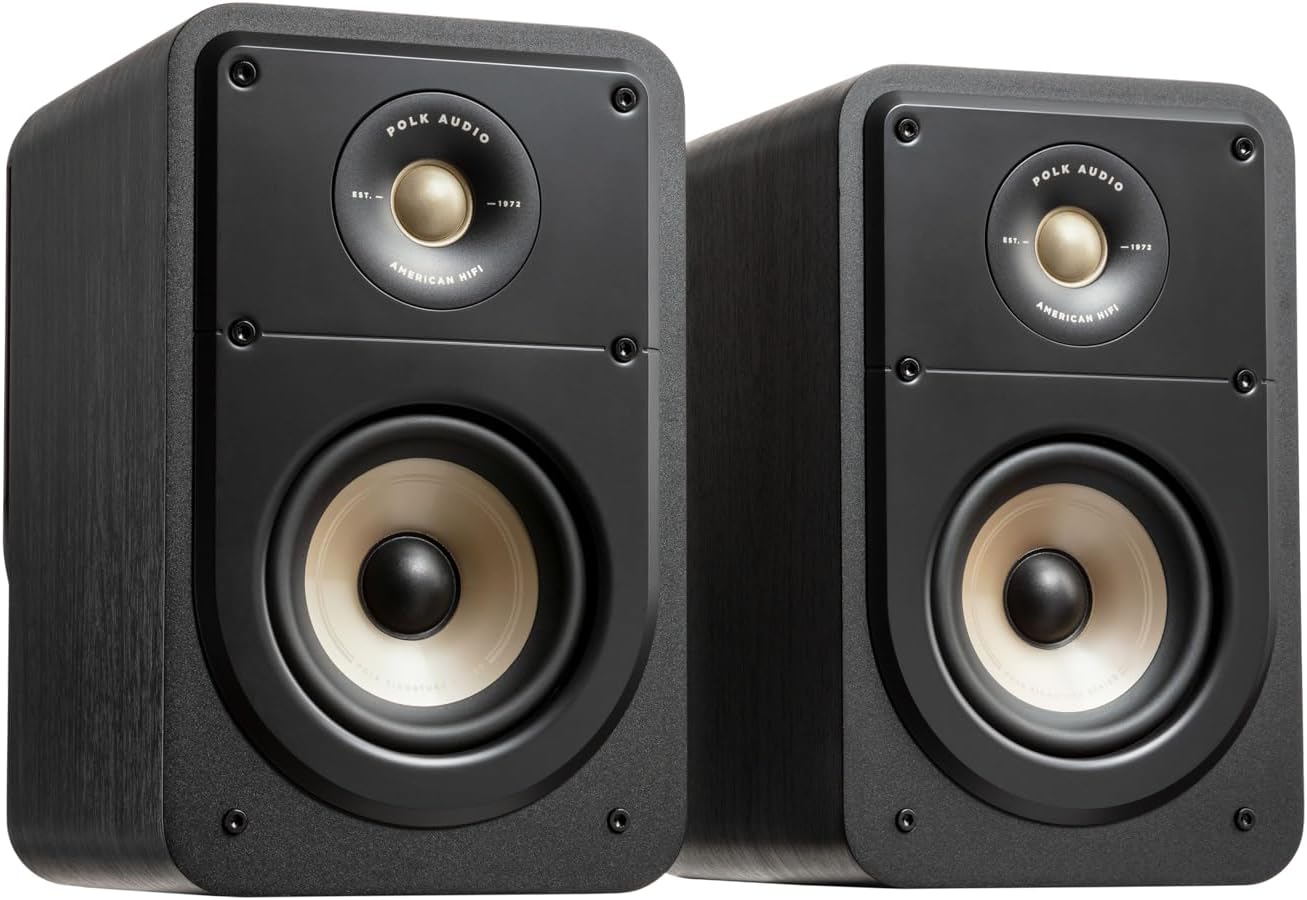
Polk lists ES15 at 12 inches high, 7.5 inches wide, and 10.2 inches deep, with a 5.25-inch mid-bass driver and a one-inch tweeter. Its impedance description says compatible with 8 Ohm outputs, which we retain as compatibility wording rather than a full impedance curve.
We would consider ES15 when those cabinet dimensions suit a sensible stand or furniture position and you have a compatible amplifier. Mark the footprint on the proposed surface and leave room for plugging in the speaker cable without crowding the rear of the cabinet.
A bookshelf name does not mean the pair should be pushed into any empty shelf opening. Evaluate how the room arrangement affects access, stability, and the clear path toward the listening area.
This is ES15, not the smaller ES10 or the larger ES20. Confirm that exact name and pair quantity when comparing offers, since the series contains several similarly styled models.
ELAC Debut 3.0 DB53: a clearly identified generation
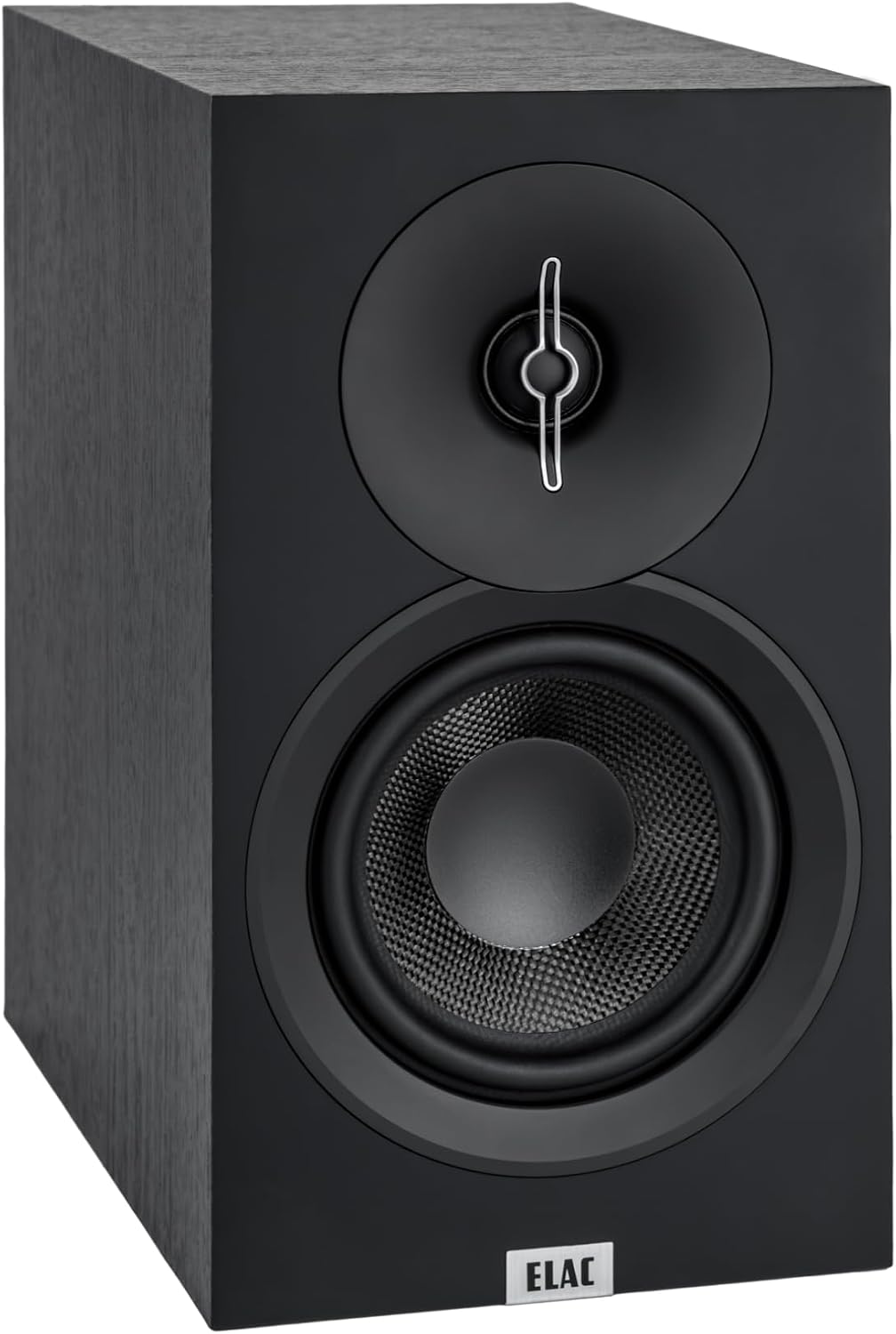
ELAC's Debut 3.0 manual lists DB53 as a two-way bass-reflex speaker with a 6 Ohm nominal impedance. It gives cabinet dimensions of approximately 12.2 inches high, 6.8 inches wide, and 10.5 inches deep.
We would shortlist it when you can provide that cabinet space and confirm a suitable amplifier. DB53 is the model to check, rather than carrying assumptions over from older Debut speakers or the larger DB63.
The inspected retailer title and official manual present different frequency-response figures, so this guide does not use those numbers to rank bass reach. A source discrepancy is a reason to leave a comparison unresolved, not to select the more attractive number.
During an audition, evaluate ordinary listening levels and your actual room arrangement. If you need substantially more low-frequency output, investigate a suitable system change separately instead of expecting a compact pair to solve every requirement.
Q Acoustics 3020c: cabinet depth is part of compactness
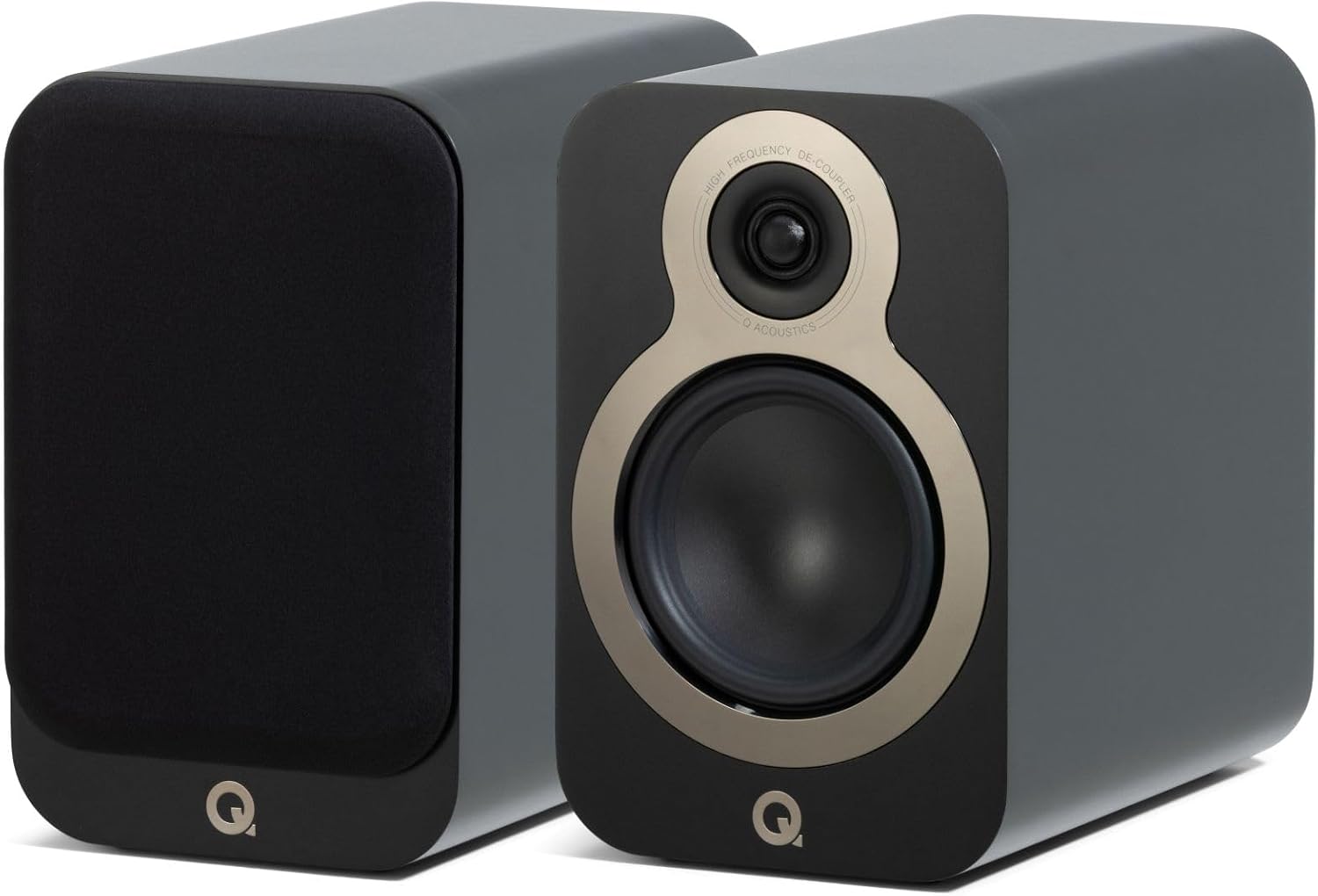
Q Acoustics lists 3020c at 11.0 inches high, 6.9 inches wide, and 11.1 inches deep. It specifies 6 Ohm nominal impedance with a 3.7 Ohm minimum, and includes a pair of foam bungs in the box.
The depth is worth checking carefully on narrow furniture. A front-facing product image can make a speaker look smaller than its full placement footprint, especially when you add rear plugs and a practical cable bend.
We would consider 3020c when that depth fits your room and you can confirm the amplifier combination. If you use the supplied bungs, follow the manufacturer's instructions and judge the result rather than treating them as a universal cure for placement problems.
This recommendation is for 3020c, not the earlier 3020i or another model in the series. Clear model identification is more useful than a collection of reviews that describe several generations as though they were one speaker.
Klipsch RP-500M II: audition the design without assuming a result
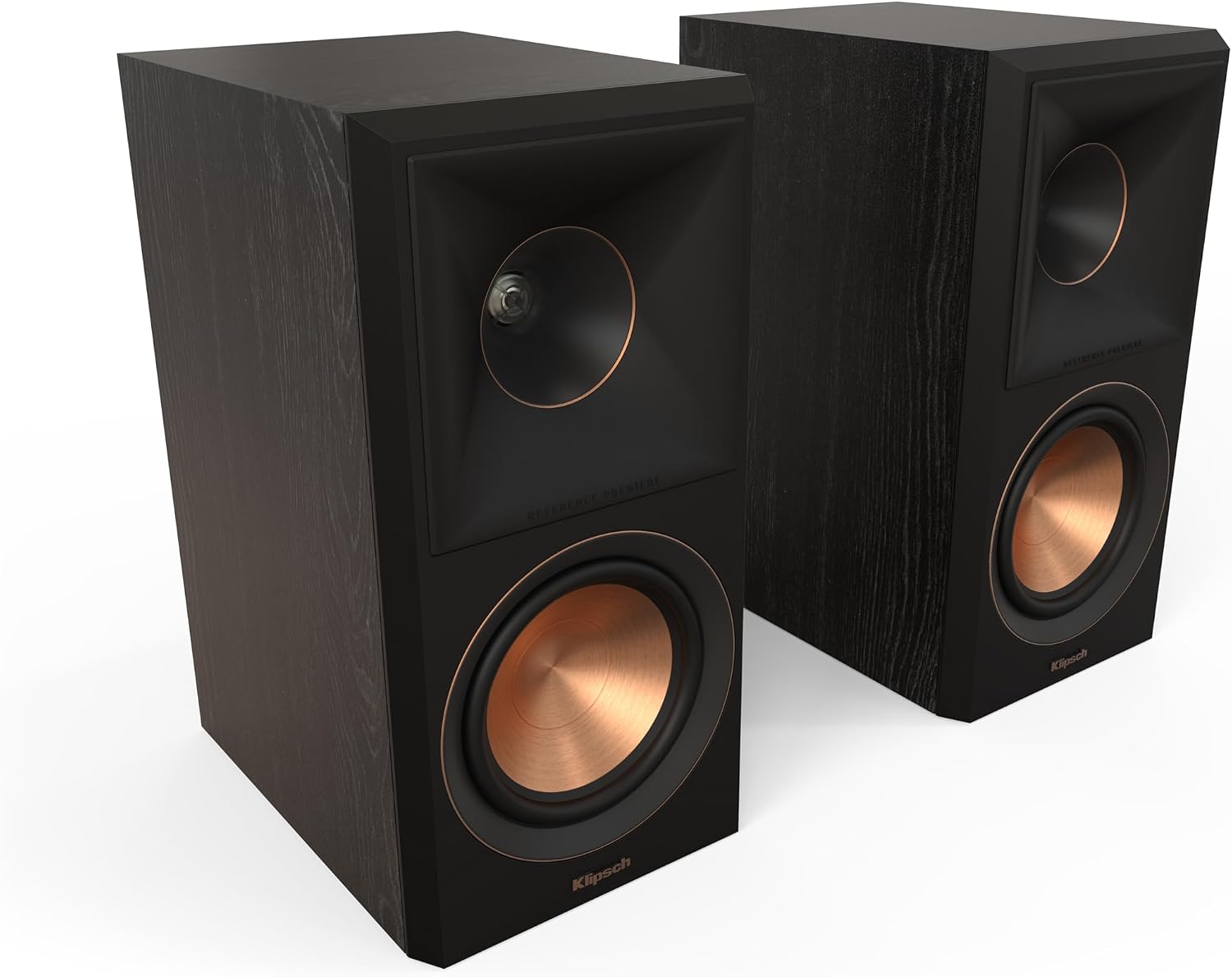
Klipsch documents a horn-loaded titanium tweeter, a 5.25-inch woofer, and a rear-firing port for RP-500M II. Its specification sheet describes the load as “8 Ohms Compatible” and lists a height of 13.56 inches per speaker.
We would shortlist this pair when the cabinet fits and you want to audition that design with your normal music and amplifier. The presence of a horn is not enough to establish that you will prefer its sound, and we have not measured a performance advantage here.
Do not compare a published sensitivity number without reading the manufacturer's measurement conditions and footnotes. Numbers from different methods cannot automatically become a reliable ranking of how loudly each pair will play in your room.
Verify the full RP-500M II name and the two-speaker package. The center-channel model and the earlier RP-500M are different purchases, even when shopping results place them beside each other.
Build a practical listening triangle
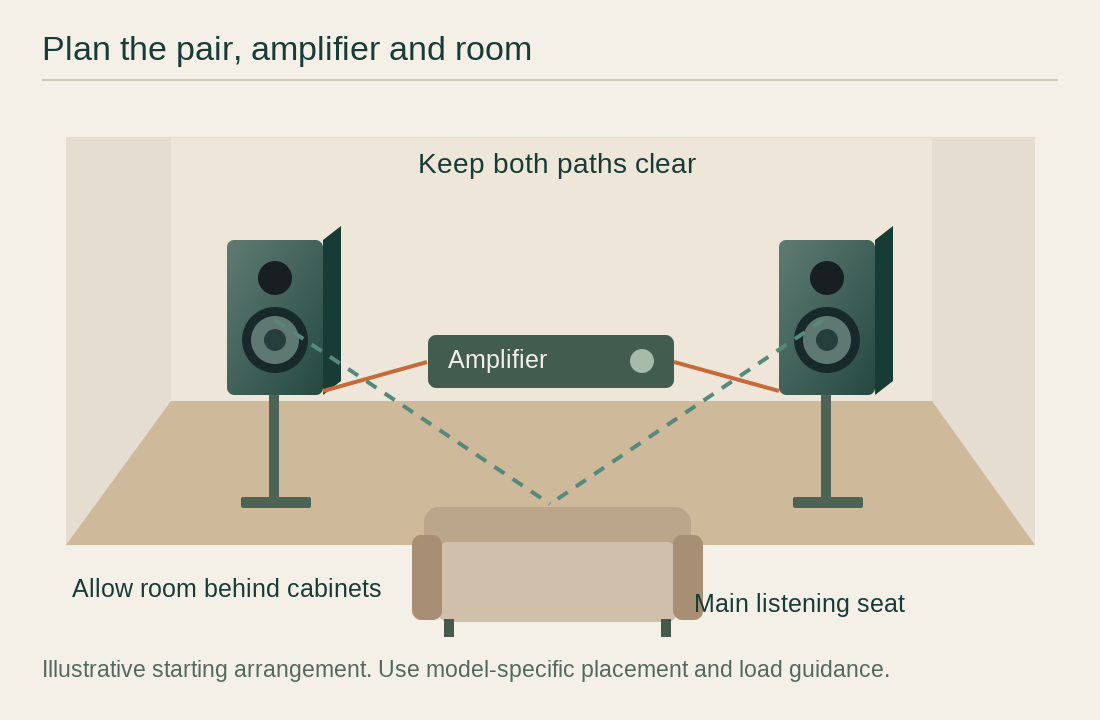
Place the pair so both speakers have a clear path toward the main seat and the distances to that seat are reasonably similar. The illustration shows an adjustable starting arrangement, not a certified layout or a product-specific minimum clearance.
Try suitable stands or stable furniture that puts the speakers at a sensible listening height, following the model's instructions. Keep doors, walkways, and frequently used storage accessible so the system can stay in place during daily life.
Begin with familiar spoken audio or a recording whose center image you know. Change the position or angle of one element at a time, keeping the listening level consistent enough to make the adjustment useful.
If bass seems excessive or uneven, inspect the relationship between the pair, the seat, and nearby boundaries before buying a different speaker. A modest placement change may be more informative than comparing another list of driver materials.
Match the amplifier as a complete component
Check the amplifier's supported speaker loads, connection instructions, and ventilation requirements. Follow its manual for the intended configuration rather than assuming a maximum wattage number describes every operating condition.
Use an appropriate speaker cable and connect the marked terminals consistently, with the amplifier powered off as directed. Keep loose wire strands from touching neighboring terminals and make the cable route secure without creating a trip hazard.
Do not connect passive speakers directly to a laptop's headphone jack or a line output. The signal path needs the suitable amplifier stage, and an adapter that changes the plug does not create that function.
Also include the source in the plan: a computer, streamer, or turntable must connect appropriately to the amplifier. If a turntable requires phono equalization, confirm where that function is provided instead of assuming every RCA socket performs the same job.
Judge the system at your normal volume
Audition familiar recordings at your usual distance and everyday listening level.
If possible, compare within the same room and keep the level similar. A change in placement or volume can make a comparison less clear, so write down what you changed and which detail you are evaluating.
Notice whether the system works for quiet background listening as well as an evening listening session. In a small room, a pair's daily usefulness includes convenient control, manageable placement, and how it fits alongside the rest of your furniture.
Budget for the whole setup
Include suitable supports, speaker cable, and any source connection you need before comparing the total cost. A pair-only price is useful, but it does not describe a complete working system if you are starting from scratch.
If you already have a good amplifier, begin by confirming compatibility and reusing it where appropriate. If you want a simpler desk system without a separate amplifier, our powered-speaker guide covers a different, more integrated route.
Common questions
Does a smaller room require the smallest speaker?
Not automatically. Start with actual placement space, listening distance, desired use, and the complete system rather than choosing by cabinet height alone.
Can I compare bass by the lowest frequency in a listing?
Only when the measurement definitions and conditions are comparable. This guide avoids turning ambiguous or conflicting response figures into a performance ranking.
Should I buy the amplifier before the speakers?
Choose the combination deliberately. If one component is already owned, use its documented requirements to narrow the other; if you are buying both, verify the intended pairing before ordering.
Sources & research notes
Product details checked October 14, 2026. Manufacturer descriptions establish documented features; our conditional choices and setup examples are original editorial analysis. We have not conducted hands-on performance tests. Current offers can change.
- KEF Q1 Meta manufacturer documentation — 4 Ohm nominal/3.2 minimum, Uni-Q, cabinet dimensions include terminal
- Polk Signature Elite ES15 manufacturer documentation — Exact ES15 size/drivers and 8 Ohm compatibility wording, pair
- ELAC Debut 3.0 DB53 manufacturer documentation — DB53 manual dimensions and6 Ohm; response discrepancy left unresolved; general connection/placement
- Q Acoustics 3020c manufacturer documentation — Cabinet dimensions6 Ohm nominal/3.7 minimum, foam bungs, two units
- Klipsch RP-500M II manufacturer documentation — Horn tweeter,rear port,height,8 Ohm-compatible wording; no sensitivity ranking
Product images are the inspected Amazon listing’s first/main images, used on the basis of the site owner’s authorization confirmation. Scene-photo credits appear beside each photo.