
The best choice depends on whether you need a complete home theater receiver, a two-channel stereo receiver, or a Bluetooth adapter for equipment you already own. The Yamaha RX300A is best suited to buyers seeking a 5.2-channel receiver with Dolby Atmos and newer HDMI formats. The Denon AVR-S570BT is a strong fit for an 8K-ready home theater setup, while the Sony STRDH190 is designed for straightforward stereo listening and turntable connections. The Auris and BLT-HD are Bluetooth streaming receivers, not full AV receivers.
| Product | Best suited for | Category |
|---|---|---|
| Yamaha RX300A | Home theater with Dolby Atmos | 5.2-channel AV receiver |
| Denon AVR-S570BT | HDMI-based home theater and gaming | 5.2-channel AV receiver |
| Sony STRDH190 | Stereo listening and phono input | Two-channel receiver |
| Auris Blume Pro | Adding Bluetooth streaming to a system | Bluetooth music receiver |
| BLT-HD | Bluetooth streaming with digital or analog outputs | Bluetooth music receiver |
Yamaha RX300A 5.2-Channel AV Receiver

The Yamaha RX300A is best for buyers building a compact home theater who want a 5.2-channel receiver and Dolby Atmos support. Its listed features include 4K120 and 8K HDMI support and Bluetooth multipoint, so it combines home theater connections with wireless audio capability.
Choose this model if you want one receiver for a surround-sound setup and compatible high-resolution video sources. Its 5.2-channel designation identifies a receiver intended for a five-channel speaker layout with support for up to two subwoofer connections. Dolby Atmos support is a distinguishing feature for shoppers comparing basic stereo receivers with home theater models.
Limitation: The product information does not specify the number of HDMI inputs or detailed speaker configuration options. Check the full specifications against your devices and planned speaker layout before buying.
Denon AVR-S570BT 5.2-Channel Receiver

The Denon AVR-S570BT is best for shoppers who want a 5.2-channel home theater receiver centered on HDMI video sources. Its listed features include four 8K HDMI inputs, eARC, built-in Bluetooth, an HD Setup Assistant, and support for an enhanced gaming experience.
Choose this Denon if your setup needs multiple HDMI connections for sources such as a TV, game system, or media player. The four HDMI inputs make it easier to connect several devices directly to the receiver, while eARC is useful for sending audio from a compatible TV to the receiver over HDMI. Built-in Bluetooth provides a wireless streaming option.
Limitation: The listed information does not identify Dolby Atmos support. If immersive audio formats are essential, verify the receiver’s supported formats and speaker options before choosing it over a model that explicitly lists Atmos.
Sony STRDH190 Two-Channel Stereo Receiver

The Sony STRDH190 is best for listeners who want a simple two-channel stereo receiver rather than a surround-sound AV system. Its listed features include phono inputs and Bluetooth, making it a candidate for a stereo setup that includes a turntable and wireless music playback.
Choose this receiver if your priority is listening through a left-and-right speaker pair and connecting a turntable through the listed phono input. Bluetooth is included for wireless streaming, so you do not need to add a separate Bluetooth receiver just to provide that function. Its two-channel design may also suit a music-focused system with fewer setup demands than a home theater receiver.
Limitation: This is a two-channel receiver, not a 5.2-channel surround receiver. Avoid it if you need multiple home theater speaker channels or the HDMI video switching features listed for the Yamaha and Denon models.
Auris Blume Pro Bluetooth Music Receiver

The Auris Blume Pro is best for people who already own a stereo, AV receiver, or amplifier and want to add Bluetooth music streaming. Listed features include Bluetooth 5.3, LDAC and aptX HD support, a DAC, an OLED display, and optical, coaxial, and AUX outputs.
Choose this adapter if your existing system works well but lacks the wireless input options you want. Its multiple output types can help match the adapter to different audio connections on a compatible stereo or amplifier. The display and listed Bluetooth codecs may also matter to buyers who want visible device information or are comparing wireless audio formats.
Limitation: This is a music receiver or adapter, not a speaker amplifier or full AV receiver. It does not replace a home theater receiver’s speaker connections or HDMI switching.
BLT-HD Bluetooth 5.4 Music Receiver
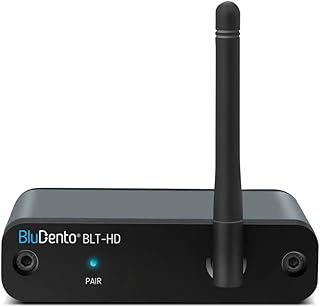
The BLT-HD is best for stereo owners seeking a Bluetooth streaming adapter with a choice of connection types. Its product name lists Bluetooth 5.4, LDAC and aptX Lossless, long-range operation, and RCA, optical, and coaxial outputs.
Choose this model if you want a standalone Bluetooth receiver to connect to an existing home stereo, AV receiver, or amplifier. Its RCA and digital output options provide flexibility when matching the adapter to available inputs. The listed Bluetooth codecs may help narrow the choice for shoppers comparing wireless streaming features.
Limitation: The listing name does not provide specific range measurements or detailed output specifications. Confirm that its connection types match your system; it does not replace an AV receiver or power speakers on its own.
Buying Guide: How To Choose An AV Receiver Or Amplifier
Do you need a home theater receiver or a stereo receiver?
Start with the number of speakers you plan to use. A 5.2-channel receiver, such as the Yamaha or Denon in this selection, is intended for a multichannel home theater arrangement. A two-channel receiver such as the Sony is designed for left-and-right stereo playback. A Bluetooth music receiver, such as the Auris or BLT-HD, is a smaller add-on that sends audio to existing equipment rather than powering a full speaker system.
Do not choose by the word “receiver” alone. Product names can describe very different components. A complete AV receiver usually handles speaker output and video-device connections, while a Bluetooth receiver generally adds wireless audio input to another system.
Which HDMI features matter for a TV and game system?
Compare the HDMI features with the video sources and display you own. The Denon lists four 8K HDMI inputs and eARC, while the Yamaha lists 4K120 and 8K HDMI support. These terms describe different parts of a connection setup: HDMI inputs connect sources to the receiver, and eARC can return audio from a compatible TV through HDMI.
Check the full specifications for the exact formats and capabilities you require. A product title’s mention of 8K or 4K120 does not, by itself, establish every detail of compatibility with a particular console, television, or source device.
Should you choose Dolby Atmos support?
Dolby Atmos matters to buyers seeking compatible immersive home theater audio. The Yamaha listing explicitly names Dolby Atmos, which makes it the clearest match in this group for shoppers prioritizing that feature. The Denon listing emphasizes HDMI, Bluetooth, eARC, and gaming but does not mention Atmos in the supplied product details.
Before selecting any receiver for an Atmos setup, confirm its supported audio formats and the speaker configuration it can accommodate. The format name alone does not tell you which speakers or installation arrangement you will need.
How many channels do you need?
Match the receiver’s channel count to the speaker system you intend to connect. The Yamaha and Denon are both listed as 5.2-channel receivers; the Sony is a two-channel model. If you plan a surround setup, a stereo receiver is not a substitute for a multichannel AV receiver. If you only need a pair of speakers, a larger home theater model may include features you do not need.
When is a Bluetooth adapter the better option?
Choose a Bluetooth adapter when your existing stereo or amplifier already meets your needs and only lacks wireless streaming. Compare its outputs with the available inputs on your equipment. The Auris lists optical, coaxial, and AUX outputs; the BLT-HD lists RCA, optical, and coaxial outputs. Select the connection type that matches your system rather than assuming all outputs are interchangeable.
Bluetooth codecs are another comparison point. The Auris lists LDAC and aptX HD, while the BLT-HD lists LDAC and aptX Lossless. Codec support on the receiver is only one part of wireless playback; check the source device’s supported features as well.
What should you check before buying?
- Count your planned speakers and choose a suitable channel configuration.
- List every source device and confirm that the receiver has enough appropriate inputs.
- Check that your TV, receiver, and sources support the video or audio features you want to use.
- For a turntable, confirm the receiver’s phono connection; the Sony listing specifically identifies phono inputs.
- For a Bluetooth adapter, match its outputs to the inputs on your existing stereo or amplifier.
- Review the complete manufacturer specifications for details not provided in the product name.
Frequently Asked Questions
What is the difference between an AV receiver and an amplifier?
An AV receiver is generally a central component for home theater that handles audio and may switch video sources. An amplifier’s primary role is to drive speakers. Product categories and included functions vary, so check the specific model’s connections and capabilities.
Can a Bluetooth receiver power passive speakers?
The Auris Blume Pro and BLT-HD are listed as Bluetooth music receivers or adapters, not speaker amplifiers. They are intended to connect with a stereo, AV receiver, or amplifier rather than replace the equipment that drives passive speakers.
Which product in this selection lists Dolby Atmos?
The Yamaha RX300A product name lists Dolby Atmos support. Confirm the full specifications and speaker requirements before assembling an Atmos system.
Which receiver is designed for a turntable?
The Sony STRDH190 is listed with phono inputs, making it the most directly relevant option here for a stereo setup that includes a turntable. Verify that the connection suits your turntable and cartridge setup.
Are the Denon and Yamaha both 5.2-channel receivers?
Yes. Both product names identify them as 5.2-channel AV receivers. Their listed features differ: the Yamaha names Dolby Atmos and 4K120/8K HDMI, while the Denon names four 8K HDMI inputs, eARC, Bluetooth, and an HD Setup Assistant.