
For a light-up effect on a car, choose paint based on whether you want a glow after the lights go out or a bright fluorescent color under UV light. The five options below are craft and general-purpose paints, not products identified as automotive paint. Neon Nights is a practical starting point for metal surfaces, Artecho offers multiple glow colors, and Rust-Oleum is a fluorescent spray option. Check the product directions and test a small, inconspicuous area before applying any paint to a vehicle.
| Product | Best suited for | Effect or format |
|---|---|---|
| Neon Nights Glow in the Dark Set | Multiple colors and metal craft projects | Phosphorescent acrylic paint |
| Artecho Glow in the Dark Paint | Color variety and UV-reactive effects | Eight colors; charges under light |
| Rust-Oleum Fluorescent Yellow | Bright fluorescent accents | Spray paint |
| Artecho Fluorescent Neutral Acrylic | A single paint color for DIY projects | 120 ml tube |
| Angelus Neon Green Glow Paint | Green glow and flexible materials | Water-based paint |
Neon Nights Glow In The Dark Set

Best for: Drivers or makers who want several luminous colors for small accents, signs, or removable car-themed decorations. The listed features say the acrylic paint works on most surfaces, including metal, plastic, wood, and canvas.
This set uses phosphorescent paint, which stores light and glows in darkness after charging. The manufacturer recommends bright sunlight or a UV black light for 10–20 minutes. It can also be visible in daylight, so the effect is not limited to dark settings.
Why it stands out: The eight-color set gives a project more color choices than a single-color paint, and its stated metal compatibility makes it relevant to some craft surfaces associated with cars.
Limitation: The product is not identified as automotive paint. Its directions also exclude fabric, textiles, face, and body use. Do not assume it is suitable for a vehicle’s painted body, clear coat, or exterior weather exposure without checking the manufacturer’s instructions.
Artecho Eight-Color Glow Paint

Best for: Projects that need both fluorescent color under suitable lighting and a glow after light charging. Artecho describes the colors as vibrant in daylight and under UV light, with a separate glow-in-the-dark effect after exposure to light.
The instructions say to apply a thicker layer, let it dry fully, and charge the artwork under strong light for 5–20 minutes before viewing it in darkness. This makes it useful for testing different visual effects on a sample panel or a nonessential craft surface before deciding on a design.
Why it stands out: The eight colors allow more variation than a single-color option, while the listed features describe both UV-reactive fluorescent appearance and stored-light glow.
Limitation: The product information does not establish that the paint is designed for automotive finishes or prolonged exposure to road conditions. Avoid treating its light effect as a substitute for approved vehicle lighting or reflective safety equipment.
Rust-Oleum Fluorescent Yellow Spray Paint
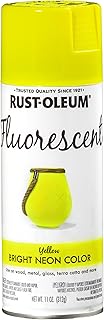
Best for: Anyone seeking a bright yellow fluorescent finish in a spray format for a sign, craft, or other suitable item. The listing describes it for interior and exterior use and says it can be sprayed directly or used with stencils.
The paint is described as fast drying, with a bright neon effect intended to increase visibility. The listed coverage is 10–12 square feet per can, and the product is said to dry to the touch in 15 minutes. Those details can help with rough planning for a small project, but they do not specify coverage on a car or its body panels.
Why it stands out: A spray format can make it easier to cover broad areas or apply a stencil than using a small brush-applied craft paint. It is the most direct choice here for a fluorescent yellow appearance.
Limitation: Fluorescent paint is not necessarily phosphorescent: the provided features do not say that this paint glows after the surrounding lights are off. The listing also does not identify it as automotive paint, so check the label and test substrate compatibility first.
Artecho Fluorescent Neutral Acrylic Paint

Best for: Buyers who want one 120 ml tube rather than a multi-color set. The listing calls the color “Fluorescent Netral” and describes the paint as an acrylic pigment packaged individually.
The product features describe a luminous effect after the paint absorbs light, and list uses such as decorations and DIY art. They also say the dried paint forms a waterproof seal and name canvas, rock, wood, fabric, and ceramic as surfaces. Those stated uses are useful context, but they do not establish compatibility with automotive paint or vehicle clear coat.
Why it stands out: A single tube suits a project that needs one selected pigment, and the listed waterproof-after-drying feature may be relevant to some craft applications.
Limitation: The supplied product information does not describe a multi-color range or specify automotive application instructions. Confirm the color and intended surface from the packaging before use, and do not infer that “waterproof” means suitable for vehicle use or automatic-car-wash exposure.
Angelus Neon Green Glow Paint

Best for: A project needing a green glow on a flexible material such as leather, vinyl, or fabric. Angelus says the paint is formulated to remain flexible on those surfaces, with a crack-resistant finish.
The product is described as water-based and non-toxic, with soap-and-water cleanup. Its glow effect appears after charging in direct light. These features make it a possible option for accessories or craft components where flexibility is more important than a hard, rigid finish.
Why it stands out: Among these options, it specifically identifies flexible materials and a flexible finish. That distinction matters for a painted item that bends, though it does not establish suitability for every flexible automotive component.
Limitation: This is a 1-ounce, single-color paint, so it is less suited to broad coverage or projects that need several colors. The supplied details do not identify it as paint for vehicle body panels or automotive trim.
Buying Guide: How To Choose Light-Up Paint For A Car Project
Do you want a glow in darkness or a fluorescent color?
These effects are different. Phosphorescent paint absorbs light and can continue to glow after the light source is removed. Fluorescent paint looks vivid under ordinary light and can appear especially bright under suitable UV lighting, but that does not mean it will glow in darkness after the UV source is off.
Check the product description for explicit charging directions if afterglow is important. The Neon Nights and Artecho products describe charging before viewing in darkness. Rust-Oleum’s listed features describe a fluorescent yellow effect but do not claim a stored-light glow.
Is the paint intended for a vehicle’s exterior?
None of the supplied product descriptions identifies its paint as automotive paint. General-purpose or craft paint may not be suitable for a vehicle’s factory finish, clear coat, plastic trim, or repeated outdoor exposure. Before applying anything to a car, read the container’s directions and confirm the product is approved for the exact substrate and environment.
For a personal project, test a small, inconspicuous area or a separate sample made from the same material. Consider whether the paint may affect the finish, be difficult to remove, or need a particular surface preparation. Do not rely on an unverified craft-paint claim for a road-safety purpose.
Which format works best for the project?
- Choose a set when the design needs several colors. Neon Nights and Artecho each list eight colors.
- Choose a spray when applying a bright color to a suitable larger surface or using a stencil. Rust-Oleum is the spray option in this selection.
- Choose a single tube when one paint color is enough. Artecho’s 120 ml tube and Angelus’s 1-ounce green paint are single-color choices.
- Choose a flexible-material formula only when the intended surface matches the product directions. Angelus specifically lists leather, vinyl, and fabric.
How should you compare charging and application directions?
Glow performance depends on following the product’s own instructions. The listed products give different charging guidance: Neon Nights specifies bright sunlight or a UV black light, while Artecho recommends strong light and a 5–20 minute charge. Neon Nights also cautions that its paint is not activated by UV LED, so check the details rather than assuming all UV sources work the same way.
Application thickness and drying matter too. Artecho recommends a thicker layer and full drying before charging. Follow the actual label for coats, drying conditions, and cleanup; the product data provided here does not supply a complete automotive surface-preparation process.
What should you check before buying?
- Confirm whether the desired effect is fluorescent visibility, afterglow, or both.
- Check the listed surfaces and exclusions; do not assume compatibility with a vehicle finish.
- Match the package format and quantity to the size of the project.
- Review charging, drying, application, and cleanup directions on the product.
- For a car used on public roads, check applicable vehicle and lighting rules before adding any visible treatment.
Frequently Asked Questions
Does light-up paint glow without being charged?
Phosphorescent paint needs exposure to light before it can glow in darkness. Follow the specific product’s charging directions; the time and suitable light source can vary.
Is fluorescent paint the same as glow-in-the-dark paint?
No. Fluorescent paint looks vivid under light, particularly under suitable UV lighting. Glow-in-the-dark paint stores light and emits a visible glow after the light source is removed.
Can I use these paints on my car’s body?
The supplied product details do not identify any of these options as automotive body paint. Confirm suitability with the manufacturer and test an inconspicuous sample before applying paint to a vehicle.
Which option is a spray paint?
Rust-Oleum Fluorescent Yellow is the spray paint in this selection. Its listed features describe a bright fluorescent effect, but do not say that it glows in darkness after charging.
Which paint is listed for flexible surfaces?
Angelus Neon Green Glow Paint is described as flexible and crack-resistant on leather, vinyl, and fabric. That claim does not automatically establish suitability for every car interior or exterior material.
Can glow paint replace vehicle safety lights?
No. The product descriptions do not present these paints as approved vehicle lighting or safety devices. Use required vehicle lights and approved safety equipment as directed by applicable rules.