
A 16-foot optical audio cable is a practical choice when a TV and soundbar, receiver, or audio system are too far apart for a short cord. The KabelDirekt 16-foot cable is best for a straightforward TOSLINK connection, while its braided version offers a different outer covering. MOSWAG is a close-length option at 16.5 feet, and BlueRigger and Amazon Basics offer 15-foot alternatives. Check the ports on both devices and measure the actual cable route before choosing.
| Product | Length | Best suited for |
|---|---|---|
| KabelDirekt Optical Audio TOSLINK Cable | 16 feet | Standard TOSLINK connections |
| MOSWAG Braided Toslink Cable | 16.5 feet | Buyers wanting a braided cable jacket |
| KabelDirekt Braided Optical Audio Cable | 16 feet | A 16-foot braided-cable option |
| BlueRigger CL3 Toslink Cable | 15 feet | Installations where an in-wall-rated cable is needed |
| Amazon Basics Toslink Cable | 15 feet | Connecting a TV to an audio component |
KabelDirekt 16-Foot Optical Audio Cable

Best for: A standard 16-foot connection between equipment with TOSLINK optical ports. This cable has TOSLINK-to-TOSLINK F05 connectors and is listed for connecting TVs, consoles, disc players, and streaming boxes to soundbars, amplifiers, stereo systems, or digital-to-analog converters.
The metal-free fiber-optic design carries audio as light and is described by the manufacturer as immune to electrical interference. Its flexible PVC jacket may suit a home setup where the cable needs to follow a route around furniture or other equipment. KabelDirekt also says each cable undergoes multi-stage testing during manufacturing.
Why it was selected: Its stated length matches the 16-foot search closely, and its listed uses cover common TV and home-audio connections. Limitation: It is not identified as CL3-rated for in-wall installation. Choose another cable if that rating is required for the intended route.
MOSWAG 16.5-Foot Braided Toslink Cable
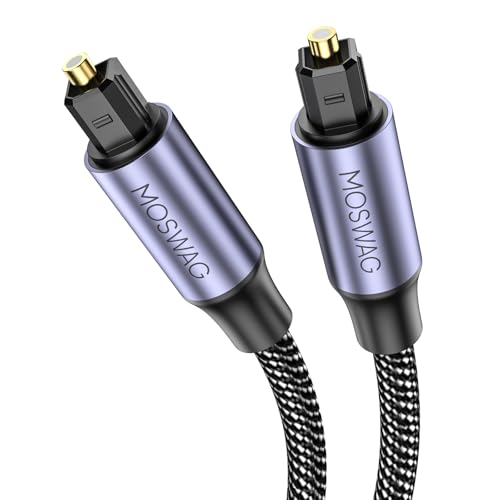
Best for: Buyers who want a cable close to 16 feet and prefer a braided outer covering. The listed length is 5 meters, or about 16.5 feet. The product is designed for devices with TOSLINK optical connections, including TVs, gaming consoles, Blu-ray players, soundbars, amplifiers, and stereo systems.
MOSWAG describes this cable as supporting uncompressed PCM and compressed multichannel formats, including 5.1 and 7.1 audio. The listing also names Dolby Digital Plus, DTS-HD High Resolution, and LPCM. These format claims do not guarantee that every connected device will output those formats; device settings and the full audio chain matter.
Why it was selected: It is one of the closest supplied options to a 16-foot requirement and explicitly lists a braided design and multichannel audio support. Limitation: At 16.5 feet, it is slightly longer than a true 16-foot cable. Confirm that the extra length fits the planned route.
KabelDirekt 16-Foot Braided Optical Cable

Best for: A buyer who wants a 16-foot KabelDirekt cable with a braided exterior. Its listed connectors are TOSLINK-to-TOSLINK F05, and the manufacturer identifies TVs, consoles, DVD or Blu-ray players, and streaming devices as possible sources. Listed destination equipment includes soundbars, amplifiers, stereo systems, and D/A converters.
The product description also identifies a metal-free fiber-optic construction and says the cable is immune to electrical interference. The stated flexibility may help when routing the cable along a home entertainment setup. Its intended use is digital optical audio, so both connected devices need compatible optical audio ports.
Why it was selected: It combines the requested 16-foot length with a braided design, giving buyers an alternative to the standard-jacket KabelDirekt model. Limitation: The supplied product details do not specify an in-wall rating or list supported audio formats. Do not assume either feature without verifying the product information.
BlueRigger 15-Foot CL3 Toslink Cable

Best for: A home theater or AV installation where the listed CL3 in-wall rating is relevant. This BlueRigger cable is 15 feet, so it is a close alternative rather than an exact 16-foot match. Its features include fiber-optic audio transmission, a flexible PVC jacket, gold-plated connectors, and removable rubber dust covers.
The listing states support for uncompressed PCM and compressed 5.1 to 7.1 surround formats, including Dolby Digital Plus, DTS-HD, ADAT, and LPCM. It also says the jacket can withstand more than 25,000 bend cycles. That manufacturer claim is not a substitute for routing the cable without sharp kinks or excessive stress.
Why it was selected: Its CL3 designation distinguishes it from the other options for buyers considering an in-wall route. Limitation: It is one foot shorter than the requested length. Remove the protective tips before connecting the cable, as the listing instructs.
Amazon Basics 15-Foot Toslink Cable
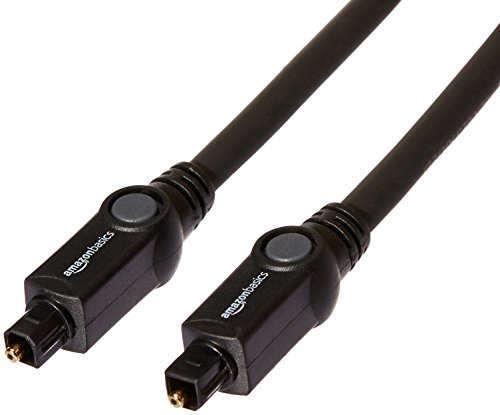
Best for: Connecting a TV or another audio source to a soundbar, receiver, preamplifier, audio processor, or digital-to-analog converter. This 15-foot cable is a near-length option for buyers who do not need an exact 16-foot cord. The listed features include multi-channel fiber-optic digital audio, buffer tubing, and gold-plated, corrosion-resistant connectors.
The product description focuses on common component-to-component connections rather than a long list of specific audio formats. As with any optical cable, it requires compatible optical ports on both devices. It cannot replace an HDMI connection or carry video.
Why it was selected: It offers a simple, clearly described TOSLINK connection and a 15-foot length for common home theater uses. Limitation: It is shorter than 16 feet and the provided details do not identify it as CL3-rated. The listing also instructs users to remove the protective end caps before use.
Buying Guide: How To Choose A 16-Foot Optical Audio Cable
What length should you buy?
Measure the route the cable will actually follow, not just the straight-line distance between the TV and soundbar. Include the path around furniture, behind a console, or along a wall, plus enough slack to connect both ends without pulling on the plugs. A cable listed as 16 feet may be too short if the route bends around obstacles.
If a precise 16-foot cable is unavailable, compare the 15-foot and 16.5-foot options against your measurements. A 15-foot cable may work for a shorter route, while 16.5 feet can provide extra reach. Avoid leaving a large excess coil tightly wound or forcing the cable into a sharp bend.
Does your equipment have optical audio ports?
Look for a port labeled Optical, TOSLINK, OPT, or S/PDIF on each device. The cable in this guide has TOSLINK connectors at both ends, so both the audio source and destination need compatible optical connections. A TV with only HDMI, analog, or another type of output cannot connect directly through this cable without suitable equipment.
Check the source and destination directions. A TV typically sends audio from an optical output, while a soundbar or receiver receives it at an optical input. An optical cable does not carry video, power, or network data.
Do you need a braided jacket or a standard jacket?
Choose based on the installation route and handling needs rather than assuming that a jacket type changes audio quality. The supplied KabelDirekt and MOSWAG listings include braided options; the standard KabelDirekt listing describes a flexible PVC jacket. Compare the construction details and select a cable that can be routed without pinching, tight bends, or tension.
Is an in-wall rating important?
If the cable will run inside a wall, check the applicable building requirements and choose a product with the specific rating required for that installation. Among the options here, the BlueRigger 15-foot model is expressly described as CL3-rated and designed for in-wall installation. Do not treat a general PVC jacket or a different product’s durability claims as proof of an in-wall rating.
Which audio formats should you check?
Optical audio can carry digital audio, but the formats available depend on the source, the receiving device, and their settings. Product descriptions may list PCM or compressed surround formats, but a cable’s format claims do not make an incompatible TV or soundbar support them. Review the audio output settings on the TV and the supported input formats on the sound system.
If sound does not play after connection, confirm that both plugs are fully seated and that protective caps have been removed. Then select optical output on the source device and check whether its audio format is supported by the receiving equipment. A stereo PCM setting can be a useful compatibility check when multichannel audio does not work.
What should you compare before buying?
- Length: Match the stated cable length to the measured route and leave practical slack.
- Connectors: Confirm that both devices have TOSLINK optical ports.
- Installation: Verify an explicit in-wall rating if the cable will run inside a wall.
- Construction: Compare braided and flexible PVC options based on the route and handling.
- Audio support: Check the connected equipment’s supported formats and output settings.
- Protective covers: Remove end caps or dust covers before connecting when the product instructions require it.
Frequently Asked Questions
Is a 16-foot optical cable the same as a 16-foot TOSLINK cable?
In common home-audio listings, an optical audio cable with TOSLINK connectors is often described as a TOSLINK cable. Confirm that the cable has the connector type your devices use; the products in this guide are intended for TOSLINK optical connections.
Can I use an optical cable with a soundbar?
Yes, if the TV or audio source has an optical output and the soundbar has an optical input. Select optical audio output in the source device’s settings if needed.
Does an optical audio cable carry surround sound?
Some optical connections support certain multichannel formats, but the exact options depend on the connected devices and audio settings. Check both devices’ specifications rather than relying on the cable description alone.
Can I run a regular optical cable inside a wall?
Do not assume that a cable is suitable for in-wall installation unless its listing provides the required rating. The BlueRigger 15-foot model in this guide is identified as CL3-rated; confirm local requirements before installation.
Why is there no sound after I connect the cable?
Check that the protective caps are removed, both plugs are seated, and the cable runs from an optical output to an optical input. Then select optical output on the source and check the audio format settings on both devices.