
The best Bluetooth digital audio receiver depends on the connections and listening features you need. The KAIY is a strong fit for a stereo setup needing optical or RCA connections, while the 1Mii B06Pro offers several output options. The Auris Blume HD is suited to listeners seeking named high-resolution Bluetooth codec support. The Monster works as either a transmitter or receiver, and the Esinkin is a straightforward choice for streaming to a home stereo. Compare the connection types and operating modes before choosing.
| Product | Best For | Listed Highlights |
|---|---|---|
| KAIY Bluetooth 5.4 Receiver | Optical or RCA stereo connections | Bluetooth 5.4, optical, low latency |
| Esinkin Bluetooth Audio Adapter | Simple home-stereo streaming | Wireless music streaming from phones and tablets |
| Monster Bluetooth Transmitter & Receiver | Two-way wireless audio use | Transmitter and receiver modes, analog and digital |
| Auris Blume HD | Codec-focused Hi-Fi listening | LDAC, aptX HD, audiophile DAC |
| 1Mii B06Pro | Multiple stereo input options | Optical, RCA, AUX, and coaxial outputs |
KAIY Bluetooth 5.4 Receiver

Best for: A home stereo or wired speaker setup that needs a Bluetooth receiver with optical and RCA connection options. Its listed Bluetooth 5.4 support, optical connection, and low-latency positioning make it a relevant pick for buyers comparing newer Bluetooth receivers for home audio.
The product is described as a Bluetooth-to-RCA adapter and an AUX wireless audio receiver. Those connection descriptions make it useful to shoppers checking how a receiver can bring wireless audio to wired speakers or a stereo. The listed optical option can also matter when a buyer’s audio setup uses a digital connection.
Why it was selected: It combines several connection types in one receiver-focused product and explicitly describes low latency. Choose this if your priority is adding Bluetooth to a home audio system while considering optical or RCA connections.
Consider: Check the input and output connections on your existing equipment before ordering. The product name lists optical and RCA, but does not specify every connection detail or codec.
Esinkin Bluetooth Audio Adapter

Best for: Buyers looking for a Bluetooth receiver focused on music streaming to a home stereo. The product name describes it as a wireless audio adapter that works with smartphones and tablets, so its central use is straightforward: stream audio from a mobile device to a sound system.
This model is a better fit for shoppers who do not need a combined transmitter-and-receiver device. Its listing centers on receiver use and home-stereo music streaming, rather than naming multiple advanced codecs, a digital output, or a long-range feature.
Why it was selected: It represents a simple receiver category for people who want to add wireless streaming to an existing sound system. Choose it if the main requirement is streaming from a phone or tablet and your stereo has a compatible connection.
Consider: The supplied product information does not identify specific output ports, codecs, or range. Confirm the adapter’s connection requirements against your stereo before purchase, especially if you need a particular digital input or output.
Monster Bluetooth Transmitter And Receiver
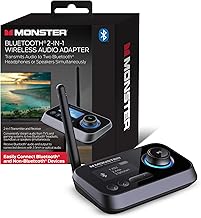
Best for: People who need both Bluetooth transmitting and receiving functions. This two-in-one adapter is described as a way to stream audio to or from non-Bluetooth devices, making it more flexible than a receiver-only model for setups that need both directions of wireless audio.
The listed features include support for streaming TV audio to two headphones, a stated 33-foot range, analog and digital connections, a 3.5 mm AUX port, and USB power. These details make the Monster a useful option for buyers comparing a TV-focused adapter with a basic home-stereo receiver.
Why it was selected: Its two operating modes and stated two-headphone TV-streaming use give it a distinct role among these products. Choose this if you want a device that can send audio to Bluetooth headphones as well as receive audio for another device.
Consider: It is not exclusively a receiver, so buyers should check the operating mode and connections needed for their setup. The listed range is 33 feet; do not assume that distance will be the same in every room or environment.
Auris Blume HD Bluetooth Receiver

Best for: Listeners comparing Bluetooth receivers by codec support and audio conversion features. The product name identifies an audiophile DAC and support for LDAC and aptX HD, alongside Bluetooth 5.3. Those named features make it a specialized choice for buyers whose source device and listening priorities align with those codecs.
The Blume HD is described for use with a home stereo, AV receiver, or amplifier. This makes it relevant to shoppers adding Bluetooth reception to a larger audio setup rather than choosing a device exclusively for television headphone transmission.
Why it was selected: It clearly identifies its DAC and codec features, helping buyers distinguish it from simpler adapters that do not list those capabilities. Choose this if LDAC or aptX HD support is an important part of your receiver search.
Consider: Codec support on the receiver alone does not establish that the complete listening chain will use a particular codec. Check whether your transmitting device supports the codec you intend to use, and verify the connection type required by your stereo.
1Mii B06Pro Bluetooth Receiver

Best for: Buyers who want to match a receiver to one of several listed audio connections. The product name identifies optical, RCA, AUX, and coaxial connections, plus Bluetooth 5.3. That broad connection list makes it a practical candidate for comparing against a stereo or amplifier with a specific available input.
The B06Pro is described as a long-range Hi-Fi wireless audio adapter and lists aptX HD, low latency, and 3D surround. These are useful comparison points for shoppers who want more than a basic Bluetooth receiver. Its product name also identifies it as an upgraded model.
Why it was selected: It offers the most explicitly varied connection list among the receiver-focused products here. Choose this if connection flexibility is central to your purchase and your equipment has an optical, RCA, AUX, or coaxial input.
Consider: Confirm the exact connection you plan to use before buying. The name lists several formats, but the best choice depends on your equipment’s available input and the audio features supported across your source and receiver.
Buying Guide: How To Choose A Bluetooth Digital Audio Receiver
Which connection should the receiver have?
Start by checking the audio input on the stereo, amplifier, or speaker system you want to use. A receiver must connect to that equipment through a compatible output. The products in this comparison name different options: the KAIY lists optical and RCA, while the 1Mii B06Pro lists optical, RCA, AUX, and coaxial. The Esinkin’s supplied description does not specify its ports, so check its full listing if you are considering it.
Optical and coaxial are digital connection types, while RCA and AUX are commonly used analog connections. Do not select a product based only on the word “digital” in a title. Confirm whether your stereo has an input that matches the receiver’s output, and consult the product details for how each port is used.
Do you need a receiver, a transmitter, or both?
A Bluetooth receiver takes audio from a Bluetooth source, such as a phone, and sends it to a connected sound system. A transmitter sends audio from a source device to Bluetooth headphones or speakers. A two-in-one adapter may provide both functions, but you need to select the correct mode for your intended use.
The Monster is specifically described as a transmitter and receiver and lists TV audio streaming to two headphones. The other products are presented primarily as Bluetooth receivers. Choose a receiver-only model if your goal is phone-to-stereo streaming; consider a two-way adapter if you also need to send audio from a TV or another non-Bluetooth source.
Do Bluetooth version and codecs matter?
Bluetooth version is one specification to compare, but it does not tell you everything about the resulting audio. These listings name Bluetooth 5.4 for the KAIY and Bluetooth 5.3 for the Auris and 1Mii models. The supplied details do not list a Bluetooth version for the Esinkin or Monster, so avoid assuming one.
Codec support is relevant when both the transmitting device and receiver support the same codec. The Auris lists LDAC and aptX HD, and the 1Mii lists aptX HD. If you plan to use a particular codec, verify its support on your phone, tablet, or other source as well as on the receiver.
Should you prioritize low latency or a stated range?
Low latency can matter when audio needs to stay closely aligned with video, but the product names alone do not provide a comparative measurement. The KAIY and 1Mii listings mention low latency. The Monster lists a 33-foot range, while the Auris is described as long range. Treat these as product-specific features, not guarantees of performance in every room.
Walls, nearby devices, and placement can affect wireless connections. If you are buying for a TV, check whether your use requires a transmitter, whether the headphones can connect to it, and whether the stated range suits the space. For music streaming to a stereo, pay particular attention to receiver output connections and the source device’s Bluetooth support.
What should you check before ordering?
- Identify the audio input available on your stereo, amplifier, or speakers.
- Confirm that the receiver’s listed output connection matches that input.
- Decide whether you need receiving, transmitting, or two-way operation.
- Check codec support on both the Bluetooth source and receiver if a specific codec matters.
- Review the full product details for power and setup requirements not provided in the product names here.
- For TV use, distinguish stereo playback from sending audio to Bluetooth headphones.
Frequently Asked Questions
What does a Bluetooth digital audio receiver do?
It receives audio wirelessly from a Bluetooth source and sends that audio through a wired connection to a compatible stereo, amplifier, or speaker system. The receiver’s output must match an available input on the audio equipment.
Can a Bluetooth receiver connect to any home stereo?
No. The stereo needs a compatible audio input, and the receiver must have a matching output. Check both devices’ connection details before choosing a model.
What is the difference between a Bluetooth transmitter and receiver?
A receiver accepts wireless audio from a Bluetooth source and feeds connected audio equipment. A transmitter sends audio from a source to Bluetooth headphones or speakers. A two-in-one adapter can support both roles if its mode and connections suit the setup.
Do I need LDAC or aptX HD?
Not necessarily. These codecs matter mainly if you want to use them and your Bluetooth source also supports them. A receiver’s codec label by itself does not confirm that every source will transmit using that codec.
Which option is designed for streaming TV audio to two headphones?
The Monster product is specifically described as supporting TV audio streaming to two headphones. Check its transmitter mode and the connections available on your TV before choosing it for that purpose.
Is a longer Bluetooth range always better?
Not for every setup. Range can be useful when the source and receiver are farther apart, but the listed range does not guarantee the same result through walls or interference. Choose based on your room and confirm the product’s stated range and operating requirements.