
Cool DJ lighting effects can turn a plain room or stage into a more engaging dance space. For moving beams and directional movement, the six-head RGBW fixture is a strong fit; for a broad mix of room-filling effects, consider the SPOOBOOLA projector. The 150W six-arm light suits hosts seeking several control modes, while the two-piece 295W moving-head set is aimed at event setups that need a pair of fixtures and a wheeled case. Compare effect types, controls, and setup needs before choosing.
| Product | Best suited for | Standout listed feature |
|---|---|---|
| Mini 295 7R Moving Head Pair | Event users needing two moving-head lights | Two lights and a wheeled case |
| Six 40W RGBW Moving Head | Beam-focused DJ and stage setups | Six heads, three-axis linkage, DMX and sound activation |
| 120W Six-Arm Moving Head | Parties seeking varied beam and strobe effects | Six arms, starry effects, and DMX-512 support |
| Lumvraneo 150W Six-Arm Light | Hosts wanting multiple operating modes | Beam, chase, pulse, sound, auto, and DMX modes |
| SPOOBOOLA 6-in-1 Party Light | Home parties and multi-effect room coverage | Disco, water-wave, star, pattern, and DJ effects |
Mini 295 7R Moving Head Pair

This set is best for DJs and event organizers who want two moving-head fixtures in one package. The listing identifies two Mini 295 7R lights and a case with four wheels, making the package relevant to users moving gear between parties, weddings, and other events. It was selected for its paired-fixture format and transport case rather than for detailed effect or control claims.
Choose this if having two fixtures and a wheeled case matters more than choosing from a clearly listed set of control modes. The product title specifies 295W lighting, but the supplied details do not describe programming options, beam patterns, or sound activation. Limitation: check the product listing for operating modes and included control accessories before purchase, as those details are not provided here.
Six 40W RGBW Moving Head Light

This fixture is best for users who want directional RGBW beams and movement in a single stage light. Its listed configuration includes six 40W lights and three-axis linkage. The product also specifies DMX control and sound-activated operation, giving DJs a choice between music-responsive use and more deliberate control. It was selected for combining moving-head styling, multiple light sources, and named control features.
Better for a beam-oriented DJ setup than for a buyer primarily seeking room-wide water or star projections. The listing describes use at parties, weddings, churches, live shows, and bars. Limitation: the supplied information does not state channel counts or the physical movement range, so confirm those details if precise programming or positioning is important.
120W Six-Arm Moving Head Light

This 120W RGBW light is best for party hosts who want a decorative mix of beams, color, and strobe effects. Its listed features include six arms, a glowing magic-ball effect, red and green starry effects, and white and amber strobe. DMX-512 and remote support are also identified in the product name, making it a candidate for users who want more than a simple standalone effect light.
Choose this if the six-arm look and combination of star and strobe effects match the event’s visual style. It was selected as a middle ground between moving-beam fixtures and multi-effect room projectors. Limitation: the supplied details do not specify control modes beyond DMX-512 and remote support, or provide channel information. Check the listing for those specifics before planning a programmed show.
Lumvraneo 150W Six-Arm DJ Light
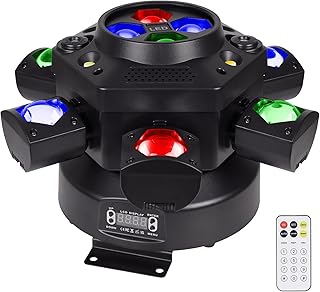
This is best for DJs or home hosts who want several operating choices in one six-arm fixture. Listed effects include beam, strobe, sweep, chase, pulse, and dimming, while the stated movement is 540-degree pan and 180-degree tilt. The four control modes are DMX-512 with 22 channels, sound-activated, master-slave, and auto-run. It was selected for the clearest stated range of effects and operating modes among the moving fixtures.
Better for users who want to switch between music-responsive operation and programmed DMX control. The listing also describes use for gatherings, birthdays, and house parties. Limitation: DMX operation may be unnecessary for a buyer seeking only a simple plug-in party light; choose a simpler effect projector if extensive control is not needed.
SPOOBOOLA 6-in-1 Party Light Projector

This projector is best for home parties and rooms where varied projections matter more than moving-head beams. Its listed effects include two disco balls, water-wave projections, twinkling stars, red and green patterns, and RGB DJ lights. The product identifies Party Light, Disco Ball, Ocean Light, Star Light, and DJ Light scenes, which can run separately or together. Its listing states coverage extending over 600 square feet.
Choose this if you want several effect styles from one projector and remote-based scene selection. Two sound-activated modes are listed to change effects with music. It was selected for the breadth of projection types and indoor party focus. Limitation: this is a projector-style option, not a substitute for a moving-head fixture when directional stage beams are the priority.
Buying Guide: How To Choose DJ Lighting Effects
Which effect style fits the room?
Start with the visual result you want. Moving-head lights create directional beams that can sweep across a dance floor or stage. Six-arm fixtures combine multiple beams and decorative effects in a compact unit. Multi-effect projectors emphasize room coverage through patterns, stars, or water-like projections. A projector may suit a living room party, while moving fixtures are more appropriate when beam movement is central to the show.
Consider the room’s size, ceiling height, and surfaces. A patterned projection is easier to appreciate when there is a visible wall or ceiling, while beams are more noticeable in a space where their paths can be seen. The listed coverage figure for a product is not a guarantee of the same visual impact in every room; placement and ambient light affect what guests see.
Do you need sound activation or DMX control?
Sound activation can make a fixture respond to music without a lighting console. It is useful for casual parties and simpler setups, but the supplied product details do not establish how each unit handles sensitivity or timing. A remote can provide basic selection on models that include one. DMX-512 is a more deliberate control option for users who want to coordinate lighting cues; check the fixture’s channel count and control requirements before building a setup.
Master-slave operation, where listed, can be useful when coordinating compatible fixtures. Auto-run offers a less hands-on option. These modes do not appear in every product description, so compare the controls stated for the exact model rather than assuming that all moving lights support the same features.
Should you choose one fixture or a pair?
A single fixture can be easier to position and may be enough for a small gathering. Two lights can create a more balanced arrangement across a stage or dance area, but they also require more space and setup. The two-piece Mini 295 package specifically includes a wheeled case; the other listed products are presented as individual lights. Confirm what accessories and cables are included on the product page before planning transport or installation.
What practical details should you check?
- Mounting and placement: Confirm how the light is intended to be positioned and whether any mounting hardware is included.
- Controls: Check whether you need sound activation, a remote, DMX, or an auto mode.
- Effect type: Decide between moving beams, multi-arm effects, and projected patterns.
- Technical details: Verify dimensions, power requirements, channels, and included accessories from the current listing.
- Use environment: The supplied descriptions focus on parties, stages, and indoor venues; do not assume suitability for outdoor use unless the listing confirms it.
Frequently Asked Questions
What are the main types of cool DJ lighting effects?
Common options include moving beams, strobe effects, color-changing lights, star and pattern projections, and water-wave effects. The best type depends on whether you want stage movement, room decoration, or a combination.
Are sound-activated DJ lights suitable for home parties?
They can be convenient for home parties because the light responds to music without requiring a lighting console. Check whether sound activation is listed for the specific fixture and whether other controls, such as a remote, are included.
What is the difference between a moving-head light and a party projector?
A moving-head light directs beams and changes their position. A party projector creates effects such as stars, patterns, or water-like visuals on surfaces. Choose based on whether you want moving beams or broad decorative projections.
Do I need DMX-512 to use DJ lights?
No. Some listed lights offer sound-activated or automatic modes that do not require DMX control. DMX-512 is useful when you want more deliberate programming, but confirm the fixture’s channel count and control requirements first.
Can one light cover a whole party room?
Coverage depends on the fixture, placement, room shape, and ambient light. One projector’s listing states coverage extending over 600 square feet, but that figure should not be treated as a guarantee of identical results in every space.
What should I verify before buying a moving-head DJ light?
Check the stated effect modes, movement range, control methods, channel information, included accessories, and intended placement. Do not assume features that are absent from the product description.