
A tenor ukulele is the better choice for players who want a familiar ukulele sound, a comfortable middle size, or a wider fretboard; a baritone is better for players who prefer a larger instrument and a lower, guitar-like tuning. Among these picks, the Enya NOVA U Pro is best for travel and varied playing, the Donner is best for a ready-to-play tenor bundle, and the Winzz is a koa-wood baritone option. The Caramel is another baritone to consider. The TOM strap is an accessory, not a ukulele, and is included only for players comparing standing-play gear.
| Product | Type | Best For |
|---|---|---|
| Enya NOVA U Pro | Tenor | Travel and practice |
| Donner DUT-1 | Tenor | Beginners wanting a bundle |
| Winzz KOA | Baritone | Players seeking a koa body |
| Caramel BEG94 | Baritone | Players wanting an electric baritone |
| TOM Ukulele Strap | Accessory | Standing players needing a strap |
Tenor Or Baritone: What Is The Difference?
The main differences are instrument size, tuning, and sound. A tenor ukulele is typically tuned G-C-E-A, like soprano and concert ukuleles, and retains the familiar bright ukulele character. A baritone is commonly tuned D-G-B-E, with the same pitches as the highest four strings of a guitar. That lower tuning gives it a deeper sound and can make it feel more familiar to some guitarists.
Tenor and baritone are size categories, but exact dimensions and playing feel vary by model. Tenors are generally smaller than baritones, while offering more room than the smaller common ukulele sizes. Baritones usually have a longer scale and more space between frets. Check a product’s specifications and setup before buying, especially if you need a particular tuning or string arrangement.
Neither size is universally better. Choose tenor if you want to use standard ukulele chord shapes and join players using standard G-C-E-A tuning. Choose baritone if a lower register is more important, or if you want chord shapes and tuning that relate closely to the top four guitar strings. Chord shapes may produce different pitches across the two tunings, so a song’s chord chart may need adjustment.
Enya NOVA U Pro Carbon Fiber Tenor
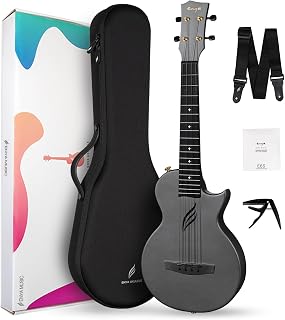
Best for: Adults who need a tenor for regular practice, travel, or different playing styles. Its 26-inch tenor format is described as lightweight, and the carbon fiber composite body is intended to support clear projection and balanced resonance.
The product features a cutaway, rounded metal fret ends, and support for standard high-G or optional low-G setups. Those details make it a flexible choice for strumming, fingerpicking, recording, and playing with others. It is the strongest tenor pick here for shoppers who prioritize a composite body and multiple setup possibilities over a traditional wood construction.
Limitation: Choose another model if you specifically want the look and feel of a wood-bodied ukulele. The listing describes the body as carbon fiber composite, not wood.
Donner DUT-1 Mahogany Tenor Bundle
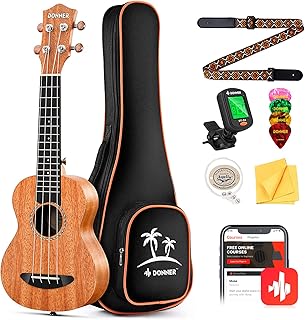
Best for: Beginners who want a tenor and several listed accessories in one package. The bundle includes a gig bag, strap, tuner, extra Aquila nylon strings, picks, and a cleaning cloth, along with the ukulele and online lessons.
The mahogany body and neck, rosewood fingerboard and bridge, and bone nut and saddle are among the construction details provided. The listing describes a warm, rich sound and includes polished Aquila carbon nylon strings. This is a practical choice for a new player who wants to start with a tenor without sourcing each listed accessory separately.
Limitation: This is a tenor, not a baritone. Buyers seeking a lower-register instrument or the standard baritone tuning should choose a baritone model instead.
Winzz KOA Wood Baritone Ukulele
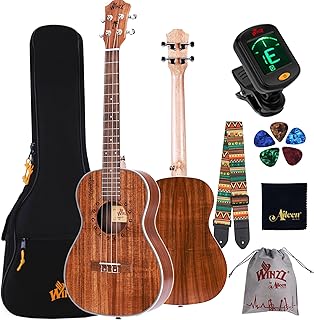
Best for: Players looking for a 30-inch baritone with koa across the top, back, and sides. The manufacturer says the wood was dried for almost a decade and describes the instrument’s sound as bright, clear, and resonant.
The listed Alice strings include two nylon strings and two steel strings, which the product description says are easy to press and tune. This model is a relevant option for shoppers who want a baritone with a specified koa body rather than a tenor or a composite instrument. Its stated audience includes adults, teens, beginners, and experienced players.
Limitation: The listing describes mixed nylon and steel strings, so check the exact string setup and replacement requirements before purchase. Do not assume it uses a standard all-nylon ukulele set.
Caramel BEG94 Ebony Wood Baritone

Best for: Players comparing 30-inch baritones who want an instrument described as electric and fitted with an LCD color display. The listing also highlights a smooth fretboard, tuning pegs intended to help maintain tuning, and a compact, lightweight body.
This model is an alternative to the Winzz for shoppers who want a baritone with electronic features identified in the product name. Its description presents it as suitable for beginners and experienced players, with a warm, bright tone. It was selected because it offers a second baritone option with a different feature emphasis.
Limitation: The supplied feature information does not explain the electronics or display functions in detail. Confirm what those features do and what is included before choosing it for amplified performance.
TOM Quick-Attach Ukulele Strap

Best for: Ukulele players who want to play standing and need an accessory rather than another instrument. The listing describes a quick-lock buckle, a soft silicone pad at the contact point, and a buckle tensile test of 74 pounds under ISO 2307.
The product description says attachment requires no tools or hardware changes and that the silicone pad is intended to protect the finish where it touches the body. It is included as a related accessory for players comparing tenor and baritone setups who plan to stand while playing.
Limitation: A strap does not help determine whether tenor or baritone is the right instrument, and this listing does not establish that every ukulele has the required attachment point. Check your instrument’s strap-button arrangement before buying.
Buying Guide: How To Choose Between Tenor And Baritone
Which tuning do you want?
Start with tuning, because it affects how chords and song materials work. Standard tenor ukulele tuning is G-C-E-A. Baritone tuning is commonly D-G-B-E, a lower arrangement that matches the top four strings of a guitar. If you already use ukulele chord charts or play with a group using standard-tuned ukuleles, a tenor is often the more straightforward fit. If you are comfortable adapting chord names or use guitar-based shapes, baritone may suit you.
Before ordering, check the manufacturer’s stated tuning and the strings fitted to the instrument. The product names in this selection identify tenor or baritone, but not every supplied description specifies a tuning. The Winzz listing, in particular, mentions a mixed nylon-and-steel string set, so confirm how it is intended to be set up.
How important are size and hand comfort?
A tenor may offer a useful middle ground: more room than smaller ukuleles while remaining more compact than a baritone. A baritone’s larger scale can provide more space between frets, which some players prefer, but the larger body and longer neck may be less convenient for small hands or compact storage. These are general tendencies, not guarantees; playing comfort depends on the individual and the exact instrument.
When possible, compare the scale length, nut width, overall length, and body dimensions listed by the manufacturer. Do not rely on the category name alone to predict comfort. If you cannot try the instrument in person, check the measurements against an instrument you already find comfortable.
What sound are you trying to achieve?
Choose tenor for the brighter, familiar ukulele register commonly used in group strumming and standard ukulele arrangements. Choose baritone if you want a lower sound with a closer relationship to guitar’s upper four strings. Body material also matters, but wood type alone does not guarantee a particular tone. Construction, strings, setup, and the player’s technique all contribute.
In this selection, the Enya emphasizes a carbon fiber composite body and balanced resonance, while the Donner lists mahogany construction and a warm, rich sound. The two baritone listings take different approaches: the Winzz specifies koa on the top, back, and sides, while the Caramel product name identifies ebony wood and electric features. Compare the stated features rather than assuming that one material is automatically better.
Do you need a complete starter package?
A bundle can simplify the first purchase if it includes accessories you would otherwise need. The Donner package lists a gig bag, strap, tuner, extra strings, picks, a cloth, and online lessons. Review each included item and decide whether it matches your needs. A bundle is less useful if you already own its accessories or want a different tuner, case, or string type.
For a single instrument, consider which features matter most. The Enya is the tenor pick with a composite body and cutaway. The Winzz is the koa-bodied baritone option. The Caramel is worth comparing if the described electric features are important, but the supplied product information leaves their operation unclear.
Will you travel or perform standing up?
For travel, consider total instrument size, body material, and how you will protect the ukulele. The Enya is described as lightweight and designed for travel, while the Donner includes a padded gig bag with backpack-style straps. Check bag dimensions and instrument fit before relying on a case or bag for transport.
For standing performance, determine whether the ukulele has strap buttons or another compatible attachment method. The TOM strap listing describes a quick-lock attachment, but compatibility depends on the instrument’s hardware. A strap is optional and does not replace choosing the correct size, tuning, or playing setup.
Frequently Asked Questions
Is a tenor or baritone ukulele better for beginners?
Neither is best for every beginner. A tenor is a natural choice for learning standard ukulele tuning and using common ukulele materials. A baritone can suit a beginner who prefers lower pitches or guitar-related tuning. Choose based on the music and tuning you intend to use.
Can I use the same chord shapes on tenor and baritone?
Some finger shapes may transfer, but the instruments are commonly tuned differently, so the resulting chord pitches and names can change. Use chord charts that match the instrument’s tuning, or verify how a guitar or ukulele chart applies before playing.
Does a baritone ukulele sound like a guitar?
A baritone uses the same pitches as the highest four strings of a guitar when tuned D-G-B-E, so its register and chord relationships can feel guitar-like. It remains a ukulele in construction and playing format, and its sound is not identical to a guitar.
Is a tenor ukulele easier to hold than a baritone?
A tenor is generally smaller, so it may be easier to carry or hold for some players. Hand comfort varies, however. Compare the instrument’s measurements and consider whether fret spacing, body size, and neck feel suit you.
Can I tune a baritone like a tenor?
Tuning depends on the instrument’s strings and setup. Do not assume a baritone can use standard tenor tuning without checking string suitability and manufacturer guidance. Confirm the intended tuning before changing strings or adjusting the instrument.
Should I choose wood or carbon fiber?
Choose based on your preferences and intended use, not a universal material ranking. The Enya listing emphasizes a lightweight carbon fiber composite body, while the Donner and Winzz specify wood construction. Compare the stated materials, sound goals, care expectations, and included features.