
The best car amplifier cooling option is a fan that moves air around the amplifier without blocking its vents. The Xscorpion cross-flow fan is best for compact, even airflow; the two-fan Xscorpion set suits buyers who want a pair of 12-volt fans; and the Wathai USB fan is better for indoor electronics setups. A vehicle cabin fan or cooling seat cushion is not a substitute for directly cooling an amplifier.
| Product | Best suited for | Power or cooling type |
|---|---|---|
| Xscorpion 8-Inch Cross-Flow Fan | Compact amplifier spaces | Cross-flow fan |
| Wathai 240mm USB Cooling Fan | Indoor audio equipment | 5V USB |
| Xscorpion Two-Pack Cross-Flow Fans | Buyers needing two fans | 12V cross-flow fans |
| XOOL 12V Car Fan | Cabin airflow, not direct amp cooling | 12V accessory plug |
| ZONETECH Cooling Seat Cushion | Cooling a seated passenger | 12V seat cushion |
Xscorpion 8-Inch Cross-Flow Fan

Best for: A car audio installation where a slim fan can sit near an amplifier and distribute air along a longer area. The listed cross-flow design moves air across the fan’s length, rather than concentrating airflow at one small point.
The compact profile may help when installation space is limited. The product listing also describes quieter operation compared with traditional fan designs, which may matter in a vehicle where fan noise is noticeable. It is intended for amplifier cooling, making it more directly relevant than a cabin fan or seat cushion.
Consideration: The supplied product details do not state airflow volume or power requirements. Check the product listing and installation space before choosing it, and leave the amplifier’s ventilation openings unobstructed.
Wathai 240mm USB Cooling Fan

Best for: Buyers cooling an amplifier or receiver in a home, workshop, or other indoor setup where USB power is available. The listing names receivers and AV cabinets among its intended uses, alongside routers, TV boxes, and other electronics.
The unit contains two 120mm fans connected to one USB cable. A multi-speed controller lets users adjust fan speed to balance airflow and noise, and the square design can be laid flat or stood upright. The stated maximum input is 5V/1A; the listing warns that excess power may damage the motor.
Consideration: This is a USB-powered electronics fan, not a stated 12V car-audio accessory. Choose it if the amplifier is used near a suitable USB power source; avoid assuming it can connect directly to a vehicle’s 12V system.
Xscorpion Two-Pack Cross-Flow Fans

Best for: Buyers who want two dedicated amplifier-cooling fans for a car, marine audio, RV, or similar setup. The listing specifies 12-volt operation and says the fans are designed to keep an audio amplifier cool while in use.
Each fan is described as an 8-inch cross-flow turbo cooling fan. The stated airflow is 42 cubic feet per minute. A two-piece package can suit installations where airflow needs to be directed in more than one area, subject to available space and the actual equipment layout.
Consideration: The listing provides a per-product airflow figure but does not explain installation orientation or wiring details. Confirm the fit and electrical connection requirements before installation, and do not assume both fans will fit every amplifier enclosure.
XOOL 12V Portable Car Fan

Best for: Drivers who need more airflow in the vehicle cabin, such as for passengers or general air circulation. The fan has a cigarette-lighter plug, two adjustable heads, two speed settings, and a 360-degree rotating head, according to the listing.
This product may help move air through the cabin, but its listed purpose is vehicle comfort rather than amplifier cooling. Its adjustable direction can make it useful when the goal is to direct airflow toward occupants or a broad cabin area.
Consideration: Choose this fan for cabin airflow, not as a dedicated amplifier fan. The listing does not give amplifier-specific airflow, mounting, or installation details, so it is not the best choice when the priority is cooling an amp’s heatsink or enclosure.
ZONETECH 12V Cooling Seat Cushion
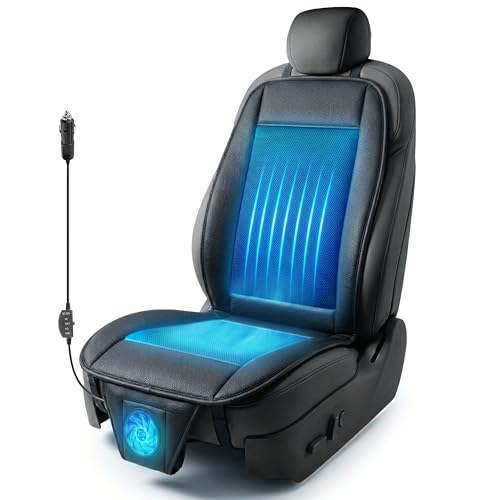
Best for: A driver or passenger seeking a cooler seat in hot weather, not a buyer trying to cool a car amplifier. The cushion circulates air through microfiber and mesh materials, and its control dial offers high, medium, and low settings according to the supplied features.
This product is included as a useful distinction because “car cooling pad” can refer to a seat accessory. It is designed to create airflow between a person and the seat upholstery. That function does not make it an amplifier cooling pad or a substitute for a fan installed near audio equipment.
Consideration: Avoid this product if your goal is reducing amplifier heat. Its stated use is passenger comfort, and the listing does not describe amplifier cooling, electronics mounting, or airflow directed at an amplifier.
Buying Guide: How To Choose A Car Amplifier Cooling Fan
Do you need a fan for the amplifier or for the cabin?
Start by identifying what needs cooling. An amplifier fan moves air around audio equipment. A cabin fan circulates air for people, while a cooling seat cushion targets the seat and passenger. These categories are not interchangeable. For amplifier cooling, prioritize products explicitly described for amplifiers, receivers, or electronics.
A fan aimed generally into the vehicle may not move air through the space around an amplifier. For useful equipment cooling, position airflow so it can reach the amplifier’s ventilation area without covering vents or trapping warm air in a closed compartment.
Which fan style suits a tight installation?
A cross-flow fan is worth considering when a slim form and airflow distributed along the fan’s length suit the available space. The Xscorpion models in this guide are described as cross-flow fans for amplifier cooling. Compare their dimensions with the intended mounting area before buying.
A square, dual-fan design such as the Wathai may be more appropriate for a flat indoor setup or an AV cabinet. Its USB power and adjustable speed are relevant advantages in that setting, but the listed 5V input means it should not be treated as a direct 12V automotive fan.
How much airflow should you look for?
Compare stated airflow when product information provides it. The Xscorpion two-pack listing specifies 42 cubic feet per minute. The single Xscorpion fan details provided here do not list a CFM figure, so airflow cannot be compared directly from the supplied specifications.
More airflow is not the only consideration. Physical fit, air direction, fan noise, power needs, and whether the installation leaves the amplifier’s vents clear all affect suitability. Avoid choosing based on a product name alone when its listed use is for passengers or general cabin circulation.
What power source and fit should you check?
Check the fan’s specified power input and the power source available at the installation point. The Wathai model is listed as USB powered, with a maximum input of 5V/1A. The Xscorpion two-pack is listed as 12V. The XOOL fan uses a cigarette-lighter plug but is designed for cabin use.
Before buying, measure the area where the fan will sit and review the product listing for dimensions and connection details. The provided details do not specify every model’s wiring or mounting method, so confirm those requirements rather than assuming a particular installation will work.
How can you compare product claims fairly?
- Amplifier-specific purpose: Favor listings that explicitly identify amplifier or receiver cooling.
- Power: Match the stated voltage or USB input to the intended setup.
- Airflow: Compare published airflow figures, while recognizing that not every listing provides one.
- Space: Check fan dimensions and leave the equipment’s ventilation openings clear.
- Noise and speed: Consider quiet-operation claims or speed controls when those features are stated.
- Product category: Do not mistake a seat cushion or cabin fan for a dedicated amplifier cooler.
Frequently Asked Questions
What is a car amplifier cooling pad?
In this context, it is a fan or cooling accessory used to move air around an amplifier. The term can also refer to car seat cooling products, so check the product’s stated purpose before purchasing.
Can a car seat cooling cushion cool an amplifier?
No. A seat cushion is designed to circulate air for passenger comfort. It is not listed as an amplifier-cooling product and should not replace a fan intended for electronics.
Is a USB cooling fan suitable for a car amplifier?
A USB fan may suit an indoor amplifier or receiver setup with an appropriate USB power source. The Wathai listing specifies 5V/1A maximum input, so do not assume it connects directly to a 12V vehicle supply.
Is a 12V cabin fan the same as an amplifier fan?
No. A 12V rating alone does not establish that a fan is designed to cool an amplifier. The XOOL fan is described for cabin airflow, while the Xscorpion fans are specifically listed for amplifier cooling.
Where should an amplifier cooling fan go?
Place it where airflow can reach the amplifier’s ventilation area, while keeping vents unobstructed. Check the product’s installation information and the amplifier’s layout before mounting a fan.