
The best choice depends on whether you need a true stereo signal path, acoustic tone shaping, or effects for live performance. Among these five options, the Limbo explicitly lists stereo reverb, while the SONICAKE pedals list XLR outputs and acoustic preamp functions. The BOSS AD-2 and Fishman AFX Pro EQ Mini are relevant preamp choices, but the supplied product details do not confirm stereo operation. Check the manufacturer’s specifications and your rig’s input and output needs before buying.
| Product | Best suited for | Listed function to note |
|---|---|---|
| SONICAKE Acoustic Guitar Effects Pedal | Players wanting an acoustic preamp and XLR output | Notch filter, mute, digital reverb |
| BOSS AD-2 Natural Acoustic Preamp | Players seeking a dedicated acoustic preamp pedal | Product details supplied do not list features |
| SONICAKE Sonic Wood Multi Effects Pedal | Players wanting preamp, EQ, and time-based effects | Chorus, delay, reverb, XLR output |
| Limbo Reverb Guitar Effects Pedal | Players prioritizing stereo reverb effects | Nine stereo reverb modes |
| Fishman AFX Pro EQ Mini | Players looking for a compact acoustic EQ/preamp | Product details supplied do not list features |
SONICAKE Acoustic Guitar Effects Pedal
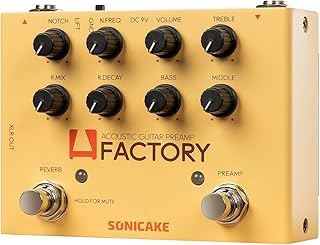
This SONICAKE pedal combines an analog preamp with digital reverb and includes a high-impedance input and balanced XLR output. Its listed controls and functions also include gain adjustment, a notch filter, and a mute function. The feature description says the notch filter’s frequency range is adjustable to help address feedback or shape the sound.
Best for: Acoustic players who want preamp and reverb functions in one pedal and need a balanced XLR output option. The XLR connection may be useful when routing a signal to equipment with a compatible input, but the supplied details do not describe the complete output configuration.
Why it stands out: The combination of gain adjustment, notch filtering, mute, and reverb offers several practical controls in an acoustic-focused unit. It is more feature-specific than a basic preamp listing.
Limitation: The listed features do not confirm stereo output or stereo reverb. Choose it for its stated preamp, reverb, and XLR functions, not on the assumption that it is a stereo preamp.
BOSS AD-2 Natural Acoustic Preamp

The BOSS AD-2 is identified as a natural acoustic preamp guitar pedal. That makes it relevant to players comparing acoustic-specific preamp pedals, especially when the priority is a dedicated preamp rather than a multi-effects unit. The product details provided here do not include its input and output layout, tone controls, effects, or stereo specifications.
Best for: Buyers who are considering a dedicated acoustic preamp and want to investigate the BOSS AD-2’s full specifications before choosing. Its product name identifies its acoustic-preamp purpose, but the supplied information alone is not enough to compare its detailed features with the other pedals.
Why it was selected: It directly matches the acoustic guitar preamp part of the search. It may be a more focused option to research than a reverb-only pedal when preamplification is the main requirement.
Limitation: No feature list was supplied, so stereo operation, output connections, and specific tone-shaping functions cannot be confirmed from the available information. Verify those details before using it in a stereo setup.
SONICAKE Sonic Wood Multi Effects Pedal

The SONICAKE Sonic Wood is described as an acoustic pedal with an analog preamp, a two-band EQ, chorus, delay, reverb, and an XLR output. Its feature list presents it as an all-in-one option for acoustic players who want several common effects alongside preamp and EQ functions. The manufacturer description characterizes the preamp and EQ as designed to recreate a classic acoustic guitar amplifier sound.
Best for: Acoustic guitarists who want to add chorus, delay, or reverb without assembling a separate pedal for each effect. The listed XLR output also makes this option worth considering for players who need that connection type in their signal chain.
Why it was selected: It covers more than basic preamplification. The analog preamp and two-band EQ address tone shaping, while the listed modulation and ambience effects suit players building a versatile live or practice setup.
Limitation: The supplied features do not state that the XLR output or effects operate in stereo. Do not treat the presence of multiple effects or an XLR connection as confirmation of a stereo signal path.
Limbo Stereo Reverb Effects Pedal

The Limbo is a reverb effects pedal, not a listed acoustic preamp. Its product name and description specify nine stereo reverb modes, along with shimmer and tide effects, freeze and infinity functions, ramp modulation, and analog dry through. It is included because stereo ambience may be part of an acoustic guitarist’s signal chain, even when a separate preamp is needed.
Best for: Players who already have a suitable preamp or instrument input solution and want stereo reverb options. The explicit stereo-mode description makes it the clearest match in this list for someone focused on stereo effects.
Why it was selected: It adds a defined stereo function that the preamp products’ supplied feature lists do not confirm. Its range of reverb modes may suit players seeking spacious effects rather than only basic acoustic tone conditioning.
Limitation: The listed features do not identify it as an acoustic preamp. Choose it to add reverb, not as a substitute for a preamp or as proof that the entire signal chain will be stereo.
Fishman AFX Pro EQ Mini Acoustic Preamp

The Fishman AFX Pro EQ Mini is identified as an acoustic preamp and EQ. Its name makes it relevant to players looking for a compact acoustic-focused unit with equalization, although the supplied product information does not describe the EQ bands, input and output connections, or whether it supports stereo.
Best for: Acoustic players researching a smaller-format preamp and EQ rather than a pedal whose listed purpose centers on reverb or multiple effects. The EQ designation is useful to note when comparing tone-shaping needs.
Why it was selected: It directly matches the acoustic preamp category and includes EQ in its product name. That makes it a relevant candidate for buyers who want to compare a preamp/EQ format with the feature-rich SONICAKE options.
Limitation: The product details provided do not confirm specific controls, output types, or stereo capability. Check the full specifications if balanced outputs or a dual-channel path are essential to your setup.
Buying Guide: How To Choose An Acoustic Guitar Stereo Preamp
An acoustic guitar stereo preamp can refer to more than one kind of device. Some products provide preamplification and tone controls, while others add stereo effects or route a signal to different outputs. Confirm what the unit actually does before choosing it. In this selection, the two SONICAKE products list acoustic preamp functions, the BOSS and Fishman products are identified as acoustic preamp models, and the Limbo is described as a stereo reverb pedal.
Do you need a true stereo preamp or stereo effects?
Start by defining what “stereo” means for your setup. A stereo effects pedal processes or outputs a stereo effect, while a preamp may simply condition or shape an instrument signal. A product that has an XLR output is not automatically a stereo device; XLR describes a connector format, not whether the signal path has left and right channels.
If your main goal is stereo ambience, the Limbo’s listed nine stereo reverb modes are relevant. If your main goal is acoustic preamplification, compare the acoustic preamp products and verify their input and output specifications. A complete stereo rig may require more than one piece of equipment.
Which connections should you check?
Match the pedal’s connections to the instruments and equipment you already use. The SONICAKE Acoustic Guitar Effects Pedal and Sonic Wood list XLR outputs, and both list acoustic preamp functions. The other listings do not provide enough connection detail to make a direct output comparison. Check whether your intended destination accepts the pedal’s output and whether you need one or two channels.
- Look for the stated input type and confirm it suits your instrument setup.
- Check whether the pedal provides the outputs your amplifier, mixer, or recording equipment requires.
- For stereo, confirm that both the effect and the output routing support left and right channels.
- Do not infer stereo operation from the presence of an XLR output or multiple effects.
Should you choose a dedicated preamp or a multi-effects pedal?
A dedicated preamp may suit players who want to focus on acoustic signal shaping. The BOSS AD-2 and Fishman AFX Pro EQ Mini are identified as acoustic preamps, but the details supplied here are limited, so check their complete feature lists before comparing them. The Fishman’s name also identifies it as an EQ product.
A multi-effects unit may reduce the need for separate pedals if you want several functions in one device. The Sonic Wood lists an analog preamp, two-band EQ, chorus, delay, and reverb. That range may be useful when those are the effects you need, but verify the stereo details independently.
How important are feedback controls and tone shaping?
For amplified acoustic instruments, the SONICAKE Acoustic Guitar Effects Pedal lists a notch filter with adjustable frequency range, gain adjustment, and mute. Those stated functions make it a candidate for players who want dedicated feedback-related adjustment and a way to mute. The Sonic Wood lists a two-band EQ, which may appeal to players seeking basic tone shaping as part of an effects pedal.
Compare the controls with the adjustments you actually need. A pedal’s title alone does not establish how much control it offers. When the feature list does not specify bands, ranges, or connection details, consult the manufacturer’s full product documentation.
What should you prioritize for live performance?
For live use, consider signal routing, quick access to controls, and whether you need effects or a mute function. The SONICAKE acoustic preamp lists a mute, gain adjustment, and balanced XLR output. The Sonic Wood combines preamp and EQ functions with chorus, delay, and reverb. The Limbo’s freeze and infinity functions are listed as part of its reverb feature set, but it should be viewed as an effects pedal rather than an acoustic preamp.
Choose based on the job each unit performs. A clear signal path is easier to plan than relying on a product label: preamp for signal conditioning, EQ for tone adjustment, and reverb or other effects for ambience and texture.
How can you verify stereo compatibility before buying?
Read the full specifications for the input and every output, and look for explicit references to stereo input, stereo output, or stereo signal routing. Confirm whether stereo is available on the effect you plan to use and whether your amplifier, mixer, or recording interface can receive both channels. The product data available for this comparison confirms stereo reverb modes for the Limbo, but it does not confirm stereo preamp operation for any of the five options.
Frequently Asked Questions
What does an acoustic guitar preamp do?
An acoustic guitar preamp conditions and shapes an instrument’s signal before it reaches other equipment. Specific functions vary by model. In this selection, listed functions include EQ, gain adjustment, and—in some pedals—effects such as reverb, chorus, and delay.
Does an XLR output mean a preamp is stereo?
No. XLR identifies a connection type and does not by itself confirm stereo operation. Check the product’s specifications for explicit stereo input and output details.
Which listed product explicitly includes stereo reverb?
The Limbo pedal lists nine stereo reverb modes. Its supplied product details describe it as a reverb pedal, not an acoustic preamp.
Which listed option includes an acoustic preamp and XLR output?
Both the SONICAKE Acoustic Guitar Effects Pedal and the SONICAKE Sonic Wood list acoustic preamp functions and an XLR output. Their supplied details do not confirm stereo output.
Can a stereo reverb pedal replace an acoustic preamp?
Not based on the supplied details for the Limbo. It is listed as a reverb effects pedal, so buyers who need preamplification should select a separate product that explicitly provides that function.
What should I verify before using a pedal in a stereo rig?
Verify the pedal’s input and output routing, whether the desired effect is stereo, and whether the rest of your signal chain accepts left and right channels. A stereo pedal cannot create a complete stereo setup if the connected equipment or routing is mono.