
The best outdoor small cell antenna depends on the device connector, coverage area, and whether you need all-direction reception or a focused signal. The BINGFU antenna is best for compatible trail cameras and devices needing a 10-foot cable; the dual-SMA eifagur model suits cellular routers with two antenna ports; and the ALHXGUSLO Yagi is better for aiming toward a known signal source. Compare connector and mounting needs before choosing.
| Product | Best for | Key detail |
|---|---|---|
| BINGFU SMA 4G LTE | Trail cameras and compact installations | 5 dBi, omnidirectional, 10-foot cable |
| eifagur Dual SMA | Routers with two SMA ports | Omnidirectional, dual 5-meter cables |
| SIGNALPLUS 5G/4G LTE | External-port routers and boosters | 698–3800 MHz range listed in product name |
| ALHXGUSLO Yagi | Directional signal targeting | 700–2700 MHz, directional design |
| eifagur Trail Camera Pack | Selected cellular trail cameras | Omnidirectional, IP67 listed in features |
BINGFU SMA 4G LTE Antenna
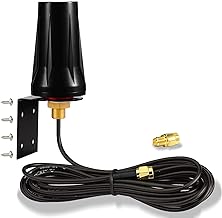
Best for: Buyers replacing an antenna on a compatible cellular trail camera, router, or other device that accepts an SMA or RP-SMA connection. It is selected for its stated frequency coverage, omnidirectional pattern, and 10-foot cable.
The listed frequency ranges are 698–960 MHz, 1710–2170 MHz, and 2300–2700 MHz. BINGFU specifies 5 dBi gain and rain-proof construction. The antenna includes an SMA male connector and an RP-SMA male adapter, according to the product details. Its mounting options are fixed wall mount and through-hole mount.
The product details name several Tactacam Reveal models and the Defend Cellular Security Camera as compatible devices. Check the camera’s connector and the exact model before ordering; a connector adapter does not guarantee compatibility with every device. The listing describes the antenna as rain-proof, but does not provide an IP rating.
eifagur Dual SMA Omnidirectional Antenna

Best for: Cellular router or modem users whose equipment has two SMA antenna ports and who want a setup that does not require aiming. It is selected for the dual connectors, wide listed frequency range, and two included cable runs.
The stated frequency range is 698–2700 MHz, with a listed gain of 10–12 dBi. The antenna is omnidirectional, and the product details specify two 5-meter RG174 cables with dual SMA male connectors. The seller describes it as suitable for 4G LTE, GSM, and CDMA cellular hotspots, routers, and modems.
Because the antenna uses two SMA male connectors, verify the device’s port type and whether it requires two external antennas before buying. The long cable runs can help with placement, but the listing does not provide a cable-loss figure or an IP weather-resistance rating. Choose this if connector count and cable length match your installation.
SIGNALPLUS 5G And 4G LTE Antenna

Best for: Buyers seeking a broad-band antenna for a router, modem, gateway, or signal booster with an external antenna port. It is included because the product name lists coverage from 698 to 3800 MHz and references both TS9 and SMA options.
The product details state that it is omnidirectional and intended for rural or urban use. They also describe it as applicable to North American carriers and compatible with brands of routers, modems, signal boosters, and gateways that have an external antenna port.
The supplied information does not specify cable length, gain, weather-resistance rating, or exactly which connector configuration is included. Confirm the connector and included parts on the current listing, then compare them with the device manual. Do not assume that the broad frequency range alone guarantees compatibility or improved reception on a particular network.
ALHXGUSLO Wideband Yagi Antenna

Best for: Installations where the signal source is in a known direction and the user can aim the antenna accordingly. It is selected as the directional alternative to the omnidirectional models in this comparison.
The listed frequency range is 700–2700 MHz. The seller describes the antenna as a fixed-mount Yagi for 3G, 4G, LTE, and Wi-Fi applications, and states gain figures of up to 10.6 dB and 11 dBi in the product details. It is described as compatible with cellular boosters and hotspots across multiple carrier technologies.
A directional antenna must be oriented toward the signal source, so it is less convenient when the source direction is unknown or changes. The product details do not include cable length or connector type. Confirm both before buying, especially when connecting it to a booster or modem. The listing includes performance claims, but actual reception depends on the device, network, placement, and local signal conditions.
eifagur Outdoor Trail Camera Antenna Pack

Best for: Owners of the listed Spypoint Link Micro, LINK-EVO, LINK-S, LINK-S Solar, LINK-DARK, or LINK-W cellular trail cameras who need replacement antennas. The product is offered as a two-pack and is selected for its stated camera focus and outdoor rating.
The feature list specifies frequency ranges of 698–960 MHz, 1710–2170 MHz, and 2300–2700 MHz, with 5 dBi gain and an omnidirectional pattern. It also lists IP67 waterproofing, 50-ohm impedance, VSWR below 1.8, and a 3-meter RG174 cable. The product name refers to additional camera families, but the detailed compatibility list names the Spypoint models above.
There is a specification inconsistency: the product name says 9 dBi, while its feature list says 5 dBi. Treat 5 dBi as the stated technical feature and verify the current listing if gain is a deciding factor. Confirm connector fit for your exact camera model before purchase.
Buying Guide: How To Choose An Outdoor Small Cell Antenna
Does the antenna fit the device connector?
Start with the device manual or the label beside its antenna port. SMA and RP-SMA connectors can look similar but differ in pin and socket arrangement. TS9 is a different connector style. Check both the connector type and the number of ports: some routers use two antenna connections, while a camera may use one. A listed adapter may help with a connector mismatch, but it does not establish compatibility with every device.
Should you choose an omnidirectional or directional antenna?
An omnidirectional antenna receives signals from multiple directions, so it is often simpler to position when the source direction is unknown. The BINGFU, eifagur dual-SMA, SIGNALPLUS, and eifagur camera models are described as omnidirectional. A directional Yagi focuses reception toward one direction. It can be a better option when you know where the signal source is and can aim the antenna, but it requires more careful placement.
Which frequency range matters?
Compare the antenna’s stated frequency range with the cellular bands supported by your carrier and device. A broad range may cover more frequencies, but it does not guarantee that a specific network band is supported or that reception will improve. The products here list different ranges: some stop at 2700 MHz, while the SIGNALPLUS product name extends to 3800 MHz. Check the complete product specifications and your device documentation.
How should you interpret antenna gain?
Gain is one factor in antenna selection, but it is not a standalone guarantee of better service. Compare gain figures only after checking antenna type, frequency coverage, connector, and placement needs. Directional and omnidirectional designs behave differently. Also look for inconsistencies in a listing: the eifagur camera product name states 9 dBi, while its feature list specifies 5 dBi. Confirm the current technical details when a number is important to your decision.
What outdoor installation details should you check?
Review the mounting method, cable length, cable type, and weather-protection information. A longer cable can make placement easier, but the supplied listings do not provide comparable cable-loss figures. The BINGFU antenna is described as rain-proof, while the eifagur camera antenna lists IP67. Do not assume that a product with no stated rating has a particular level of water resistance. Follow the manufacturer’s mounting instructions and protect connections as appropriate for the installation.
How do trail camera antennas differ from router antennas?
Trail camera antennas are often selected around a specific camera model and its connector. Router antennas may need dual leads, a longer cable, or compatibility with an external antenna port. Match the antenna to the exact device rather than relying only on general terms such as “4G LTE” or “outdoor.” If the product lists camera models, compare them with your model number and connector before ordering.
Frequently Asked Questions
What is an outdoor small cell antenna used for?
It connects to compatible cellular equipment, such as a router, modem, booster, or trail camera, to receive cellular signals from an outdoor position. The right antenna depends on the equipment, connector, frequency range, and installation location.
Is an omnidirectional antenna easier to install than a Yagi?
Generally, an omnidirectional antenna does not need to be aimed at one known source direction. A Yagi is directional and needs careful orientation, making it more appropriate when the signal source direction is known.
Can I use any SMA antenna with my cellular device?
No. Check whether the device needs SMA or RP-SMA, confirm the connector gender, and verify the supported frequency bands. Also check whether the device uses one antenna port or two.
Does a higher listed gain guarantee faster internet?
No. Antenna gain alone does not guarantee faster data or stronger service. Results depend on factors including the supported bands, antenna direction, placement, cable, device, and available network signal.
Can these antennas work with every carrier?
No universal carrier compatibility should be assumed. Compare the antenna’s frequency range with the bands used by your carrier and supported by your device. Carrier names in a product listing do not replace those checks.