
The best direct-drive turntable depends on whether you want home listening, DJ-style controls, or a way to digitize records. The Audio-Technica AT-LP120XUSB-BK is a strong fit for buyers seeking manual playback and pitch controls, while the Pioneer DJ PLX-500 suits shoppers who want a DJ-style layout and USB recording. The Gemini TT-5000 adds a built-in preamp and computer recording. Note that the products listed are primarily vinyl turntables; only some product descriptions mention CD playback, and not every listed model is confirmed to have a direct-drive motor.
| Product | Best suited for | Key distinction |
|---|---|---|
| Audio-Technica AT-LP120XUSB-BK | Manual vinyl listening and pitch control | Three speeds, USB, anti-skate |
| Pioneer DJ PLX-500 | DJ-style use and vinyl digitizing | USB and phono/line output |
| Gemini TT-5000 | Home listeners who want recording and a preamp | Three speeds, USB, built-in preamp |
| SoundBeast All-in-One | People seeking several playback formats | CD, cassette, radio, Bluetooth listed |
| DIGITNOW Bluetooth Record Player | Multi-format playback and conversion | CD, cassette, USB/SD encoding listed |
Audio-Technica AT-LP120XUSB-BK

Best for: Vinyl listeners who want a fully manual turntable with playback adjustments and a USB connection for conversion. The listed features include a direct-drive DC servo motor, three selectable speeds, adjustable dynamic anti-skate, variable pitch control, and quartz speed lock.
The balanced S-shaped tonearm has a hydraulically damped lift control and a lockable rest. These details make the model a useful choice for buyers who want hands-on control rather than automatic operation. Its 33, 45, and 78 RPM selections also cover the three record speeds stated in the product description.
Why it stands out: It combines direct drive, USB connectivity, manual controls, and a three-speed selection in one turntable. Limitation: It is fully manual, so buyers seeking automatic record operation should compare other models. The supplied product information does not specify whether a computer recording application is included.
Pioneer DJ PLX-500 Direct Drive Turntable
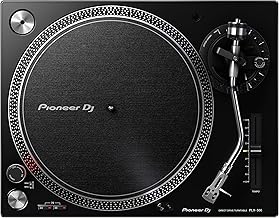
Best for: Buyers who prefer a DJ-style layout and want the option to play and digitize vinyl. The product name and description identify direct drive, USB recording, and phono/line output. It also lists a dust-cover sleeve stand.
USB recording is relevant for people who want to transfer records to a digital collection. Phono/line output offers a choice of connection type, though the supplied listing does not detail all setup requirements. Its DJ-style design may appeal to users who prioritize a familiar control layout over a fully automated listening experience.
Why it stands out: It directly pairs direct-drive playback with USB recording and phono/line outputs. Limitation: The provided product details do not state the selectable RPM speeds or explain whether recording software is included. Confirm the complete setup requirements before buying if digitizing is the main goal.
Gemini TT-5000 Direct-Drive Turntable

Best for: Home vinyl enthusiasts who want a built-in phono preamp and a straightforward route to computer recording. The product listing specifies a direct-drive motor, three speeds, anti-skate, and a 523-gram die-cast aluminum platter.
The stated speed options are 33, 45, and 78 RPM. Gemini lists wow and flutter under 0.25% WRMS and a ±10% pitch slider with a strobe indicator. For digitizing, the turntable connects to a Mac or PC by USB; the listing says recording can reach 48 kHz/16-bit and names Audacity software.
Why it stands out: Its combination of a built-in preamp, USB recording, and pitch adjustment suits buyers who want playback and archiving features together. Limitation: The listed digital recording specification is up to 48 kHz/16-bit, so buyers with different recording requirements should check whether that meets their needs.
SoundBeast All-in-One Turntable

Best for: Shoppers who want several audio formats and built-in playback options in one unit. Its product name lists a three-speed record player, Bluetooth, CD, cassette, AM/FM radio, USB, and built-in speakers, along with a handmade wooden exterior.
This is a format-flexibility option rather than a confirmed direct-drive recommendation. The supplied information does not identify its turntable drive mechanism, so buyers specifically searching for a direct-drive motor should verify that detail with the seller before choosing it. Its range of listed sources may suit a household that plays more than vinyl.
Why it stands out: It is the only listed product described with both CD and cassette playback alongside records and radio. Limitation: The available features do not confirm direct drive or provide details about USB recording, outputs, or the exact record speeds.
DIGITNOW Bluetooth Record Player

Best for: Buyers looking for an all-in-one system with multiple playback and conversion features. The product description lists a stereo speaker, Bluetooth, CD and cassette functions, radio, auxiliary input, USB/SD encoding, remote control, and a built-in amplifier.
Its USB and SD encoding features may interest people who want to convert audio without assembling a separate chain of components. The product name also identifies vinyl-to-MP3 conversion. However, the supplied details do not identify a direct-drive mechanism or specify the record speeds, so this model is better treated as a multi-format alternative than a confirmed direct-drive turntable.
Why it stands out: It lists a broad set of sources and built-in audio features in a single system. Limitation: Direct drive is not stated in the provided information. Verify the drive type and recording workflow if either is essential to your purchase.
Buying Guide: How to Choose a Direct-Drive Turntable
Do you specifically need direct drive?
A direct-drive turntable uses a motor coupled to the platter. For this selection, the Audio-Technica, Pioneer DJ, and Gemini listings explicitly identify direct drive. The SoundBeast and DIGITNOW descriptions do not. If direct drive is a must-have, focus first on models whose listing clearly confirms the mechanism instead of assuming all record players use it.
Direct-drive status alone does not tell you whether a turntable has USB, a preamp, pitch controls, or automatic operation. Compare those features separately. A model can meet the drive-type requirement yet still need additional equipment or a particular setup for your listening and recording plans.
Which record speeds should you check?
Match the turntable’s supported speeds to the records you plan to play. The Audio-Technica and Gemini listings explicitly state 33, 45, and 78 RPM. The Pioneer listing supplied here does not state its speed options, and the two all-in-one product descriptions provide incomplete speed details. Check the full manufacturer or seller listing if speed coverage matters.
Three-speed support can be useful for collections that include records in multiple formats, but it should not be treated as proof that every record type is supported. Confirm the speed and any required accessories or setup instructions for the particular records you own.
Do you want to digitize your records?
USB recording can simplify the connection between a turntable and a computer, but the recording process depends on the model and software. Gemini specifically lists USB computer connection, Audacity, and recording up to 48 kHz/16-bit. Audio-Technica lists USB conversion, while Pioneer lists USB recording. The supplied details do not give equally specific software information for every model.
For a conversion-focused purchase, check whether the computer, cables, and software you plan to use are supported and whether the turntable sends the signal at the format you need. The DIGITNOW description lists USB/SD encoding and vinyl-to-MP3 conversion, but does not confirm a direct-drive motor.
Do you need a built-in phono preamp?
A phono preamp prepares a turntable’s signal for equipment that accepts a line-level audio input. Gemini lists a built-in phono preamp, and Pioneer lists phono/line output. The supplied Audio-Technica features do not specify a built-in preamp, so check its complete product details and your existing audio system before choosing cables or accessories.
Consider your destination equipment as well as the turntable. A receiver or powered speaker may have a phono input, a line input, or both. Match the turntable output to the available input to avoid buying a model that requires an unplanned component.
How important are manual controls and pitch adjustment?
Manual operation gives the listener direct control over starting and stopping playback, but it is less convenient for shoppers who want automatic operation. The Audio-Technica is explicitly fully manual. It also lists adjustable anti-skate, variable pitch control, and quartz speed lock. Gemini lists a ±10% pitch slider with a strobe indicator.
These controls matter most to buyers who want to adjust playback speed or prefer hands-on operation. If you mainly want simple everyday listening, prioritize the controls you will use and avoid paying attention to feature names without checking how they fit your routine.
Is an all-in-one system the right choice?
An all-in-one record player can consolidate sources such as vinyl, CD, cassette, radio, and Bluetooth. SoundBeast lists those functions along with built-in speakers, while DIGITNOW lists CD, cassette, radio, Bluetooth, a built-in amplifier, and USB/SD encoding. These descriptions make them relevant to multi-format buyers, but neither supplied listing confirms direct drive.
Choose an all-in-one model if having multiple sources together is more important than confirming a particular turntable mechanism. Choose a clearly identified direct-drive model if the motor type, pitch controls, or DJ-style layout is central to your decision. Check the full specifications before treating an all-in-one unit as a substitute.
What should you verify before ordering?
- Confirm that the product explicitly states direct drive if that is a requirement.
- Check supported RPM speeds against the records you intend to play.
- Compare USB recording details, including software and stated digital format.
- Check whether the system has a built-in preamp or a phono/line output option.
- Decide whether manual operation and pitch controls fit your needs.
- For all-in-one models, verify the drive type and the listed formats in the full product information.
Frequently Asked Questions
What is the best direct-drive turntable in this selection?
The Audio-Technica AT-LP120XUSB-BK is a strong choice for manual vinyl playback with three speeds, USB, anti-skate, and pitch controls. Gemini TT-5000 is a better fit if a built-in phono preamp and specified computer-recording details are priorities.
Which listed models explicitly confirm direct drive?
The Audio-Technica AT-LP120XUSB-BK, Pioneer DJ PLX-500, and Gemini TT-5000 listings identify direct drive. The supplied SoundBeast and DIGITNOW descriptions do not state the drive type.
Which turntables list three playback speeds?
Audio-Technica and Gemini explicitly list 33, 45, and 78 RPM. The other supplied descriptions do not provide the same complete speed information.
Which option includes a built-in phono preamp?
The Gemini TT-5000 product description explicitly lists a built-in phono preamp. Pioneer lists phono/line output, which is a separate specification to compare when planning connections.
Can these turntables play CDs?
The Audio-Technica, Pioneer DJ, and Gemini descriptions focus on vinyl playback and do not list CD playback. SoundBeast and DIGITNOW list CD functions, but their supplied descriptions do not confirm direct drive.
Which model is specified for computer-based vinyl recording?
Gemini lists USB connection to a Mac or PC, Audacity software, and recording up to 48 kHz/16-bit. Audio-Technica and Pioneer also list USB conversion or recording, but the provided information includes fewer workflow details.