
The most direct way to connect an acoustic guitar to an amp is to use a guitar with a built-in output and a 1/4-inch instrument cable, or add a compatible pickup to an acoustic guitar without an output jack. The Flatsons Crush20 is best suited to acoustic players seeking an amp with acoustic-guitar and microphone inputs. The KQ-3 pickup and JSAUX cable are useful for guitars that need a signal connection. The other two products are designed primarily for electric guitar or bass, so check their limitations before choosing.
| Product | Best suited for | Key consideration |
|---|---|---|
| Flatsons Crush20 | Acoustic players seeking an amp with dual inputs | Rechargeable 20W amp |
| KQ-3 Clip-On Pickup | Steel-string acoustic guitars without an output | Not for classical guitars |
| JSAUX 10 ft Guitar Cable | Connecting an instrument output to an amp input | Requires a pickup or built-in output |
| LEKATO JA-05G Mini Amp | Portable practice with an instrument signal | Electric-guitar-focused amp |
| LEKATO Headphone Amp | Private electric-guitar or bass practice | Not a standalone acoustic-guitar pickup |
Flatsons Crush20 Acoustic Guitar Amp

Best for: Acoustic players who want an amp designed around acoustic guitar and vocal inputs. The listed features include 20W output, rechargeable operation, a 6.35 mm microphone input, an acoustic-guitar input, reverb, and a two-band EQ.
Its two inputs are useful when a player wants to connect an amplified acoustic guitar and a microphone to the same amp. The listed battery life is up to eight hours, which makes it a portable option for practice or situations where mains power may not be convenient. The product description also identifies wireless capability, but the information provided does not specify its range or supported devices.
Why it was selected: It is the most directly acoustic-oriented amp in this selection and provides the guitar input needed for a pickup-equipped instrument. Limitation: A guitar without a built-in pickup or separate pickup still needs a way to send its signal to the amp. Check the product details for the exact input and wireless setup you need.
KQ-3 Clip-On Acoustic Guitar Pickup

Best for: Players with a compatible steel-string acoustic guitar that has no built-in pickup or output jack. This clip-on soundhole pickup is designed to send the guitar’s signal to an amplifier, and its listed cable length is 10 feet.
Choose this if your guitar is within the stated 38–42-inch size range and you want a pickup that attaches rather than a permanently installed system. It can provide the instrument signal required for a standard amp connection. Verify the guitar’s string type and size against the listing before buying, because the product is specifically described for steel-string acoustic guitars.
Why it was selected: A pickup solves the core connection problem for an acoustic guitar that cannot otherwise plug into an amp. Limitation: The listing says it is not for classical guitars. It also does not establish that it will fit every steel-string acoustic guitar, so confirm the stated size range.
JSAUX 10-Foot Right-Angle Guitar Cable

Best for: Connecting a pickup-equipped acoustic guitar to an amp with a compatible 1/4-inch input. The listed cable is 10 feet long and has a right-angle plug at one end and a straight plug at the other. It is described as an instrument cable for electric guitar, mandolin, and bass.
This cable is a practical connection choice when the guitar already has a pickup and output jack, or when a separate pickup provides a compatible instrument output. The different plug shapes can help accommodate different instrument and amp jack positions. The cable itself does not amplify the guitar or create a pickup signal.
Why it was selected: A compatible instrument cable is a basic part of a wired guitar-to-amp setup. Limitation: It will not make an unplugged acoustic guitar electrically connect to an amp on its own. The guitar needs a pickup or other compatible signal source, and the amp must have an appropriate input.
LEKATO JA-05G Mini Electric Guitar Amp

Best for: A player seeking a compact practice amp for an instrument that provides a suitable electric-guitar signal. Listed features include 5W output, Bluetooth, rechargeable operation, and four built-in effects: clean, distortion, overdrive, and reverb.
It may be considered for an acoustic guitar only when the guitar has a compatible pickup and the amp’s input connection suits that signal. The effects provide options for shaping the sound, while its portable design is aimed at practice use. The listing identifies it as a mini electric guitar amp, not an acoustic-specific amplifier.
Why it was selected: It offers a compact amp option for buyers who already have a pickup-equipped instrument and are comparing portable practice gear. Limitation: It is less directly suited to acoustic amplification than an amp specifically described for acoustic guitar. Avoid choosing it solely because the guitar is acoustic; confirm the input and desired sound first.
LEKATO Guitar Headphone Amp
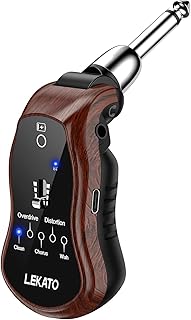
Best for: Private practice with an electric guitar or bass when headphone monitoring is the priority. The product is described as a rechargeable headphone amplifier with five effects: clean, chorus, overdrive, distortion, and wah.
This is not the same kind of product as a room-filling acoustic guitar amp. It may be relevant to an acoustic player only if the instrument has a compatible pickup and the headphone amp accepts its output. Its intended electric guitar and bass use makes checking the connection particularly important before using it in an acoustic setup.
Why it was selected: Some buyers searching for a guitar-to-amp connection are actually looking for a portable practice solution. This product addresses headphone practice and offers several effects. Limitation: It is not listed as an acoustic guitar speaker amp, and the provided information does not establish that it includes a speaker for playing aloud.
Buying Guide: How To Connect An Acoustic Guitar To An Amp
The right setup depends on whether the guitar already has a pickup. An acoustic guitar produces sound naturally through its body, but an amplifier needs an electrical signal. A cable only carries a signal; it does not capture the sound of an acoustic guitar by itself. Start by checking the guitar’s sides or end block for an output jack, and look for onboard controls that indicate an installed pickup system.
Does the guitar have a built-in pickup?
If it has an output jack, use a compatible 1/4-inch instrument cable from the guitar to the amp’s instrument input. Confirm that both ends fit the equipment. If the guitar has no output, choose a suitable pickup first. A clip-on or soundhole pickup may avoid permanent installation, but fit and guitar type vary. The KQ-3 listing, for example, specifies steel strings and a 38–42-inch guitar range, and excludes classical guitars.
Should you choose an acoustic amp or an electric guitar amp?
An acoustic-specific amp is the more direct choice when the goal is to amplify an acoustic instrument. The Flatsons Crush20 is described as an acoustic guitar amp and includes an acoustic input, microphone input, reverb, and two-band EQ. An electric guitar amp can accept a pickup signal in some setups, but its product description and controls may be intended for electric guitar tones. Check the amp’s input and intended use rather than assuming every guitar amp will suit every acoustic pickup.
What cable do you need?
For a typical wired setup, use an instrument cable with plugs that match the guitar output and amp input. A 1/4-inch TS instrument cable is a common format for guitar connections; the JSAUX cable is listed with 1/4-inch TS tips. Its 10-foot length may suit a short practice setup, but select a cable length that fits the space without creating excess slack. Do not confuse an instrument cable with a speaker cable, which serves a different connection purpose.
What if you want to play quietly?
A headphone amplifier and a speaker amp serve different purposes. A headphone amp is intended for private listening through headphones, while a speaker amp plays sound into a room. The LEKATO headphone amp is listed for electric guitar and bass practice, so verify compatibility with an acoustic pickup before purchase. If you want to perform for other people, choose an amp with a speaker and the correct guitar input instead.
Which features matter for practice or performance?
- Inputs: Check for a guitar input and, if needed, a separate microphone input.
- Portability: A rechargeable amp can be useful away from a convenient power outlet. Check the listed battery information and charging details.
- Tone controls: EQ and reverb can help shape the amplified sound, but the available controls differ by model.
- Effects: Effects may be useful for experimentation, although they are not necessary for a basic acoustic connection.
- Pickup fit: Confirm guitar size, string type, pickup attachment method, and output connection.
For a simple setup, the signal path is: acoustic guitar pickup or built-in pickup, instrument cable, then amp input. Keep the amp volume low when first connecting or powering on, then raise it gradually. If there is no signal, check that the pickup is attached and powered if required, the cable is fully inserted, and the amp is set to the correct input. Product-specific controls and setup instructions should be checked in the manufacturer’s listing or documentation.
Frequently Asked Questions
Can I plug a regular acoustic guitar directly into an amp?
Only if it has a built-in pickup and a compatible output jack. A standard acoustic guitar without an electrical pickup needs a pickup or another suitable sound-capture system before it can send a signal through an instrument cable.
Can I use any guitar cable for an acoustic guitar?
Use a cable that matches the guitar’s output and the amp’s input. A 1/4-inch instrument cable such as the listed JSAUX model is suitable only when both devices accept the corresponding connection. The cable does not replace a pickup.
Can I connect a classical guitar to the KQ-3 pickup?
The product listing says the KQ-3 is not for classical guitars. Choose a pickup that specifically supports the guitar’s construction and strings instead.
Is an acoustic guitar amp necessary?
It is not the only possible option, but an acoustic-specific amp is the clearest match when acoustic amplification is the goal. Other amps may work with some pickup signals, but verify their inputs and intended use before buying.
Can I use a headphone amp to play an acoustic guitar aloud?
A headphone amp is designed for headphone practice rather than room amplification. The listed LEKATO model is for electric guitar and bass, and the provided details do not identify it as a speaker amp for acoustic guitar.
What is the simplest acoustic guitar-to-amp setup?
Use an acoustic guitar with a built-in pickup, a compatible 1/4-inch instrument cable, and an amp with a matching guitar input. If the guitar lacks a pickup, add a compatible pickup before connecting it to the amp.