
The best center speaker for music depends on your room, receiver, and whether you listen in stereo or use an AV receiver’s multichannel mode. The Klipsch R-52C suits buyers who want a horn-loaded tweeter and dual 5.25-inch woofers; the Dayton Audio C40 emphasizes off-axis clarity; and the Polk Monitor XT35 fits spaces where a low-profile cabinet matters. These are passive speakers, so they need a compatible amplifier or receiver.
| Speaker | Best For | Standout Feature |
|---|---|---|
| Klipsch R-52C | Detailed, forward presentation | Horn-loaded tweeter and dual 5.25-inch woofers |
| Dayton Audio Classic C40 | Wide seating coverage | 2.5-way crossover and sealed cabinet |
| Polk Monitor XT35 | Low-clearance placements | Slim cabinet and wall-mountable design |
| Polk Monitor XT30 | Compact, balanced system building | Dual 5.25-inch woofers |
| NEUMITECH NEUMI CS5 | Budget-focused music and movie setups | Dual 5-inch fiberglass woofers |
Klipsch R-52C Center Speaker
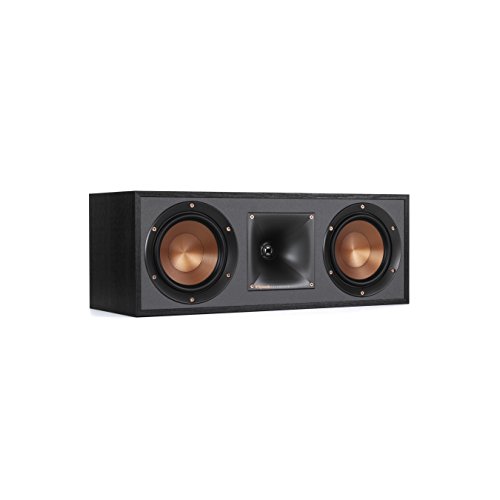
The Klipsch R-52C combines two 5.25-inch spun-copper IMG woofers with a one-inch aluminum LTS tweeter mounted to a 90-by-90-degree Tractrix horn. Its listed frequency response is 89Hz to 21kHz, plus or minus 3dB. That published range gives buyers a useful point of comparison when matching speakers and planning bass management.
Best for: Listeners seeking a center speaker with a horn-loaded high-frequency driver and larger dual woofers. It was selected for its clearly stated driver configuration and response range, which make its design easier to compare with the other options.
Consider: Its listed response begins at 89Hz, so buyers who want strong low bass should plan around the rest of the system rather than expect this center speaker to cover the deepest bass on its own. Check cabinet clearance before placing it on a media console.
Dayton Audio Classic C40

The Dayton Audio Classic C40 is a passive 2.5-way center speaker with dual four-inch poly woofers and a one-inch silk-dome tweeter. Its specialized crossover manages the woofers independently to support wider off-axis dialogue coverage. Dayton also specifies a sealed acoustic-suspension cabinet, designed for controlled low-end response and reduced bass distortion.
Best for: Households where listeners sit across a wider area and want a compact speaker designed to maintain clarity away from the center seat. Its 2.5-way crossover and sealed cabinet distinguish it from simpler dual-woofer designs.
Consider: The provided product details do not include a frequency-response range or maximum power rating. Compare those specifications with your other speakers if exact tonal or output matching is important. As a passive speaker, it also requires an amplifier or receiver.
Polk Monitor XT35 Slim Center

The Polk Monitor XT35 uses a one-inch Terylene tweeter and four three-inch dynamically balanced woofers in a slim, low-profile cabinet. Polk describes it as wall-mountable and says the design is intended to avoid blocking a television. The product information lists 4- and 8-ohm compatibility and references playback from sources including streaming music services.
Best for: Buyers who need a shallow-looking center speaker beneath a television or prefer a wall-mountable option. Its four small woofers and slim form set it apart from the larger-cabinet, dual-woofer models.
Consider: The low-profile design may be a placement advantage, but buyers should still confirm that the cabinet dimensions and mounting arrangement work in their room. The supplied details do not state a frequency-response range, so compare specifications before seeking a precise match with existing speakers.
Polk Monitor XT30 Compact Center
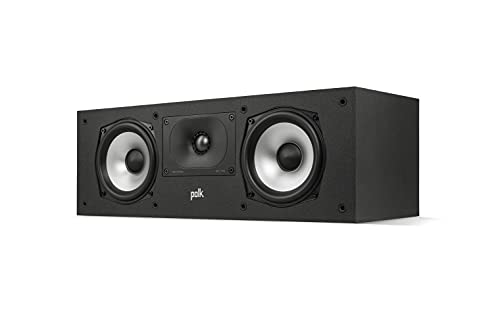
The Polk Monitor XT30 has a one-inch Terylene tweeter and two 5.25-inch dynamically balanced woofers. Polk describes it as a compact center speaker intended to provide clear dialogue and a smooth midrange. The product listing specifies 4- and 8-ohm compatibility and identifies Dolby Atmos and DTS:X system use.
Best for: Buyers who want a compact Polk center with larger woofers than the XT35’s four three-inch drivers. It is a practical option to compare when midrange reproduction and matching with other Monitor XT speakers are priorities.
Consider: “Compact” does not mean it will fit every shelf. Check the speaker’s dimensions and clearance needs against your console. The supplied features do not include its frequency-response range or cabinet dimensions.
NEUMITECH NEUMI CS5

The NEUMITECH NEUMI CS5 is a passive center speaker with dual five-inch fiberglass woofers and rubber surrounds, plus a one-inch tweeter. The product description positions it for budget-conscious music and movie listeners and says the woofers are tuned for a balance of bass and midrange output at normal listening levels. Its dark-wood finish offers a different appearance from the black options.
Best for: Buyers seeking a straightforward center speaker for a music-and-movie system, especially those who want dual five-inch woofers and a dark-wood cabinet. The fiberglass woofer construction and stated focus on balanced bass and midrange support its selection.
Consider: The CS5 is passive and requires a separate amplifier or receiver. The provided features do not list a frequency-response range or impedance, so confirm amplifier matching and compare its published specifications with your other speakers before buying.
Buying Guide: How To Choose A Center Speaker For Music
Do you need a center speaker for music listening?
Not necessarily. Standard two-channel stereo uses left and right speakers; a center speaker is usually part of a multichannel home theater system. Some AV receivers can route stereo music through additional speakers using an upmixing or sound mode. The exact behavior depends on the receiver and its settings, so check the receiver manual if you want music to play through the center channel.
If you primarily listen to two-channel music, prioritize the quality and placement of the left and right speakers first. If you also watch films or television, a center speaker can carry dialogue and other center-channel content in compatible multichannel programs. A center speaker is most useful when the system and source actually provide or create a center-channel signal.
Which driver layout suits your room?
Compare woofer size and number as a starting point, not as a complete measure of sound quality. The Klipsch R-52C and Polk XT30 use dual 5.25-inch woofers, while the NEUMI CS5 has dual five-inch woofers. The Dayton C40 has dual four-inch woofers and a crossover designed for off-axis coverage. The slim Polk XT35 uses four three-inch woofers to fit a lower-profile cabinet.
Room size, listening distance, speaker placement, and the rest of the system all affect the result. A larger woofer does not automatically make a speaker the best match. Use published response and impedance information where available, and avoid comparing models solely by driver count.
How important is off-axis performance?
Off-axis performance matters when listeners sit to the left or right of the screen rather than directly in front of it. The Dayton C40 specifically describes a crossover intended to improve off-axis dialogue clarity and provide wider listening coverage. That makes it a relevant option for a wide couch or multiple listening positions.
For music, seating position matters too if your receiver routes audio through the center. When possible, compare speaker specifications and audition placement from the seats people use most often. Keep the center speaker aimed toward the listening area when its placement allows.
Will the center fit beneath your television?
Measure the available width, height, and depth before choosing a model. The Polk XT35 is the clearest fit to consider when a low-profile design is needed, and the listing identifies it as wall-mountable. The XT30 is described as compact, but that description alone does not confirm it will fit a particular shelf.
Leave room for any required connections and make sure the speaker does not block the screen or remote-control sensor. For wall placement, check the product’s mounting instructions and the wall surface before installation. Do not assume that every center speaker supports wall mounting.
What amplifier and speaker matching should you check?
These products are passive speakers, so they need amplification from a receiver or amplifier. Confirm that the amplifier supports the speaker’s impedance and that the system has a center-channel output. The Polk XT35 and XT30 listings state 4- and 8-ohm compatibility; the Dayton listing identifies a six-ohm speaker. The supplied details do not give complete matching information for every model.
Also consider sensitivity, power handling, and frequency response when comparing speakers, but do not fill gaps in the product information with assumptions. Confirm those figures in the manufacturer’s documentation if they matter to your setup. A center speaker should integrate sensibly with the left and right speakers in a multichannel system.
Should you match the center to your left and right speakers?
Matching the brand or product family can simplify system building, but it is not the only factor. Compare driver design, tonal character as described by the manufacturer, impedance, and available response specifications. The Polk XT30 and XT35 both belong to Polk’s Monitor XT family, which may make them natural candidates for buyers already considering speakers in that range.
When replacing a single center speaker, check whether its sound and output suit your existing front speakers. If exact timbre matching is important, consult the manufacturers’ specifications or audition the combination where possible. Room correction can help some systems, but it should not be treated as a substitute for checking basic compatibility.
Frequently Asked Questions
Can a center speaker play music by itself?
It can reproduce audio routed to it by an amplifier or receiver, but ordinary stereo music has left and right channels rather than a dedicated center channel. Use a receiver mode that sends audio to the center if you want it included in playback.
Is a center speaker important for stereo music?
No. A conventional stereo setup uses left and right speakers. A center speaker is primarily useful in multichannel systems or when a receiver processes stereo audio into a multichannel format.
Which listed speaker is designed for wider seating coverage?
The Dayton Audio Classic C40 is described as using a 2.5-way crossover to improve off-axis dialogue clarity and provide wider listening coverage.
Which option is intended for a low-profile placement?
The Polk Monitor XT35 is specifically described as a slim center speaker designed not to block a television. Its listing also says it is wall-mountable.
Do these center speakers need a receiver?
They are passive speakers and need an amplifier to play audio. The NEUMI CS5 listing explicitly states that it requires a separate amplifier or receiver. Confirm the connection and impedance requirements for the model you choose.