
The best portable mini audio mixer depends on whether you need simple line-level routing, more inputs, or a podcast-ready bundle. The LZSIG is best for combining four sources in a compact powered mixer, while the Little Bear MC5 is better for a simple passive setup that needs no external power. The COKYIS offers six channels, and two larger options add microphones or streaming-oriented features.
| Product | Best For | Key Difference |
|---|---|---|
| LZSIG Mini Audio Mixer | Four-source line mixing | Mono/stereo modes and multiple connector sizes |
| F993 Podcast Equipment Bundle | Beginning podcast setups | Bundle listing includes a live sound card and microphone |
| Pro 5 Channel Audio Mixer Mic Set | Streaming and karaoke | Wireless microphones and USB interface are named in the listing |
| COKYIS 6-Channel Mixer | More sources and sub-mixing | Six channels and independent microphone control |
| Little Bear MC5 | Portable passive mixing | Four 3.5 mm inputs and no external power required |
LZSIG Mini Audio Mixer

Best for: Buyers who need to combine up to four line-level audio sources into one output. The LZSIG is described as a 4-in-1 line mixer for sources such as electronic drums, keyboards, electric guitars, computers, CD players, and gaming consoles.
Its listed features include mono and stereo operating modes, compatibility with 3.5 mm and 6.35 mm TRS/TS cables, and a power-management chip and low-noise op-amps intended to reduce unwanted noise. Those options make it a flexible choice when a small setup uses a mix of compatible cable sizes or needs mono/stereo routing.
Why it was selected: It directly fits the portable mini mixer category and clearly specifies four inputs, one output, and selectable modes. Limitation: It is a line mixer, so buyers seeking a full mixing console with extensive channel controls should compare its available controls with their requirements before choosing it.
F993 Podcast Equipment Bundle
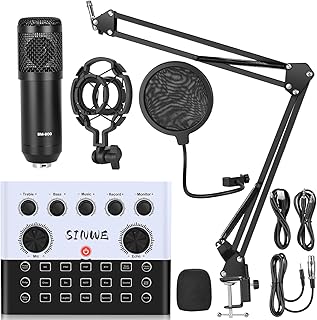
Best for: New podcasters who want to consider a packaged setup rather than sourcing a mixer and microphone separately. The product name identifies it as an all-in-one podcast equipment bundle with a live sound card and microphone.
This option differs from a basic line mixer because the listing frames it as podcast equipment. That may suit buyers who want to start with a microphone-and-sound-card package and are comparing compact audio products for spoken-word recording or live audio use.
Why it was selected: It addresses the needs of podcast and live-sound buyers, a common use for compact audio equipment. Limitation: The supplied product information does not specify input count, connection types, included accessories beyond the named microphone and live sound card, or device compatibility. Check the full listing for those details before purchasing.
Pro 5-Channel Audio Mixer Mic Set

Best for: Buyers looking for a small mixer set aimed at live streaming, karaoke, or studio recording. The product name lists a five-channel mixer, dual wireless microphone system, USB interface, and 48V phantom power.
Those named features make this a broader option than a basic source-combining line mixer. Choose it if microphone use and the stated wireless and USB features are central to your setup. Its product title also identifies it for family karaoke, which may be relevant to users who need a mixer for both recording and shared entertainment.
Why it was selected: It covers microphone-focused applications as well as the core compact-mixer search. Limitation: The supplied information does not give details about wireless range, battery requirements, USB functions, or the number and type of physical inputs. Confirm those specifics in the complete listing to ensure they fit your intended setup.
COKYIS 6-Channel Mini Mixer

Best for: Users who need more channels for sub-mixing instruments or other audio sources. The listing describes a six-channel stereo line mixer with 1/4-inch TRS inputs and outputs, ultra-low-noise operation, and independent microphone control.
Compared with the four-channel LZSIG, the COKYIS is the better fit when the stated six-channel capacity is important. Its product description names guitars, bass, and stage mixing as intended uses. Independent microphone control is another distinction for buyers who want that feature in a compact sub-mixer.
Why it was selected: It offers the highest stated channel count among the compact line mixers in this selection. Limitation: The available details do not state its power requirements or provide a full input/output layout beyond the 1/4-inch connections. Check the listing before connecting equipment with different connector types.
Little Bear MC5 Passive Mixer

Best for: People who want a portable mixer with a simple passive circuit and no battery or external power. The MC5 has four 3.5 mm stereo inputs and one 3.5 mm output, according to the product details.
Its passive design is described as not boosting or reducing the audio signal. The listing also identifies an input-impedance switch with 1K and 4.7K settings, intended to help match different audio sources. Named uses include CD players, instruments, portable recording devices, and video playback devices.
Why it was selected: It is a straightforward choice for users prioritizing portability and operation without a separate power supply. Limitation: The stated connections are 3.5 mm, and the passive circuit does not boost the signal. Avoid this option if your setup requires signal amplification or different connectors without appropriate equipment.
Buying Guide: How to Choose a Portable Mini Audio Mixer
How many audio sources do you need to combine?
Count the sources that need to play or record at the same time, not just the devices you own. A four-channel mixer may suit a few instruments or playback devices. A six-channel model provides more stated inputs for sub-mixing. Leave room for sources you expect to add, but do not assume that all channel types are interchangeable: confirm the exact input layout and supported signal types.
Do you need a line mixer or a microphone-focused setup?
A line mixer combines compatible audio sources into an output and can be suitable for instruments, computers, and playback devices. A podcast bundle or microphone set may make more sense when the main task is voice recording, live streaming, or karaoke. Check whether the listing identifies the microphone connections and controls you require. A product title alone does not establish compatibility with a particular computer, phone, or recording application.
Which connectors should you check?
Match the mixer’s input and output connectors to the cables and equipment in your setup. The products here name 3.5 mm and 1/4-inch connections, but those are not automatically interchangeable. The LZSIG listing specifies both connector sizes and mono/stereo modes; the Little Bear lists 3.5 mm inputs and output; the COKYIS description specifies 1/4-inch TRS input/output. Verify whether your device uses TS, TRS, or another connector before buying.
Should you choose passive or powered operation?
A passive mixer can be useful when avoiding batteries or external power is a priority. The Little Bear MC5 is specifically described as working without either. The LZSIG, by contrast, lists power-management circuitry, but the supplied product details do not state its precise power source. Check each listing’s power information rather than assuming that compact size means battery operation or USB power.
Are mono and stereo modes important?
Stereo is useful when preserving left and right audio channels matters, while mono may suit a single-channel destination or a simpler routing arrangement. The LZSIG explicitly describes switching between mono and stereo line-mixer modes. Other products may have different routing behavior, so confirm the output format and whether the mixer combines or preserves stereo signals as needed.
What details should you verify before ordering?
- Number of simultaneous inputs and the type of each input.
- Output connector and whether it supports mono, stereo, or both.
- Power requirements, especially for portable or passive use.
- Whether microphone gain, phantom power, or wireless microphones are included or supported.
- Required cables and whether your devices use matching connectors.
- For streaming bundles, the stated USB function and the devices or software named in the listing.
Frequently Asked Questions
What does a portable mini audio mixer do?
A portable mini audio mixer routes or combines audio from multiple sources into an output. The specific number of sources, connectors, and controls depends on the model.
Can a mini mixer connect a keyboard and a computer?
Some line mixers list keyboards and computers as example sources. Confirm that the mixer’s inputs and the devices’ output connections match before connecting them.
Does a passive audio mixer need power?
A passive mixer such as the Little Bear MC5 is described as operating without a battery or external power. Other compact mixers may have different power requirements, so check the product information.
Is a four-channel mixer enough for a home setup?
It can be enough if you need to combine no more than four compatible sources at once. Count simultaneous connections and check the input types before selecting a channel count.
Can I use a mini mixer for podcasting or streaming?
Yes, some products in this selection are described for podcasting, live streaming, or recording. Choose based on microphone needs, USB features, channel layout, and confirmed device compatibility.
What is the main difference between a line mixer and a podcast bundle?
A line mixer focuses on combining audio sources, while a podcast bundle may include items such as a microphone and live sound card. The supplied product details vary, so verify included components and connection requirements.