
The best direct-fit 1/8-inch microphone in this selection is the GELRHONR lavalier, which has a 3.5 mm (1/8-inch) TRRS plug for compatible phones, computers, and cameras. For singing or events, the Pyle wired mics and MELONARE wireless system offer different setups, but they are not listed as microphones with a 1/8-inch plug. Check your device’s input and connector requirements before choosing.
| Product | Best for | Connection or setup in the listing |
|---|---|---|
| GELRHONR Lavalier | Direct 3.5 mm TRRS recording | 3.5 mm TRRS plug |
| Wired Karaoke Handheld Microphone | Simple vocal and karaoke use | Wired, 2.5 m cable |
| Pyle Dynamic Cardioid Microphone | Stage and studio-style vocal use | XLR cable included |
| Pyle PDMIC59 | Vocal use with a switch | 15 ft XLR-to-1/4-inch cable |
| MELONARE 8-Channel System | Multiple wireless vocalists | UHF wireless system |
GELRHONR 3.5 mm TRRS Lavalier Microphone

Best for: A speaker or creator who needs a small wired microphone with a 1/8-inch connector. The listing describes a 3.5 mm (1/8-inch) TRRS plug and use with phones, PCs, cameras, recording, and game streaming. Its lavalier format is intended to attach near the speaker, rather than be held like a karaoke microphone.
The 4.9-foot cable gives the user some distance from the connected device while recording. This is the clearest match in this product list for someone searching specifically for a 1/8-inch microphone. Select it if your device accepts a compatible TRRS microphone input.
Limitation: A 3.5 mm plug does not guarantee compatibility with every device. The listing identifies the plug as TRRS, so check your device’s input type and requirements before buying.
Wired Karaoke Handheld Microphone

Best for: Karaoke singers who want a handheld wired microphone rather than a clip-on lavalier. The listing describes a dynamic vocal microphone with a 2.5-meter cable and use with a speaker, amplifier, mixer, or DVD player.
Choose this model if your main priority is a straightforward wired setup for singing and your audio equipment can accept the microphone’s connection. Its included cable avoids needing a separate cable purchase for a compatible setup. It is a different kind of choice from a 1/8-inch phone microphone: the product information does not identify its connector as 3.5 mm.
Limitation: The listing does not specify the cable connector. Confirm that it matches your speaker or recording equipment, and do not assume it plugs directly into a phone or computer’s 1/8-inch input.
Pyle Dynamic Cardioid Microphone
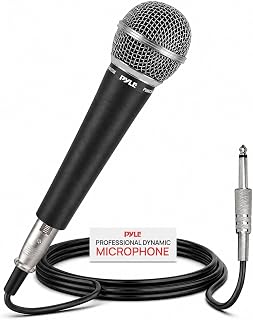
Best for: Vocalists setting up for stage or studio-style use who need a handheld dynamic microphone. Listed features include a cardioid, unidirectional pickup pattern, rugged construction, a built-in pop filter, and an included 15-foot XLR cable.
The cardioid pickup description and included cable make this a better fit for a vocal setup built around compatible audio equipment than for plugging straight into a phone. Choose it if you need a wired mic with an XLR cable and the rest of your system supports that connection.
Limitation: The listing specifies an XLR cable, not a 1/8-inch plug. A compatible adapter or audio interface may be needed for equipment with only a 3.5 mm microphone input; check the signal and connector requirements rather than relying on plug shape alone.
Pyle PDMIC59 Dynamic Vocal Microphone

Best for: Singers who want a dynamic handheld mic with an on/off switch and an included connection cable. The PDMIC59 listing describes a unidirectional moving-coil dynamic microphone and a 15-foot cable that connects XLR to a 1/4-inch audio connection.
Compared with the Pyle model above, this one explicitly lists a 1/4-inch cable connection and an on/off switch. That can make it a practical choice for compatible mixers and audio equipment when a user wants local control over the microphone signal. It is not a 1/8-inch mic simply because the cable has a smaller connector at one end.
Limitation: The included cable ends in a 1/4-inch audio connection, not a 3.5 mm TRRS plug. Choose another option or confirm the required interface if your device only has a 1/8-inch input.
MELONARE 8-Channel Wireless Microphone System

Best for: Events that need several handheld vocal microphones rather than one microphone plugged directly into a phone. The listing describes an eight-channel UHF system with eight microphones, five frequencies, and a stated range of 240 feet. Suggested uses include singing, karaoke, churches, meetings, and weddings.
Choose this system when multiple speakers or singers need wireless handheld microphones. It is a broader event setup than a single 1/8-inch lavalier, and the listing’s channel count is the key distinction. The product description does not identify a 3.5 mm output, so confirm the receiver’s output connections and the input on your sound system.
Limitation: This is a multi-microphone wireless system, not a single wired 1/8-inch microphone. The listed range is a product specification, not a guarantee for every venue or setup.
Buying Guide: How to Choose a 1/8-Inch Microphone
Does “1/8 inch” mean the same thing as 3.5 mm?
In consumer audio, a 1/8-inch plug usually refers to a 3.5 mm connector. However, matching the plug size alone does not prove that a microphone will work with a device. The GELRHONR is specifically listed with a 3.5 mm TRRS plug. TRRS means the plug has four contact sections, while other 3.5 mm audio connections may use a different contact arrangement.
Check the device manual or input label for microphone support and connector type. A headphone jack may not accept microphone input, even if the plug physically fits. Phones and computers can also differ in how they handle microphone signals.
Should you choose TRRS, XLR, or 1/4-inch?
- Choose 3.5 mm TRRS when you need a compact wired lavalier for a compatible phone, computer, or camera input. Confirm the device supports an external microphone over TRRS.
- Choose XLR when your setup is built around compatible audio equipment and you want a cable-based handheld vocal microphone. The Pyle cardioid model includes an XLR cable.
- Choose a 1/4-inch connection if your equipment accepts that format. The Pyle PDMIC59 listing includes an XLR-to-1/4-inch cable.
- Choose wireless when performers need freedom to move or several microphones are required. Plan for a compatible receiver connection to the sound system.
An adapter can change the physical connector, but it does not necessarily convert the microphone signal or make incompatible equipment work. Check whether the device needs an adapter, an interface, or a mixer.
Which microphone style suits your recording or event?
A lavalier microphone clips near the speaker and is suited to hands-free speech or recording. A handheld dynamic microphone is more appropriate for karaoke and live vocals. A multi-channel wireless system is intended for events with several performers or speakers. These categories solve different needs, so first decide whether you need discreet speech capture, a handheld mic, or a group setup.
How much cable length do you need?
For a desk or close-up recording, a shorter cable can reduce clutter. A handheld singer may need more room to move: the listed wired karaoke mic has a 2.5-meter cable, and both Pyle listings describe 15-foot cables. For wireless use, compare the system’s stated range with the space and remember that real conditions can affect signal performance.
What other details should you check?
- Confirm the connector at both ends of the included cable.
- Check that your device accepts microphone input rather than headphone output only.
- For the Pyle cardioid microphone, note the listed unidirectional pattern and built-in pop filter.
- For the PDMIC59, consider whether the on/off switch and included cable suit your workflow.
- For a wireless system, verify the receiver’s connection to your speaker, mixer, or other audio equipment.
Frequently Asked Questions
What is a 1/8-inch microphone connector?
It generally refers to a 3.5 mm audio connector. Check whether it is TRRS or another format, because devices and microphones may use different wiring and input arrangements.
Which product listed here has a 1/8-inch plug?
The GELRHONR lavalier is listed with a 3.5 mm (1/8-inch) TRRS plug. The other products are described as wired vocal microphones with unspecified or larger-format connections, or as a wireless system.
Can I plug an XLR microphone directly into a 3.5 mm jack?
Not necessarily. An adapter may change the connector shape without providing the signal conversion or input support required. Check the microphone, adapter, and device specifications before connecting them.
Is a 3.5 mm headphone jack also a microphone input?
Not always. Some jacks support both headphones and a microphone, while others provide audio output only. Check the device specifications for external microphone input support.
Is a lavalier or handheld microphone better for singing?
A handheld vocal microphone is generally the more appropriate format for karaoke or live singing. A lavalier is designed to attach near the speaker and is better suited to hands-free speech or recording needs.
Do all 1/8-inch microphones work with phones?
No. Phone compatibility can depend on the microphone’s TRRS wiring, the phone’s input support, and whether an adapter is needed. Confirm those requirements before purchase.