
For a floor-standing speaker explicitly rated at 6 ohms, the Sony SS-CS3 is the clearest match in the supplied product information. The Polk Audio T50, Dayton Audio Classic T65, and Klipsch Reference R-610F are also tower-speaker options, but their listed details do not state impedance, so confirm the rating before pairing them with an amplifier. The supplied PERLESMITH product is a stand for small speakers, not a floor-standing speaker, and is not included as a speaker recommendation.
| Product | Best for | Impedance in supplied details |
|---|---|---|
| Sony SS-CS3 | Buyers who specifically need a listed 6-ohm rating | 6 ohms |
| Polk Audio T50 | Home theater and bass radiators | Not stated |
| Dayton Audio Classic T65 | Full-size tower design and dual bass drivers | Not stated |
| Klipsch Reference R-610F | High sensitivity and stated power handling | Not stated |
Sony SS-CS3 3-Way Floor-Standing Speaker

Best for: Buyers who need a floor-standing speaker with an explicitly listed 6-ohm impedance. Among the supplied products, Sony is the only one whose provided features directly confirm this specification.
The SS-CS3 uses a 3-way, 4-driver design with a 1-inch polyester main tweeter and a ¾-inch super tweeter. Its listed peak power handling is 145 watts. The product description also highlights its cabinet design and acoustic performance for home listening.
- Choose this if the stated 6-ohm impedance is a key filter in your search.
- Consider the limitation: the provided details do not list sensitivity or frequency response, so compare those figures if they matter for your room or system.
Polk Audio T50 Home Theater Tower Speaker
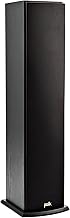
Best for: Home theater buyers who want tower speakers with built-in bass radiators. The listed driver arrangement includes a 1-inch tweeter, one 6.5-inch Dynamic Balance driver, and dual 6.5-inch bass radiators. The manufacturer description presents the design as suited to movies, music, and gaming.
The T50 is a practical option to compare when bass output and a room-filling tower format are priorities. Its listed power figure is 150 watts. However, the supplied product details do not state its impedance, so it cannot be confirmed as a 6-ohm speaker based on this information alone.
- Choose this if you want a tower with dedicated bass radiators for a home entertainment setup.
- Check before buying: verify the speaker’s impedance against your amplifier or receiver specifications.
Dayton Audio Classic T65 Tower Speaker Pair

Best for: Buyers seeking a full-size tower speaker pair with dual bass drivers. The T65 has a bass-reflex cabinet that stands over 39 inches tall, two 6.5-inch poly bass drivers, and a 1-inch silk-dome tweeter. The product details describe the cabinet as providing internal volume for bass and placing the tweeter near seated ear level.
The silk-dome tweeter is described as reproducing treble detail without harshness, while the dual bass drivers are intended to provide punchy bass. These details make the pair worth comparing for music and movie use, but they do not establish a 6-ohm rating.
- Choose this if you want a tall tower pair with two bass drivers and a silk-dome tweeter.
- Limitation: the supplied specifications omit impedance and power handling, so check both before matching it with an amplifier.
Klipsch Reference R-610F Floorstanding Speaker

Best for: Buyers comparing speakers by sensitivity and stated power handling. The supplied details list 94 dB sensitivity, a frequency response of 45 Hz to 21 kHz, 85 watts continuous power handling, and 340 watts peak power handling.
Those figures give shoppers several useful comparison points for a room-and-system match. They do not, however, confirm that this model is 6 ohms. The listed product is described as a pair, so it may suit buyers shopping for two matching floor-standing speakers.
- Choose this if sensitivity, frequency response, and continuous-versus-peak power figures are important comparison criteria.
- Check before buying: confirm the impedance from the product documentation; it is not stated in the supplied features.
Buying Guide: How to Choose 6 Ohm Floor Standing Speakers
Is the speaker actually rated at 6 ohms?
Start with the manufacturer’s impedance specification, not the speaker’s size, brand, or appearance. Of the four floor-standing speakers above, only the Sony SS-CS3 has a 6-ohm rating in the supplied information. The other three may still be candidates, but their impedance needs independent confirmation before you treat them as 6-ohm models.
Impedance describes the electrical load a speaker presents to an amplifier. Check the speaker’s manual or official product documentation, then compare its stated impedance with the receiver or amplifier’s supported speaker-load range. If that information is unclear, ask the manufacturer or seller rather than assuming a match.
What should you check on your amplifier or receiver?
Review the amplifier’s specifications for supported impedance and any guidance about connecting multiple speakers. A speaker’s impedance rating alone does not establish that every amplifier can drive it safely at every volume. Follow the equipment makers’ instructions, especially when using several speakers on the same receiver.
Power figures also need context. The Sony’s listed 145 watts is peak power, while the Klipsch listing separates continuous and peak handling. Do not compare unlike power measurements as if they were the same test. Look for compatible amplifier guidance and the speaker’s full documentation.
How do driver layout and bass design affect the choice?
Driver count and cabinet design help describe how a speaker is built, but they are not substitutes for impedance information. The Polk T50 lists dual bass radiators alongside its main driver. The Dayton T65 lists two 6.5-inch bass drivers and a bass-reflex cabinet. The Sony uses a 3-way, 4-driver design, while the supplied Klipsch details emphasize sensitivity and frequency response.
For buyers prioritizing bass features, compare the Polk and Dayton descriptions. For a listed 6-ohm rating, the Sony is the direct match in the supplied data. For a comparison centered on sensitivity and power handling, the Klipsch has more of those figures listed.
Should you buy a single speaker or a pair?
Check the package contents before ordering. The Dayton product is specifically described as a pair, and the Klipsch listing also identifies a pair. The supplied Polk and Sony names describe a speaker, but the provided information does not establish whether the package contains one speaker or two. Confirm the listing details if you need a stereo pair.
What room and placement factors matter?
Floor-standing speakers take up more space than bookshelf models, so measure the intended locations and allow room for stable placement. The Dayton’s listed height is over 39 inches, a useful starting point for checking clearance. The supplied product descriptions do not give complete placement guidance for all models, so consult each manufacturer’s recommendations.
Consider how the speakers will serve your listening setup: the Polk is described for home theater, music, and gaming; the Dayton is presented for music and entertainment; and the Sony is described for home audio. These use cases can guide comparisons, but they do not guarantee a particular result in every room.
Is a speaker stand the same as a floor-standing speaker?
No. A floor-standing speaker is a speaker cabinet designed to stand on the floor. A speaker stand is a separate support for a smaller speaker. The supplied PERLESMITH stand adjusts from 33.3 to 45 inches and is described for bookshelf or satellite speakers up to 11 pounds. It is not a tower speaker and is not included in the speaker comparison.
Frequently Asked Questions
Which listed floor-standing speaker is confirmed as 6 ohms?
The Sony SS-CS3 is the only supplied floor-standing speaker whose product features explicitly list 6-ohm impedance.
Are the Polk T50, Dayton T65, and Klipsch R-610F 6-ohm speakers?
The supplied details do not state their impedance. Check the manufacturer’s specifications or product documentation before choosing one specifically for a 6-ohm requirement.
Does a 6-ohm speaker work with every receiver?
No. Check the receiver or amplifier’s supported impedance range and follow its connection guidance. The speaker’s rating alone does not confirm compatibility with every amplifier.
Which option lists bass radiators?
The Polk Audio T50 lists dual 6.5-inch bass radiators. The Dayton T65 instead lists dual 6.5-inch bass drivers in a bass-reflex cabinet.
Is the PERLESMITH product a floor-standing speaker?
No. It is an adjustable stand intended for small bookshelf or satellite speakers, not a speaker cabinet that produces sound.