
The best in-ear reference monitors depend on whether you need tonal accuracy for critical listening, a comfortable wired monitor for performing, or a wireless system for stage use. The Reference hybrid is the most explicitly neutral option in this selection; the Sennheiser IE 100 PRO suits straightforward dynamic-driver monitoring, while the UHF system is designed for performers who need wireless monitoring. Compare the driver configurations and intended uses below before choosing.
| Product | Best For | Key Difference |
|---|---|---|
| Reference Five-Driver Hybrid | Neutral critical listening | Diffuse-field tuning and five drivers |
| Sennheiser IE 100 PRO | Simple, precise monitoring | 10 mm dynamic driver |
| BASN BmasterX | Detailed live monitoring | Six drivers and included adapters |
| KZ ZST PRO X | Listeners seeking a bass-forward hybrid | One balanced armature and one dynamic driver |
| UHF Wireless IEM System | Wireless stage monitoring | Transmitter and one bodypack |
Reference Five-Driver Hybrid Studio Monitors

This is the strongest match for buyers who prioritize neutral sound for critical listening, mixing, and evaluation. Its product description identifies a diffuse-field tuning of −1.0 dB per octave and says the tuning is intended to simulate accurate speakers in a well-treated room. The manufacturer also describes verification using ITU-T Type 4.3 equipment.
The five-driver configuration combines two dynamic woofers, two Sonion midrange drivers, and a Knowles supertweeter. That combination is intended to cover bass, midrange, and high-frequency detail. It was selected because its stated purpose and tuning focus align directly with reference monitoring.
- Best for: Mixing and critical listening where tonal balance is the priority.
- Choose this if: You want a product explicitly designed around neutrality.
- Consider: The listing emphasizes an extreme neutral tuning, which may not suit listeners who prefer emphasized bass.
Sennheiser IE 100 PRO Dynamic Monitors

The IE 100 PRO is a practical choice for buyers seeking a single-driver wired monitoring headphone from a professional audio brand. Its listed 10 mm broadband dynamic transducer is designed for powerful, precise monitoring. The product description also says the dynamic driver system reduces acoustic stress factors through homogeneous, distortion-free reproduction.
Compared with the multi-driver hybrid models in this guide, this model keeps the driver design straightforward. It was selected for its stated monitoring purpose and broadband dynamic transducer, making it a relevant option for musicians who want an uncomplicated in-ear monitor.
- Best for: Musicians who want a dynamic-driver monitor for precise monitoring.
- Choose this if: You prefer a simpler driver arrangement over a multi-driver hybrid.
- Important fit note: Sennheiser says that unsuitable or poorly seated ear tips can affect sound quality and call performance. Try the included tip sizes for a snug fit.
BASN BmasterX Six-Driver In-Ear Monitors

The BmasterX is best for musicians who want a multi-driver design with stated support for live monitoring and critical listening. Its six-driver setup includes an 8 mm liquid silicone dynamic driver for bass, balanced armatures for vocals and instruments, another BA for high frequencies, and two piezoelectric transducers for ultra-high detail. The listing specifies detail up to 20 kHz.
For fit and connection flexibility, the product includes seven sets of memory foam and silicone tips, a 150 cm detachable cable, MMCX connectors, a universal 3.5 mm jack, and a 6.35 mm adapter. The product description claims more than 26 dB of noise isolation; actual fit and isolation can vary by ear and tip choice.
- Best for: Performers who value multiple drivers, tip options, and a 6.35 mm adapter.
- Choose this if: You need the listed cable and adapter options for connecting to audio equipment.
- Consider: Its many driver types and stated emphasis on fine detail may not be necessary for buyers seeking a basic monitor.
KZ ZST PRO X Hybrid Wired Earbuds

The KZ ZST PRO X is best for buyers who want a wired hybrid earbud for music, gaming, or stage-related use and prefer a product described as delivering deep bass. Its name specifies a one balanced armature and one dynamic driver, along with a wired, no-microphone configuration. The listing also identifies singers, musicians, and drummers among its intended users.
It was selected as an accessible-style alternative to the explicitly neutral Reference model: its description points toward bass-focused listening rather than a stated flat or diffuse-field target. Buyers should distinguish those goals when using IEMs for mixing, since a bass-forward presentation may make tonal decisions less neutral.
- Best for: Listeners and performers seeking a wired hybrid with a stated deep-bass focus.
- Choose this if: You do not need an in-line microphone and want the listed one-BA, one-DD design.
- Consider: The supplied information does not specify frequency response, cable details, or fit options.
UHF Wireless In-Ear Monitor System
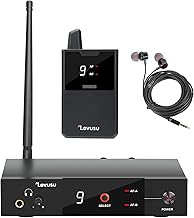
This is a wireless monitoring system rather than a standalone pair of reference earphones. It is best for performers who need a transmitter-and-beltpack setup for a studio, guitar use, band rehearsal, or live performance. The listing specifies a UHF system, an earphone, rack-mount design, a stated 180-foot range, and one bodypack.
It was selected because wireless operation is a distinct need for stage performers who want to move without a wired connection between their monitor source and beltpack. The listed single bodypack makes it a one-performer configuration as supplied; buyers should check the system details for their intended setup.
- Best for: A performer seeking a wireless monitoring system for rehearsal or live use.
- Choose this if: A transmitter, beltpack, and stated 180-foot range matter more than a standalone wired IEM.
- Consider: This listing includes one bodypack, so it is not described as a multi-performer package.
Buying Guide: How to Choose In-Ear Reference Monitors
Do you need neutral sound or a preferred listening profile?
For mixing and sound evaluation, start with the stated tuning goal rather than the number of drivers. The Reference model is the only option here with an explicit diffuse-field target and a description centered on extreme neutrality. The KZ model, by contrast, is described as having deep bass. A bass-forward sound can be enjoyable for general listening, but it may not be the right match if the main goal is making balanced mix decisions.
Descriptions such as “reference,” “studio,” and “HiFi” do not by themselves establish that two models sound alike. Compare the specific claims: tuning target, driver design, and intended use. If possible, audition monitors with familiar recordings and check mixes on other playback systems before relying on one in-ear sound signature.
Should you choose a single driver or a hybrid design?
A dynamic-driver model such as the IE 100 PRO uses a 10 mm broadband transducer, according to its listing. The KZ combines one dynamic driver with one balanced armature, while the Reference and BASN use more complex hybrid configurations. Driver count alone does not prove that a monitor is more accurate. The product’s tuning and its suitability for your listening task matter more than the number printed in the name.
A simpler configuration may appeal to buyers who want an uncomplicated monitoring option. Multi-driver designs may interest listeners seeking separate driver types for different frequency regions, but the available product descriptions do not establish that a higher driver count guarantees better sound for every user.
Is a wired monitor or wireless system better for your setup?
Wired IEMs connect directly to an appropriate audio output, but buyers need to check the connector and adapter requirements of their equipment. The BASN listing specifies a 3.5 mm jack and includes a 6.35 mm adapter. The KZ listing identifies a wired design, but the supplied product details do not give connector specifications.
A wireless system can give a performer more freedom of movement, but it requires a compatible transmitter and bodypack arrangement. The UHF listing describes a transmitter, one beltpack, and an earphone. Its stated range is 180 feet; real-world performance can depend on setup and conditions, which are not detailed in the supplied information.
How important are fit and isolation?
Fit affects comfort and the sound reaching your ears. Sennheiser specifically notes that ear tips that do not match your ear canal, or an incorrect fit, may prevent the correct sound qualities. The BASN listing includes seven sets of foam and silicone tips and claims more than 26 dB of noise isolation. Treat isolation figures as product claims, and remember that the seal depends on choosing tips that fit securely.
For extended rehearsals or critical listening, consider whether the package offers tip choices and whether the monitor sits comfortably. A poor seal can also make bass response seem different, so assess fit before deciding that a monitor’s tonal balance is unsuitable.
Which features should musicians verify before buying?
- Connection: Confirm that the plug or wireless setup works with your mixer, instrument, or monitoring equipment.
- Microphone: The KZ product is listed without a microphone. Check this detail if you also need call or headset functions.
- Number of users: The UHF system is listed with one bodypack. Verify whether that meets the number of performers in your setup.
- Listening purpose: Separate mixing accuracy, stage monitoring, gaming, and casual music listening; they may call for different sound priorities.
- Package details: Review the current listing for included cables, tips, adapters, and other accessories before ordering.
Frequently Asked Questions
What are in-ear reference monitors used for?
In-ear reference monitors are earphones used to listen closely to audio. Musicians may use them for stage or rehearsal monitoring, while producers and listeners may use them to evaluate recordings. The right model depends on whether neutrality, comfort, a particular sound profile, or wireless movement is the priority.
Which option in this list is described as the most neutral?
The Reference five-driver hybrid is the model whose product description most explicitly targets neutral listening. It specifies diffuse-field tuning at −1.0 dB per octave and is presented for critical listening, mixing, and evaluation.
Does a higher driver count mean better reference sound?
No. Driver count alone does not establish accuracy or suitability. Compare the stated tuning goal, intended use, fit, and connection requirements. The product descriptions here range from a single dynamic driver to hybrid systems with several driver types.
Are wireless in-ear monitor systems the same as IEM headphones?
Not necessarily. A wireless IEM system includes transmission equipment, such as a transmitter and bodypack, in addition to an earphone. The UHF option listed here is a system for wireless monitoring, while the other products are described as headphones or earbuds.
Can a poor ear-tip fit change how monitors sound?
Yes. Sennheiser’s product information warns that poorly fitting or incorrectly worn tips can affect sound quality. A snug seal is important, so test the available tip sizes before judging the monitor’s bass or overall balance.