
The best headphone amplifier depends on what you want to drive: the Neoteck is a portable choice for wired listening, the Douk Audio U3 is designed for a home desktop setup, and the LEKATO and FLAMMA are made for electric guitar or bass practice. The OneOdio is a pair of headphones, not an amplifier, but it can be considered as a listening option. Compare the use cases below before choosing.
| Product | Best suited for | Product type |
|---|---|---|
| Neoteck 3.5mm Headphone Amp | Portable listening and bass adjustment | Headphone amplifier |
| Douk Audio U3 | Home desktop headphone listening | Desktop headphone amplifier |
| LEKATO Guitar Headphone Amp | Electric guitar or bass practice | Instrument headphone amplifier |
| FLAMMA Bass Headphone Amp | Bass practice with grooves and amp models | Instrument headphone amplifier |
| OneOdio Wired DJ Headphones | Listeners who need headphones rather than an amp | Wired headphones |
Neoteck 3.5mm Headphone Amp

Best for: Listeners who want a portable-style headphone amplifier for wired devices and headphones within the listed 16–600-ohm range. Its 3.5mm AUX input and output are intended for a straightforward connection between an audio source and headphones.
The Neoteck stands out for its stated headphone impedance range, bass switch, and broad source-device compatibility. The listed features name MP3 players, iPods, phones, laptops, notebooks, and portable CD players. Its advertised SNR is greater than 100 dB, and the listed THD+N figure is 0.0005%; these are manufacturer-provided specifications, not independent test results.
- Choose this if you want a bass adjustment option in the amplifier.
- It is a better fit for a wired 3.5mm setup than for a guitar-specific practice rig.
- Limitation: The supplied details do not specify battery life or a charging method, so check the product listing if portable power is important.
Douk Audio U3 Desktop Headphone Amp

Best for: Home or desktop listeners who want an amplifier with both 3.5mm and 6.35mm headphone connections. The product name also lists RCA input and DC 5V, making this a different kind of setup from a small instrument plug-in amp.
The U3 uses a Class A amplifier design and a TI-NE5532 op amp, with a transistor current-expansion circuit, according to its supplied features. The product description emphasizes low distortion, dynamic range, and a warm, full sound. It also has a pluggable op-amp socket, which is intended to allow users to try different op amps.
- Choose this if you want a desktop-focused amp and value the option to experiment with op amps.
- Its 3.5mm and 6.35mm outputs make it a more flexible headphone-connection option than a single-jack model.
- Limitation: This is presented as a home desktop device, not a rechargeable guitar practice amp. Confirm that its input and power arrangement fit your setup.
LEKATO Guitar Headphone Amp
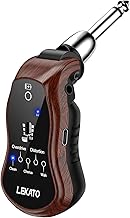
Best for: Electric guitarists and bassists looking for a compact practice-oriented headphone amplifier with built-in sound effects. The product name specifies rechargeable operation and lists five effects: clean, chorus, overdrive, distortion, and wah.
Unlike a general-purpose headphone amp, the LEKATO is designed around electric instruments. The effect selection lets a player choose among clean and more processed tones while practicing through headphones. It is a relevant option for players who want instrument-focused features rather than a bass boost or desktop hi-fi presentation.
- Choose this if you play electric guitar or bass and want the listed five effects in a rechargeable format.
- It is better suited to instrument practice than to amplifying audio from a phone or computer.
- Limitation: The provided information does not state battery runtime, input details, or how the effects are adjusted. Verify those details if they are essential to your practice routine.
FLAMMA Bass Headphone Amp

Best for: Bass players who want practice features beyond basic headphone monitoring. Its listed functions include seven amp models, 28 drum grooves, seven built-in effects with adjustable parameters, Bluetooth, USB audio recording and playback, OTG function, and rechargeable operation.
The FLAMMA is the most feature-rich instrument-specific choice in this selection based on the supplied product details. Seven amp models have individual save functions, which can help a player keep preferred model settings. Drum grooves provide built-in rhythmic accompaniment for practice, while the listed USB and OTG functions are relevant to users interested in audio recording or device connections.
- Choose this if you play bass and want amp modeling, effects, and selectable drum grooves in one practice device.
- It offers more listed practice and recording functions than the simpler LEKATO model.
- Limitation: The supplied details do not explain the recording workflow, Bluetooth use, or rechargeable runtime. Check the listing for operating specifics before relying on those functions.
OneOdio Wired DJ Headphones

Best for: Buyers who need headphones for a wired listening or monitoring setup, rather than a headphone amplifier. The OneOdio is not an amp, so it is included as a related listening component and should not be mistaken for a device that amplifies a source.
Its listed features include 50mm speaker drivers with neodymium magnets, padded ear cushions, an adjustable and stretchable headband, and 90-degree swiveling ear cups for single-ear monitoring. The product description presents it for DJing, mixing, and use with devices such as PCs, keyboards, and guitars.
- Choose this if your main need is a pair of over-ear headphones with single-side monitoring.
- It may be a useful comparison point when shopping for headphones to use with a separate amp.
- Limitation: It does not replace an amplifier. The supplied information does not provide an impedance rating, so verify headphone-to-amp matching if you plan to use it with a separate amp.
Buying Guide: How To Choose A Headphone Amplifier
Start by identifying what the device needs to amplify. A headphone amp for music playback is not automatically a guitar or bass practice amp. A general-purpose model connects an audio source to headphones, while an instrument headphone amp is built around the needs of a player and may add effects, amp models, or practice rhythms.
Are you amplifying music or an instrument?
For music from a phone, computer, or portable player, compare the Neoteck and Douk Audio U3. The Neoteck lists 3.5mm AUX input and output and compatibility with multiple common source-device categories. The U3 is a home desktop option with RCA input and 3.5mm and 6.35mm headphone connections.
For electric guitar or bass practice, consider the LEKATO or FLAMMA instead. The LEKATO lists five effects and rechargeable operation. The FLAMMA is bass-focused and lists amp models, effects, drum grooves, and recording-related functions. These features address a different use case from simply increasing headphone output for music.
Which connections and headphone range matter?
Check the source output, the amplifier input, and the headphone connector before buying. The Neoteck lists 3.5mm AUX connections and a 16–600-ohm headphone range. The Douk Audio U3 lists 3.5mm and 6.35mm headphone connections, plus RCA input. Matching the actual plugs and source connections can prevent the need for an unplanned adapter.
Do not assume that every headphone model will perform the same way with every amplifier. The supplied details for the OneOdio headphones do not include an impedance rating, and the guitar amps do not list a headphone impedance range. Check the complete product specifications when matching equipment.
Do you need portable power or a desktop setup?
Portability includes more than a small size: power source and operating time matter. The LEKATO and FLAMMA product names state that they are rechargeable. The supplied details do not state their battery runtimes. The Douk Audio U3 is described as a home desktop amplifier and lists DC power, so it is a better fit for a stationary setup than for untethered practice.
The Neoteck is described as compatible with portable sources, but the provided features do not explain its power arrangement. If you expect to carry an amplifier, confirm how it is powered and how long it operates before choosing it.
Do extra sound-shaping or practice tools help?
A bass switch is a direct selection criterion if you want to adjust bass emphasis from the amplifier; that feature is listed for the Neoteck. For guitar or bass, effects and amp models may matter more. The LEKATO lists clean, chorus, overdrive, distortion, and wah. The FLAMMA lists seven amp models and seven effects with adjustable parameters.
Drum grooves are a practice-oriented feature rather than a standard requirement for music listening. The FLAMMA lists 28 grooves, so it is the clearest match here for a bass player seeking built-in rhythmic backing. Buyers who do not need those tools may prefer a simpler device.
What should you verify before ordering?
- Confirm that the product is an amplifier if amplification is your priority; the OneOdio item is headphones.
- Match source and headphone connections, including 3.5mm, 6.35mm, or RCA where applicable.
- Check headphone impedance requirements against the amplifier’s stated range when available.
- For rechargeable models, look up battery runtime and charging details if those affect your use.
- For Bluetooth, USB, recording, or OTG functions, confirm the specific connection process and supported use in the complete listing.
- Separate advertised specifications from independently verified performance; the supplied product details do not include independent test results.
Frequently Asked Questions
What is the difference between a headphone amplifier and guitar headphone amp?
A general headphone amplifier boosts an audio signal for headphone listening. A guitar headphone amp is intended for electric instrument practice and may add instrument effects or amp models. The LEKATO and FLAMMA are instrument-focused options in this selection.
Which product here is best for portable music listening?
The Neoteck is the clearest match for wired listening from portable sources because it lists 3.5mm AUX input and output and compatibility with devices such as phones, MP3 players, and portable CD players. Confirm its power requirements in the full listing.
Which option is intended for a home desktop setup?
The Douk Audio U3 is described as a home desktop headphone amplifier. It lists RCA input and 3.5mm and 6.35mm headphone connections, along with DC power.
Which product includes built-in practice rhythms?
The FLAMMA bass headphone amp lists 28 drum grooves, along with seven amp models and seven built-in effects. It is the most practice-feature-oriented option here for bass players.
Is the OneOdio product a headphone amplifier?
No. The OneOdio is a wired over-ear headphone product with 50mm drivers and swiveling ear cups. It can be considered as headphones for a listening or monitoring setup, but it does not replace an amplifier.
Can any headphone be used with these amplifiers?
Compatibility depends on the connection and electrical specifications of both devices. The Neoteck lists a 16–600-ohm range, but the supplied details do not give impedance information for the OneOdio headphones or the instrument amps. Check the complete specifications before pairing equipment.