
The Hotone Tuner Press is the closest match for players seeking a volume pedal with a buffer because its listed features specify a switchable buffer. The other options serve different needs: the SONICAKE Vexpress combines passive volume and expression control, the Ernie Ball VP JR is a passive-signal volume pedal, and the SONICAKE Sonic Super Master adds a buffer to a clean-boost pedal. The JHS Little Black Amp Box is an effects-loop signal controller, not a volume pedal.
| Product | Best suited for | Buffer information |
|---|---|---|
| Hotone Tuner Press | Players wanting tuner, volume, and expression functions | Switchable buffer |
| SONICAKE Vexpress | Players needing volume and expression in one pedal | Not specified |
| Ernie Ball VP JR 250K | Passive-signal volume control on a compact board | Not specified |
| SONICAKE Sonic Super Master | Players wanting clean boost with an integrated buffer | Integrated buffer |
| JHS Little Black Amp Box | Players controlling an amp through its effects loop | Not a volume-pedal buffer |
Hotone Tuner Press Tuner/Volume/Expression Pedal

Best for: Musicians who want one floor unit for tuning, volume control, and expression duties, with the option to switch its buffer.
The listed feature set identifies the Tuner Press as a tuner, volume, and expression pedal with a switchable buffer. That makes it the most direct fit in this selection for a buyer specifically looking for a buffered volume-pedal option. A switchable buffer can be useful when a player wants the ability to choose whether the buffer is active in the signal path.
Why it was selected: It is the only listed product explicitly described as a volume pedal with a switchable buffer, while also providing tuner and expression functions.
Limitation: The supplied product details do not specify buffer behavior, tuning features, connections, or how the pedal changes modes. Check the product information to confirm those details meet your setup’s needs.
SONICAKE Vexpress Volume and Expression Pedal

Best for: Players who want a compact pedal that can provide passive volume control or expression control for a range of instruments.
The Vexpress combines volume and expression functions and automatically detects which function to use based on the connection. Its listed compatible instruments include guitar, bass, keyboard, synthesizer, workstation, and controller. The product information gives its dimensions as 5.85 inches long, 2.58 inches wide, and 2.4 inches high, which may help buyers planning a compact pedalboard.
Why it was selected: It is a flexible volume-pedal alternative for people who value dual functionality and broad instrument use more than a specified buffer.
Limitation: The feature list describes it as passive and does not specify a buffer. It also notes that a TRS cable should be used, or volume control may not change gradually. Choose the Hotone instead if a listed switchable buffer is essential.
Ernie Ball VP JR 250K Volume Pedal
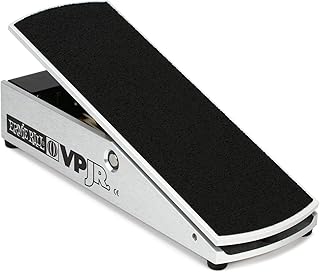
Best for: Players who need straightforward volume control for passive signals and want a junior-size pedal with a choice of two swell rates.
The VP JR 250K provides mono volume control, a taper switch for two distinctive swell rates, and a junior size intended to fit pedalboards more easily. Its listed use is for passive signals. Those details make it a practical comparison for a buyer who wants a dedicated volume pedal rather than a combined tuner or expression unit.
Why it was selected: It is a clearly specified volume pedal with a passive-signal application and a taper option that lets users choose between two swell responses.
Limitation: The supplied features do not mention a buffer. If maintaining a buffered signal is the main requirement, do not assume this pedal provides one; compare it with the Hotone Tuner Press.
SONICAKE Sonic Super Master Clean Boost

Best for: Players seeking a clean-boost pedal with an integrated buffer, rather than a foot-operated volume pedal.
The Sonic Super Master combines clean boost with an integrated buffer circuit. Its gain control adjusts the boost from 0 to 12 dB, and a footswitch turns the pedal on or off. These features make it relevant to buyers researching buffers for a guitar signal chain, although it does not provide the gradual, foot-controlled volume movement associated with a volume pedal.
Why it was selected: It offers a clearly stated buffer and adjustable signal boost, making it a useful alternative for someone whose underlying goal is signal preservation and a selectable level increase.
Limitation: This is a clean-boost pedal, not a volume pedal. Choose it only if a switched boost suits your needs; choose a dedicated volume pedal for continuous foot control.
JHS Little Black Amp Box Signal Converter

Best for: Tube-amp players who want to control the signal sent to an amplifier’s power section through its effects loop.
The Little Black Amp Box is designed to run through an amp’s effects loop and control how much signal reaches the power section. Its listed features describe using the amp’s front end while retaining its response and tone at lower levels. This makes it relevant to buyers exploring ways to manage loud amplifier output, but it serves a different purpose from a guitar volume pedal.
Why it was selected: It addresses a related volume-control need for amp users and provides a clear comparison with pedals placed in an instrument signal chain.
Limitation: The product is not listed as a volume pedal and its features do not specify a buffer. It requires an effects loop for the described use, so it is not the right choice for a player looking for a buffered pedalboard volume control.
Buying Guide: How to Choose a Volume Pedal With Buffer
Do you need a volume pedal or a buffer?
A volume pedal changes the signal level as you move its treadle. A buffer is a separate circuit function associated with the signal path; it is not the same as foot-operated volume control. Some products combine functions, while others provide only one. In this selection, the Hotone Tuner Press is the only product explicitly described as a volume pedal with a switchable buffer.
Be precise about the problem you want to solve. If you want to make volume swells or control level with your foot, prioritize a dedicated volume pedal. If you want a buffer in your signal chain, check whether the product explicitly lists an integrated or switchable buffer. Do not infer buffer functionality from the word “volume” or “signal” in a product name.
Should the buffer be switchable or always active?
A switchable buffer gives you a choice about whether the buffer is active. That may be useful when you want to compare signal-chain configurations. The Hotone listing specifies a switchable buffer, but the supplied details do not explain its exact switching method or circuit behavior. Check the manufacturer’s product information for those specifics before buying.
The SONICAKE Sonic Super Master lists an integrated buffer, but it is a clean boost, not a volume pedal. The other listed options do not specify a buffer. If buffered volume control is essential, favor a product whose features explicitly identify both functions.
Is your signal passive or active?
Match the pedal to the signal type stated in its product information. The Ernie Ball VP JR 250K is listed for passive signals. The SONICAKE Vexpress is described as passive and supports several instrument types, but its features do not claim a buffer. If your setup includes active electronics or other devices, verify suitability with the manufacturer rather than assuming compatibility from the general instrument list.
Do you need volume, expression, or both?
A volume pedal controls audio level, while an expression pedal is used as a controller for compatible equipment. The Vexpress combines both functions and detects the intended role based on the connection. Its listing specifically recommends a TRS cable for gradual volume control. The Hotone Tuner Press is also identified as a volume and expression pedal, in addition to a tuner. Check connection requirements and supported functions before choosing a multi-purpose model.
How much pedalboard space and control flexibility matter?
The Vexpress listing provides dimensions, and the Ernie Ball VP JR is described as a junior-size pedal intended to fit pedalboards more easily. The Ernie Ball also offers a taper switch with two swell rates. Compare dimensions, control style, and the exact functions you will use rather than choosing on size alone. A compact pedal is not automatically the best fit if it omits a buffer or control feature you need.
Will an amp-loop controller solve the same problem?
No. The JHS Little Black Amp Box is designed for use in an amplifier’s effects loop to control the signal sent to the power section. That differs from a volume pedal placed in an instrument signal chain. It may suit a player managing amp output, but it should not be treated as a buffered volume pedal.
Frequently Asked Questions
Which listed product is the closest match for a volume pedal with a buffer?
The Hotone Tuner Press is the closest match because its listed features identify it as a tuner, volume, and expression pedal with a switchable buffer.
Does the Ernie Ball VP JR 250K include a buffer?
The supplied feature list does not mention a buffer. It identifies the VP JR as a mono volume pedal for passive signals with a taper switch and junior size.
Is the SONICAKE Sonic Super Master a volume pedal?
No. It is a clean-boost pedal with an integrated buffer, adjustable gain from 0 to 12 dB, and a footswitch. Its listed features do not describe continuous treadle-based volume control.
Can the SONICAKE Vexpress be used for expression control?
Yes. Its listed features combine passive volume and expression control, with automatic function detection based on the connection. The listing recommends a TRS cable for gradual volume control.
Is the JHS Little Black Amp Box a pedalboard volume pedal?
No. It is designed to run through an amplifier’s effects loop and control the signal sent to the power section. Its listed features do not identify it as a buffered volume pedal.