
Powered hi-fi speakers combine speaker drivers and built-in amplification, so they can simplify a stereo setup without a separate power amp or receiver. The Klipsch R-50PM is best for listeners who want a straightforward, Bluetooth-enabled home setup; Edifier’s S880DB MKII is suited to digital sources and detailed listening; and the R1280T is a practical choice for connecting two analog devices. PreSonus Eris 3.5 speakers are best for compact desktop use, while Klipsch R-51PM speakers offer Bluetooth and phono/line input options.
| Model | Best suited for | Useful feature |
|---|---|---|
| Klipsch R-50PM | Simple home stereo setup | Built-in amplification and Bluetooth |
| Edifier S880DB MKII | Digital sources and critical listening | USB-C, optical, and coaxial inputs |
| Klipsch R-51PM | Bluetooth and analog sources | Phono/line input with switch and ground terminal |
| Edifier R1280T | Two analog devices | Two AUX inputs and side-mounted tone controls |
| PreSonus Eris 3.5 | Desktop listening and production | Compact drivers and built-in amplification |
Klipsch R-50PM Powered Speakers
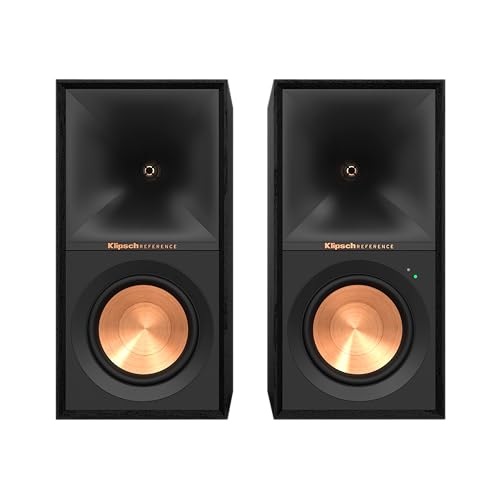
The Klipsch R-50PM is a strong match for buyers who want a powered stereo pair without adding a separate receiver or amplifier. The product description says setup involves plugging the speakers into power and connecting them to each other. Bluetooth provides a wireless streaming option, while additional line connections are also supported.
Its 1-inch aluminum LTS tweeters work with larger Tractrix horns, and copper-spun TCP woofers are designed for the speaker’s low and midrange output. Klipsch describes the horn design as providing a wider soundstage. Choose this model if easy setup and Bluetooth streaming are priorities alongside a traditional speaker format.
- Best for: A home stereo with built-in amplification and wireless streaming.
- Why it stands out: It combines Bluetooth, horn-loaded tweeters, and copper-spun woofers in a plug-and-play system.
- Consider: It still needs a power outlet and a speaker-to-speaker connection; it is not a single wireless speaker.
Edifier S880DB MKII Hi-Fi Speakers
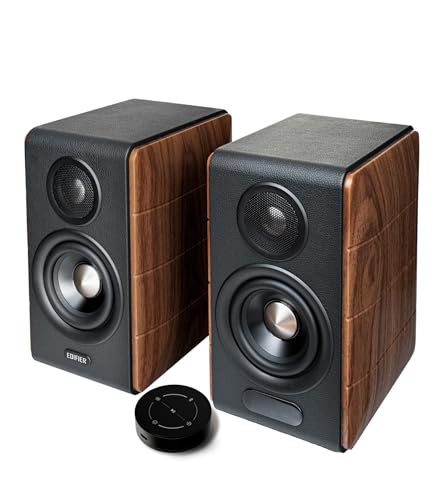
The Edifier S880DB MKII is best for buyers who connect computers, TVs, or other digital audio sources and want multiple input choices. Its listed connections include USB-C, optical, and coaxial, as well as analog RCA. The product information specifies support for 24-bit/192kHz audio through USB-C, optical, and coaxial inputs, and 24-bit/96kHz through analog RCA.
Edifier lists an 88W RMS dual-amplification system, with separate Class-D amplification for the tweeters and woofers. The speaker drivers are 1.25-inch titanium-dome tweeters and 3.75-inch aluminum mid-woofers. The stated frequency range is 20Hz–40kHz. Choose this model if digital connectivity and its listed high-resolution playback formats fit your equipment and listening needs.
- Best for: Digital-source users and listeners who want a broad selection of wired inputs.
- Why it stands out: It pairs USB-C, optical, coaxial, and RCA inputs with stated high-resolution playback support.
- Consider: Check which input your source uses before buying; the listed maximum format differs between digital and analog connections.
Klipsch R-51PM Powered Bluetooth Speakers

The Klipsch R-51PM suits listeners who want a powered monitor with Bluetooth and an analog connection that can be switched between phono and line. Its listed phono/line input includes a switch and ground screw terminal. Those features make it a relevant option for buyers considering a turntable connection, though the product details do not specify a turntable or other equipment as included.
Bluetooth provides a wireless way to stream audio, while the analog input gives users a wired alternative. This combination can be useful in a living room or listening space where sources may change. Choose the R-51PM if the phono/line connection is a deciding feature and you want built-in amplification rather than a separate power amplifier.
- Best for: Buyers who want Bluetooth plus a phono/line analog input option.
- Why it stands out: Its input has a phono/line switch and ground terminal, alongside wireless Bluetooth.
- Consider: The available product features do not list a full set of digital inputs, so confirm that its connections suit all intended sources.
Edifier R1280T Powered Bookshelf Speakers

The Edifier R1280T is best for buyers who use two analog audio sources and want to avoid plugging and unplugging them each time. Its two AUX inputs can connect devices with a 3.5mm headphone output or dual RCA output. The listed design uses a 13mm silk-dome tweeter and a 4-inch full-range unit.
A remote control provides access to volume adjustment, while bass and treble controls are located on the side of the main speaker. These controls suit listeners who want basic adjustments without navigating software. Choose the R1280T for a straightforward analog setup rather than a system that depends on listed digital inputs or Bluetooth.
- Best for: Desk or room setups with two analog sources.
- Why it stands out: Two AUX inputs, a remote, and accessible bass and treble controls are included in the listed features.
- Consider: The supplied feature list describes AUX connectivity, not Bluetooth or digital inputs.
PreSonus Eris 3.5 Powered Studio Monitors

The PreSonus Eris 3.5 is best for a compact desktop setup used for music production, gaming, movies, streaming, or everyday listening. The product is sold as a complete stereo pair and lists 50 watts of built-in amplification. Its 3.5-inch woven-composite woofers and 1-inch silk-dome tweeters are specified for a frequency range of 80Hz–20kHz.
PreSonus positions these monitors around studio-style sound and clear detail. Their smaller 3.5-inch woofers make them a different choice from larger bookshelf models: they are suited to near-field listening where the listener is close to the speakers, rather than buyers specifically seeking larger drivers. Choose this pair if desk size and mixed computer use matter.
- Best for: Desktop users who want a stereo pair for creative work and general audio.
- Why it stands out: It has built-in amplification and a stated 80Hz–20kHz range in a compact monitor format.
- Consider: The listed frequency range begins at 80Hz, so buyers prioritizing deeper bass may prefer to compare larger speaker options.
Buying Guide: How To Choose Powered Hi-Fi Speakers
What does “powered” mean?
Powered speakers contain built-in amplification, so they do not require a separate power amplifier to drive their speaker units. This can reduce the number of components in a stereo system. A powered pair still needs electricity, and the two speakers may need a cable between them. Check the product details to understand how the pair connects and which speaker holds the inputs and controls.
Which inputs match your audio sources?
Start with the devices you plan to connect. Analog RCA or 3.5mm connections can suit sources with matching outputs. Bluetooth is useful for wireless streaming from compatible devices. Optical, coaxial, or USB-C inputs can be important when connecting a digital source, but supported formats vary by input. Compare the speaker’s listed connections with the actual outputs on your TV, computer, turntable, or other equipment.
- For two analog sources: Look for multiple analog inputs, as on the Edifier R1280T.
- For digital connections: Check the specific input types and audio-format support listed for the speaker.
- For wireless playback: Confirm that Bluetooth is included if you want to stream without an audio cable.
- For a turntable: Check whether the speaker lists a phono input or phono/line selection, and verify that the turntable’s output needs match.
How much space do you have?
Measure the intended shelf, desk, or stand before choosing a pair. Compact monitors can work well close to a computer, while bookshelf speakers may need more room around them. Also consider where the main speaker’s controls and connections are located. Side-mounted controls, for example, may be less convenient if the speaker sits tightly against a wall or inside a narrow shelf.
Do driver size and frequency range matter?
Driver size and stated frequency response provide useful comparison points, but neither alone describes the entire listening experience. A smaller woofer can be appropriate for a desktop setup, while a larger design may suit a different room or listening distance. Compare the manufacturer-listed frequency range and driver configuration, then consider whether the speakers will be used for speech, music, movies, or production work.
Do not assume that every powered bookshelf pair has the same bass output or maximum listening level. The supplied specifications differ across these models, and room placement can also affect sound. If deep bass is essential, check whether the speaker’s stated range meets your needs and whether a separate subwoofer connection is specified.
Are studio monitors or hi-fi speakers the better fit?
Studio monitors are often selected for desktop work, production, and close listening. The PreSonus Eris 3.5 is described for music production as well as gaming, movies, streaming, and everyday audio. A powered bookshelf speaker may be a better fit when the system is intended for general home listening. Compare use case, dimensions, inputs, and control placement rather than relying on the label alone.
What should you check before ordering?
- Confirm the product is a powered pair and identify how the speakers connect to each other.
- Match each source device’s output to an input listed for the speakers.
- Check whether wireless Bluetooth is needed or whether wired connections are preferred.
- Compare driver sizes and stated frequency ranges for your listening priorities.
- Measure the available space and confirm that the controls and cables will be accessible.
- Review the complete product listing for any connection or accessory details not included in the feature summary.
Frequently Asked Questions
Do powered hi-fi speakers need a receiver?
Powered speakers have built-in amplification, so they do not need a separate power amplifier to drive them. A receiver may still be useful in some systems, but whether it is needed depends on the sources and connections you plan to use.
Can powered speakers connect to a turntable?
Some can, if their inputs match the turntable’s output. The Klipsch R-51PM lists a phono/line analog input with a switch and ground terminal. Check the turntable’s output requirements and the speaker’s instructions before connecting.
Are Bluetooth speakers always cable-free?
No. Bluetooth can remove the audio cable from a source device, but powered speakers still need electricity. A stereo pair may also use a cable to connect one speaker to the other.
Can I connect a computer to powered bookshelf speakers?
Yes, when the computer’s output matches an input on the speakers. Depending on the model, that may involve an analog connection, USB-C, optical, or Bluetooth. Confirm the exact inputs and supported formats before choosing.
Are compact studio monitors suitable for everyday listening?
They can be. The PreSonus Eris 3.5 is listed for production, gaming, movies, streaming, and everyday audio. Consider its compact driver size and stated frequency range when deciding whether it suits your room and bass preferences.
Should I choose more inputs or a simpler speaker?
Choose based on the sources you will actually use. Multiple inputs help when several devices stay connected, while a simpler model may be sufficient for one primary source. Identify required connections first, then compare speaker size, controls, and listening use.