
The Rockville RMM-XLR is the clearest match for shoppers specifically seeking a dynamic microphone rated at 600 ohms: its listing states a 600-ohm impedance. The other four options are dynamic microphones, but their supplied product details do not confirm impedance, so check their specifications before buying if 600 ohms is essential. Choose the Rockville two-pack for a confirmed impedance and two-mic setup, the FIFINE for wired karaoke, or the Shure SM58 for vocal performance and recording.
| Microphone | Best For | 600-Ohm Impedance Listed |
|---|---|---|
| Rockville RMM-XLR two-pack | Two-mic setups and confirmed impedance | Yes |
| Pyle dynamic cardioid microphone | Stage or studio use with included XLR cable | Not stated |
| FIFINE K6 | Wired karaoke and compatible 6.35 mm inputs | Not stated |
| Shure SM58 | Live vocals, podcasting, and recording | Not stated |
| PylePro handheld microphone | General vocal use with included XLR cable | Not stated |
Rockville RMM-XLR 600-Ohm Two-Pack

The Rockville RMM-XLR is the strongest choice when the stated 600-ohm impedance is a deciding requirement. The listing identifies these as dynamic supercardioid microphones and specifies a 50 Hz–15 kHz frequency range and -60 dB sensitivity.
This set includes two microphones, two 10-foot XLR cables, two mic clips, and two carry cases. Its metal bodies and on/off switches suit users who need a pair for a shared performance or other two-microphone setup.
- Best for: Buyers who want two dynamic mics and an explicitly listed 600-ohm impedance.
- Why it stands out: The supplied product details state the impedance and include accessories for two microphones.
- Limitation: The included XLR cables are 10 feet long, which may not suit setups needing longer cable runs.
Choose this set if the impedance specification matters more than buying a single microphone. Confirm that the supercardioid pickup pattern and included cable length fit the intended setup.
Pyle Dynamic Cardioid Microphone
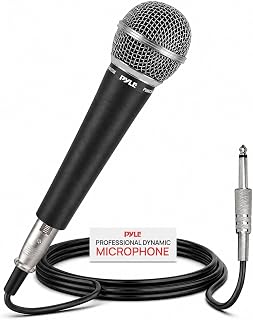
This Pyle microphone is a wired dynamic cardioid model presented for stage and studio use. Its listed features include unidirectional pickup, rugged construction, a built-in pop filter, high gain, a wide frequency response, and a 15-foot cable.
The included cable makes it a practical option for buyers seeking a ready-to-connect XLR microphone rather than a mic-only package. The cardioid pattern is a useful point of comparison for vocalists choosing between this model and the Rockville’s supercardioid two-pack.
- Best for: Singers or presenters seeking one dynamic microphone with an included 15-foot XLR cable.
- Why it was selected: It offers a straightforward stage-and-studio feature set, including a pop filter and rugged construction.
- Limitation: The supplied details do not state its impedance. Do not assume it is 600 ohms without checking the manufacturer’s specification.
Choose this Pyle if an included longer cable and cardioid pickup are priorities. If a verified 600-ohm rating is mandatory, the product information provided here is not enough to confirm a match.
FIFINE K6 Wired Karaoke Microphone

The FIFINE K6 is a dynamic handheld microphone designed for singing and karaoke. It has a 6.35 mm connection, an on/off switch, and a 14.8-foot detachable cable. The product listing identifies speaker, audio mixer, and interface connections as intended uses.
This model is better suited to a buyer whose equipment accepts a 6.35 mm plug than to someone specifically shopping for an XLR microphone. Check the input type on the speaker or audio equipment before choosing it; connector fit is separate from impedance matching.
- Best for: Home karaoke and wired vocal use with compatible 6.35 mm inputs.
- Why it was selected: Its detachable cable and handheld format address a common karaoke setup directly.
- Limitation: The listed details do not specify a 600-ohm impedance, and the 6.35 mm connector may not suit equipment requiring XLR.
Choose the K6 if karaoke use and a 6.35 mm connection are the main requirements. Avoid assuming it meets a 600-ohm target unless that rating is confirmed in the complete product specifications.
Shure SM58 Dynamic Vocal Microphone

The Shure SM58 is a cardioid dynamic vocal microphone listed for studio and live performance, podcasting, and recording. Its product description identifies it as an XLR microphone and describes it as an industry-standard vocal mic.
It is a flexible choice for buyers focused on vocal applications rather than on a stated impedance specification. The cardioid pattern and XLR connection distinguish it from the FIFINE K6’s 6.35 mm connector and the Rockville set’s supercardioid pattern.
- Best for: Vocalists, podcasters, and recording users seeking a dynamic XLR microphone.
- Why it was selected: The listed applications cover live vocals as well as studio and recording use.
- Limitation: The provided product details do not confirm a 600-ohm rating or list an included cable.
Choose the SM58 if the stated vocal applications match your needs. If you require exactly 600 ohms, verify the current technical specifications rather than relying on the product name or microphone type.
PylePro Dynamic Handheld Microphone

This PylePro is a moving-coil dynamic handheld microphone with a built-in pop filter, wide frequency response, high signal output, rugged design, and low-noise circuitry. Its listing also specifies a 15-foot XLR cable in the package.
It is a practical candidate for buyers who want a general-purpose wired vocal microphone with an included cable. The supplied details do not identify a polar pattern, so buyers who need a particular pickup pattern should seek that specification before purchase.
- Best for: Buyers seeking a handheld dynamic mic with a pop filter and 15-foot XLR cable.
- Why it was selected: Its listed construction and cable details make it comparable to the other wired vocal options.
- Limitation: The supplied information does not state impedance or pickup pattern.
Choose this model if its included cable and listed vocal features fit your setup. If 600 ohms is non-negotiable, confirm the impedance with the complete manufacturer documentation first.
Buying Guide: How to Choose a 600-Ohm Dynamic Microphone
Does the microphone actually need to be 600 ohms?
Start by checking the specification of the equipment the microphone will connect to and determine whether it requires a 600-ohm microphone. Impedance describes an electrical property; it is not the same as connector type, pickup pattern, or whether a microphone is dynamic. A product described as dynamic is not automatically a 600-ohm model.
Among these five listings, only the Rockville RMM-XLR product details explicitly state 600 ohms. The Pyle, FIFINE, Shure, and PylePro details provided here do not establish their impedance. If an exact rating is required, verify it in the manufacturer’s full specification or product documentation before ordering.
Which connection should you check?
Match the microphone connector to the input on the mixer, interface, speaker, or other equipment. The Rockville, Pyle, Shure, and PylePro products are described with XLR connections or included XLR cables. The FIFINE K6 is listed with a 6.35 mm connection. A connector adapter may change physical fit, but it does not by itself confirm an impedance match.
Should you choose cardioid or supercardioid?
Pickup pattern describes the directions from which a microphone is designed to capture sound. The Pyle cardioid model and Shure SM58 are identified as cardioid, while the Rockville microphones are described as supercardioid. Consider the pattern when comparing products, but do not infer unlisted pattern details for the FIFINE or PylePro from their supplied descriptions.
Do you need one microphone or a pair?
The Rockville listing is a two-pack and includes two cables, two clips, and two carry cases. The other product descriptions in this selection are for individual microphones. A two-pack can make sense when two microphones are needed at once; for a single vocalist, compare the individual models based on connector, cable, and intended use.
How much cable length do you need?
Compare the included cable length with the distance between the microphone and the connected equipment. The Pyle and PylePro listings each specify a 15-foot cable, the FIFINE lists a 14.8-foot detachable cable, and the Rockville set includes two 10-foot XLR cables. The Shure details provided here do not state that a cable is included. Measure the intended route and allow enough length for movement without creating unnecessary slack.
Which features matter for vocals?
For singing, speaking, or karaoke, compare the listed pop-filter features, on/off switch, pickup pattern, cable, and intended connection. The Pyle and PylePro models list built-in pop filters, while the FIFINE and Rockville models list switches. These features can help narrow the choice, but they do not replace checking impedance and input compatibility.
Frequently Asked Questions
Which microphone in this selection explicitly lists 600 ohms?
The Rockville RMM-XLR two-pack explicitly lists a 600-ohm impedance. The other supplied product details do not confirm a 600-ohm rating.
Are all dynamic microphones 600 ohms?
No. “Dynamic” describes a microphone type, while impedance is a separate specification. Check the model’s technical details instead of assuming its impedance from the microphone category.
Is a 6.35 mm microphone the same as an XLR microphone?
No. A 6.35 mm plug and an XLR connector are different connection types. Check the input on your equipment and the cable or connector supplied with the microphone before choosing.
Which option is best for a two-microphone setup?
The Rockville RMM-XLR is the listed two-pack. It includes two microphones, two 10-foot XLR cables, two clips, and two carry cases.
Can I assume the Shure SM58 is 600 ohms?
Not from the product details provided here. The listing identifies the SM58 as a cardioid dynamic XLR vocal microphone, but does not state its impedance in the supplied information. Verify the full specification if impedance is a requirement.
What should I verify before buying a 600-ohm microphone?
Confirm the microphone’s stated impedance, the equipment’s input requirements, the connector type, and any needed cable length. These are separate compatibility checks, and a matching connector alone does not confirm an impedance match.