
The best choice depends on whether you prioritize 5.1-channel surround sound, a 1000-watt peak-power claim, or modern home-theater connections. The Donner MAMP4 is the closest match for a separate 5.1 receiver, while the Bobtot is a complete 5.1 speaker system rated at 1000 watts peak. The Yamaha RX-V4A is better suited to HDMI-based home theater, and the Donner MAMP6 and Pyle PD1000BA offer 1000-watt peak ratings but do not provide the same 5.1-channel receiver configuration.
| Product | Best For | Key Detail |
|---|---|---|
| Donner MAMP4 | Separate 5.1 amplifier | 5.1 channels; specified RMS output |
| Bobtot Wireless System | All-in-one surround sound | 1000W peak; includes speakers and subwoofer |
| Yamaha RX-V4A | HDMI home theater | 5.2 channels; eARC and HDMI 2.1 features |
| Donner MAMP6 | Multi-zone or multi-speaker audio | 1000W peak; six independently controlled channels |
| Pyle PD1000BA | Karaoke and media playback | 1000W peak; four-channel amplifier |
Donner MAMP4 5.1-Channel Receiver

Best for: Buyers who want a separate amplifier with a stated 5.1-channel layout and clear RMS power specifications. It supports five speakers and one subwoofer, with 60 watts RMS listed for the left and right channels at 4 ohms and 25 watts RMS for the center and surround channels.
Inputs include Bluetooth 5.3, USB, RCA, AC-3, two microphone inputs, AUX, optical, coaxial, and FM radio. The remote offers treble, midrange, bass, echo, and Talkover adjustments. The manufacturer also describes relay changes intended to reduce standby noise.
It is the closest match here for a conventional 5.1 receiver-style amplifier, but it is not a 1000-watt model based on the supplied specifications. Caution: It supports PCM decoding only; Dolby and DTS decoding are not supported. It also has no HDMI input, so check the audio output options on the source device before choosing it.
Bobtot 1000W Wireless Surround System

Best for: Buyers seeking a 5.1 speaker package with an advertised 1000-watt peak rating, rather than a standalone receiver. The system includes an 8-inch subwoofer with a built-in receiver, a center speaker, and four wireless satellite speakers. It can switch between 5.1 and 2.1 modes using the remote or front panel.
The remote allows separate volume adjustment for each speaker and the subwoofer. The product details list a 13-foot center-speaker cable and a 32-foot range for the wireless speakers. That makes it a possible fit for shoppers who want speakers and amplification bundled together instead of selecting a separate receiver and passive speakers.
Caution: The 1000-watt figure is identified as peak power, not continuous RMS output. This is a complete speaker system, so it is not the right choice if you specifically need a standalone receiver to connect to an existing set of passive speakers.
Yamaha RX-V4A 5.2-Channel AV Receiver

Best for: Buyers who value HDMI connectivity and home-theater features more than a stated 1000-watt rating. The RX-V4A is a 5.2-channel AV receiver with four HDMI inputs and one output, eARC, and listed support for 4K60, 4K120AB, and 8K60B signals. These features make it a more relevant option for connecting HDMI source devices and a compatible television.
Wireless features listed include dual-band Wi-Fi, AirPlay 2, MusicCast, and Spotify Connect. Those options are useful for shoppers who want network-based audio streaming alongside a home-theater setup. Its 5.2-channel designation also provides two subwoofer outputs in the system category, rather than the 5.1 layout sought by some buyers.
Caution: The supplied product details do not state a 1000-watt output rating or provide power figures, so it should not be selected on the basis of that claim. Confirm speaker and room requirements against the receiver’s full specifications before purchase.
Donner MAMP6 1000W 6-Channel Receiver
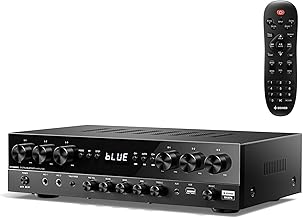
Best for: Buyers who need six separately controlled channels and flexible connections for home audio, karaoke, or multiple speaker groups. The Donner MAMP6 lists 1000 watts of peak power and 25 watts RMS multiplied across six channels. It supports up to six groups of 12 speakers, with a stated speaker impedance range of 4 to 16 ohms.
Its input options include Bluetooth 5.3, USB up to 64 GB, two pairs of RCA inputs, AUX, FM radio, optical, coaxial, and two microphone inputs. The remote provides treble, midrange, bass, echo, and Talkover controls across input modes. This makes it a more flexible choice than the 5.1-specific Donner for buyers focused on channel-by-channel control or additional speaker groups.
Caution: This is a six-channel amplifier, not a specified 5.1 AV receiver, and the listed 1000 watts is peak power. It has no HDMI input, so it may not be the simplest option for a television-centered setup.
Pyle PD1000BA 1000W Amplifier
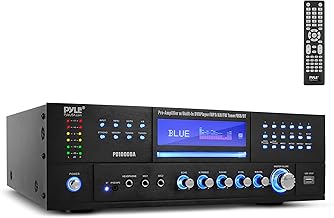
Best for: Buyers prioritizing karaoke functions and built-in media playback over 5.1 surround processing. This four-channel amplifier lists 1000 watts of peak power over 2–8 ohms. It includes Bluetooth streaming, a front-loading CD/DVD player, FM radio, USB-A, headphone input, microphone inputs with echo, and RCA outputs.
The two microphone inputs and echo controls make it suitable for karaoke-focused use. The product details also list one RCA preamp output and two mono RCA outputs dedicated to a subwoofer. Its built-in disc player and radio can reduce the need for separate source components in a simple entertainment setup.
Caution: The PD1000BA is a four-channel amplifier, not a 5.1-channel receiver. Its 1000-watt rating is peak power, so compare continuous output specifications and speaker needs rather than treating the peak figure as sustained per-channel power.
Buying Guide: How to Choose a 5.1 1000-Watt Receiver
Do you need true 5.1-channel surround sound?
A 5.1 layout generally refers to five main speaker channels and one subwoofer channel. Check the receiver’s listed channel configuration rather than relying on a large wattage number in the product name. In this selection, the Donner MAMP4 explicitly supports five speakers and one subwoofer. The Bobtot system offers 5.1 and 2.1 modes as a bundled speaker package. The Yamaha is a 5.2-channel AV receiver, while the MAMP6 and Pyle are not listed as 5.1 models.
Also distinguish between an AV receiver and an integrated amplifier. A conventional AV receiver is often chosen for routing video and audio from HDMI devices. An amplifier may focus on speaker output and analog or digital audio inputs, without HDMI video switching or surround decoding. Match the product type to the equipment you already own.
What does “1000 watts” mean?
Look for whether the specification says peak power or RMS power. Peak power describes a maximum figure, while RMS output is more useful for comparing sustained amplifier output when the measurement conditions are clear. The supplied details identify the Bobtot, Donner MAMP6, and Pyle models as 1000-watt peak products. The Donner MAMP4 instead provides channel-specific RMS figures, and the Yamaha details supplied here do not state a wattage figure.
Do not assume that a 1000-watt total or peak claim means each speaker receives 1000 watts. Check how power is divided among channels, the impedance used for the rating, and whether all channels are driven in the stated measurement. The provided Donner MAMP4 figures, for example, distinguish left and right output from center and surround output.
Which connections should you check before buying?
List the devices you plan to connect, such as a television, game console, disc player, phone, or microphone. Then compare their outputs with the receiver’s inputs. Optical and coaxial connections are available on both Donner amplifiers described here, while the Yamaha lists HDMI inputs and eARC. The Donner models do not have HDMI inputs according to the supplied information.
Bluetooth can be useful for wireless music playback, but it is not a replacement for every wired connection or home-theater format. USB support, FM radio, RCA inputs, and microphone inputs matter more for some buyers than HDMI. Choose based on the sources you will actually use, and check whether the intended source outputs audio in a format the receiver supports.
How should you compare speaker compatibility?
Check the receiver’s supported speaker impedance and the speakers’ impedance before connecting them. The Donner MAMP6 lists a 4–16-ohm range. The Pyle details state a 2–8-ohm range. The supplied information does not provide a comparable impedance range for every product, so consult the full manufacturer specifications when pairing speakers.
For an existing speaker system, count the channels and identify whether the subwoofer is passive or powered. A receiver’s subwoofer output and an amplifier’s speaker outputs may serve different connection arrangements. Do not assume that a product will work with a particular speaker type unless its documentation confirms the connection.
Should you choose a receiver or a complete speaker system?
Choose a separate receiver or amplifier if you already own speakers or want to select them independently. Choose the Bobtot package if a bundled subwoofer and satellite speakers are more convenient than assembling separate components. Before buying a package, check room layout, cable reach, wireless range, and the placement options for every speaker.
A separate receiver offers more flexibility in component selection, but may require additional purchases and setup. A complete system simplifies the product list, but its included speakers are part of the package design. Compare the full system—not just the receiver’s power claim—against your room, sources, and desired speaker arrangement.
Is HDMI important for your setup?
HDMI matters when you want to route video sources through an AV receiver or use a television connection such as eARC. The Yamaha product details list four HDMI inputs and one output, with eARC and several video signal specifications. The Donner MAMP4 and MAMP6 list optical and coaxial digital inputs but no HDMI input. A buyer using one of those amplifiers should confirm how the television or other source will deliver audio.
If your setup is primarily music playback, karaoke, or audio from a device with compatible analog or digital outputs, HDMI may be less important. If your priority is a modern TV and multiple HDMI sources, prioritize an AV receiver with the required ports and supported video features.
Frequently Asked Questions
Is a 1000-watt peak receiver necessarily more powerful than a lower-rated model?
Not necessarily. Peak and RMS figures describe different measurements, and product ratings may use different conditions. Compare RMS output by channel, impedance, and measurement details whenever available instead of ranking products by peak wattage alone.
Which option listed here is closest to a separate 5.1 receiver?
The Donner MAMP4 is the closest match because its product details specify five speakers and one subwoofer. It is not listed as a 1000-watt model and does not support Dolby or DTS decoding, so check those limitations against your setup.
Does the Bobtot system include a receiver?
Its 8-inch subwoofer has a built-in receiver, and the product is presented as a complete surround sound speaker system. It is not a standalone receiver for an existing passive-speaker package.
Which product has HDMI inputs and eARC?
The Yamaha RX-V4A listing specifies four HDMI inputs, one HDMI output, and eARC. The supplied details for the Donner amplifiers state that they do not have HDMI inputs.
Can I use a 5.1 receiver with fewer than six speakers?
That depends on the receiver’s design and instructions. Confirm supported speaker configurations in the manufacturer’s documentation, and avoid assuming that every 5.1 model can automatically be configured for a smaller setup.
Should I buy based on peak watts alone?
No. Consider channel count, RMS power, speaker impedance, inputs, decoding support, and whether the product is a standalone receiver or a complete speaker system. These details determine whether it fits your equipment and listening needs.