
The best wireless in-ear receiver depends on whether you need a complete transmitter-and-receiver system or an additional receiver for a setup you already own. The Xvive U45 is a strong fit for users seeking 5.8 GHz operation and channel scanning, while the LEKATO MS-1 suits small groups that need multiple receivers. The JOYO JW-07 is aimed at practice and guitar monitoring, and the POGOLAB system offers UHF channels and XLR input options. The Xvive U4R is a receiver-only choice; check system matching before buying.
| Product | Best For | Standout Feature |
|---|---|---|
| JOYO JW-07 | Practice and guitar monitoring | 2.4 GHz, automatic pairing, under 5 ms latency |
| Xvive U45 | Users prioritizing channel selection | 5.8 GHz and receiver channel scan |
| LEKATO MS-1 | Small bands and shared monitoring | One transmitter can pair with multiple receivers |
| POGOLAB UHF IEM | Live setups needing input options | Seven channels and XLR/AUX-LINE inputs |
| Xvive U4R | Buyers seeking a receiver-only unit | Six channels and under 5 ms latency |
JOYO JW-07 Wireless IEM System

The JOYO JW-07 is a 2.4 GHz wireless in-ear monitoring system intended for practice, studio use, guitar, DJ setups, and live performance. Its listed 48 kHz/16-bit audio specification and latency below 5 ms make it relevant to musicians who want real-time monitoring while playing or practicing.
Best for: Guitar beginners and musicians looking for a compact practice-monitoring option. The system uses automatic pairing and frequency hopping, which the product information describes as a way to reduce interference from other wireless devices. That combination may suit users who want straightforward setup rather than manually selecting a channel.
Choose this if your priority is personal monitoring and quick pairing. Consider another option if you need a stated long-distance range, multiple receiver capacity, or a different audio input configuration; those details are not specified in the provided product information.
Xvive U45 5.8 GHz IEM System

The Xvive U45 is a complete wireless in-ear monitor system with a transmitter and bodypack receiver. It operates at 5.8 GHz and lists a reliable RF connection over a distance of 100 feet or 30.5 meters. Its stated frequency response is 20 Hz to 20 kHz, with 24-bit/48 kHz audio and a 110 dB signal-to-noise ratio.
Best for: Performers and home users who want a system with a channel scan feature. To scan, hold the receiver’s channel button for three seconds. After the receiver selects a channel, the transmitter must be set manually to match it, so setup is not entirely automatic.
Choose this if 5.8 GHz operation, broad stated frequency response, and receiver-led channel scanning fit your needs. Note: Matching the transmitter channel after scanning takes an extra step. Buyers who want a fully automatic channel-matching process should compare the setup instructions of other systems before choosing.
LEKATO MS-1 Multi-Receiver IEM
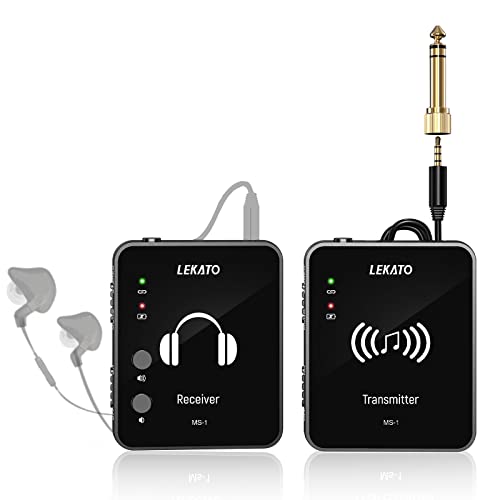
The LEKATO MS-1 is a 2.4 GHz stereo in-ear monitoring system designed for band rehearsal, studio use, church settings, and small gigs. Its main distinction is one-to-many operation: the listed features say a single transmitter can work with up to six sets of devices simultaneously.
Best for: Small groups that want multiple performers to receive a signal from one transmitter. The system supports stereo transmission and offers a one-key switch between stereo and mono input. The product instructions describe pairing by turning on the units and holding the two pair buttons until the indicator light stops flashing.
Choose this if multi-receiver use and stereo/mono selection matter more than a stated long operating range. Important limitation: The product information says to use a stereo source and stereo cable for stereo transmission. A mono source or unsuitable connection will not provide the intended stereo signal.
POGOLAB UHF Wireless IEM System

The POGOLAB system uses UHF wireless transmission and provides seven selectable channels. It is listed with a transmitter and belt receiver, 1 ms latency, 48 kHz/24-bit audio, and a dynamic range above 106 dB. The stated frequency response is 35 Hz to 16.5 kHz.
Best for: Live performers and groups who need channel choices and flexible transmitter inputs. The transmitter includes a balanced XLR input and an AUX/LINE input switch. The receiver has a 3.5 mm headphone output for connecting in-ear monitors or earbuds.
Choose this if XLR connectivity and selectable UHF channels are important to your setup. The product description also calls out color-coded indicators that correspond to the selected channel, which can help identify the connection during setup. Consider before buying: The listed frequency response does not extend to 20 kHz, so compare that specification with your monitoring preferences and other system requirements.
Xvive U4R Wireless Receiver Only

The Xvive U4R is a receiver-only product rather than a complete transmitter-and-receiver kit. It operates at 2.4 GHz, has six channels, and lists latency below 5 ms. Its stated working range is over 90 feet, which the product description presents as suitable for small clubs and venues.
Best for: Buyers specifically looking for a standalone receiver to use within a compatible monitoring setup. Its six-channel capability and low stated latency are relevant to performers who need a receiver for onstage monitoring.
Choose this if you need the receiver unit only. Important caution: The listing does not include a transmitter, and the provided product information does not detail compatibility with other systems. Confirm that your existing transmitter and receiver are designed to work together before purchasing. Choose a complete system instead if you do not already have the required transmitter.
Buying Guide: How To Choose A Wireless In-Ear Receiver
Do you need a receiver only or a complete IEM system?
A receiver-only product is not a complete wireless monitoring setup. It needs a compatible transmitter to send audio. If you are building a system from scratch, look for a product that explicitly includes both a transmitter and receiver, such as the complete systems in this guide. If you are replacing or adding a receiver, verify that it is intended to work with your transmitter before ordering.
Which wireless band should you consider?
The products here include 2.4 GHz, 5.8 GHz, and UHF options. The band alone does not establish which system will work best in every venue. Other wireless equipment and local conditions may affect performance, so consider the devices already in use and review how each system handles channel selection. The Xvive U45 includes a receiver channel scan, while the POGOLAB offers seven selectable UHF channels.
How many performers need the same monitor signal?
For a solo player, a transmitter paired with one receiver may be sufficient. For a band or team, check the stated number of supported receivers before buying. The LEKATO MS-1 lists support for up to six device sets from one transmitter. Its stereo and mono options are also relevant if performers need a particular signal format.
Do not assume that every wireless IEM system supports additional receivers. Confirm the system’s stated pairing capacity and the steps required to pair each unit. For a multi-person setup, also consider whether every performer needs the same mix or whether the system and audio source can provide different monitor mixes; the product details here do not specify individual mix control.
How much latency is acceptable for your use?
Latency is the delay between the source signal and what reaches the listener. It matters when singing or playing along with live audio because a noticeable delay can interfere with timing. The listed systems report latency below 5 ms for the JOYO JW-07 and Xvive U4R, while the POGOLAB description lists 1 ms. These are manufacturer-provided specifications, not a guarantee of identical results in every setup.
Which audio connections do you need?
Check the transmitter inputs against the output of your mixer, interface, instrument setup, or playback source. The POGOLAB lists balanced XLR and AUX/LINE input options. Other products may have different connection arrangements, so confirm the complete product listing and included cables before choosing. The LEKATO MS-1’s stereo feature also depends on using a stereo source and stereo cable, according to its listed instructions.
Should you choose mono or stereo monitoring?
Mono can be suitable when a single combined signal meets the monitoring need. Stereo can preserve left-right separation when the source and connections support it. The LEKATO MS-1 explicitly offers a stereo/mono input switch; its product information says to use a stereo source and cable for stereo transmission. Before selecting a system, confirm the format of the signal coming from your mixer or other audio source.
What range and setup details should you compare?
Compare stated operating range only as one part of the decision. The Xvive U45 lists 100 feet or 30.5 meters, while the Xvive U4R lists over 90 feet. Range figures do not replace checking the venue, wireless environment, and placement of the transmitter. Also compare pairing procedures: automatic pairing may simplify setup, while channel scanning can help users select a channel but may require manually matching the transmitter.
Frequently Asked Questions
What is a wireless in-ear receiver?
A wireless in-ear receiver receives a monitoring signal from a transmitter and sends audio to connected earphones or in-ear monitors. A receiver-only unit does not provide the transmitter needed to send the audio signal.
Can one transmitter send audio to several receivers?
Some systems support one transmitter paired with multiple receivers. The LEKATO MS-1 lists support for up to six device sets. Check the specific system’s stated capacity because multi-receiver support is not universal.
Is a 2.4 GHz system always better than a 5.8 GHz system?
No single wireless band is automatically best for every setup. Consider your venue, other wireless equipment, available channel controls, and the system’s stated features. The Xvive U45 operates at 5.8 GHz, while the JOYO JW-07 and Xvive U4R operate at 2.4 GHz.
Does a receiver-only purchase include everything needed to monitor audio?
No. A receiver-only product does not include a transmitter. Confirm that you already have a compatible transmitter and suitable earphones or in-ear monitors, or select a complete system instead.
Why does stereo monitoring require a stereo source?
Stereo transmission depends on a stereo signal reaching the system. The LEKATO MS-1 product information specifies using a stereo audio source and stereo cable for stereo operation. If the source is mono, the system cannot create the original left-right separation from that signal.