
To run a 12-volt car device from a household outlet, use an AC-to-DC converter with a cigarette-lighter socket; it changes household AC power into 12-volt DC power. The 15A converter is a practical general-purpose choice, while higher-capacity models are better suited to devices with greater power demands. Car inverters work in the opposite direction: they turn a vehicle’s DC power into household-style AC, so they are not substitutes for a wall-powered 12V adapter.
| Product | Best For | Power Direction |
|---|---|---|
| Aletbo 360W, 30A Converter | Higher-demand 12V devices | Household AC to 12V DC |
| 15A, 180W Converter | Everyday home or garage use | Household AC to 12V DC |
| 10A, 120W Converter | Lower-demand 12V devices | Household AC to 12V DC |
| 200W Car Power Inverter | Using AC outlets in a vehicle | Vehicle DC to AC |
| PiSFAU 200W Car Inverter | Vehicle charging with AC and USB ports | Vehicle DC to AC |
Aletbo 360W 30A AC-To-DC Converter
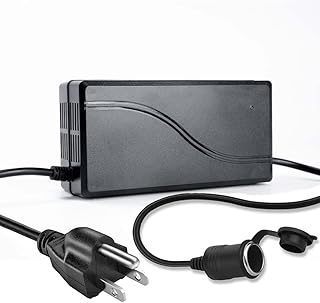
This Aletbo converter is listed as a 110V-to-12V, 360W, 30A AC-to-DC adapter with a cigarette-lighter socket. Its stated use cases include car refrigerators, tire inflators, vacuum cleaners, and iceless coolers. It follows the right power direction for running a 12V car accessory from a household outlet.
Best for: Buyers whose 12V device needs more current than a lower-amperage adapter can provide. It was selected because its listed 30A capacity is the highest among the AC-to-DC options here.
Limitation: The product information provided does not list safety protections or a supported input-voltage range. Check the device’s power requirements and the adapter’s full specifications before use.
15A 180W AC-To-DC Converter

This adapter converts 100–240V AC household power into 12V DC and provides a cigarette-lighter connection for car electronics. The listing describes overload, overheating, overvoltage, and short-circuit protection. It is also described as plug-and-play for use with a standard outlet.
Best for: General home, travel, or garage use with 12V devices that stay within the adapter’s stated 15A and 180W limits. Its broad stated AC input range and listed protections make it a useful middle-capacity option in this comparison.
Limitation: It is not the highest-capacity choice. Avoid choosing it based only on a device’s voltage; compare the device’s current or wattage requirement with the adapter’s rating.
10A 120W AC-To-DC Power Adapter

This 110V/120V-to-12V adapter is rated at 10A and 120W. Its listed applications include a car refrigerator, cooler, vacuum cleaner, dash cam, and other 12V car devices. The cigarette-lighter socket provides the connection point for a compatible car accessory.
Best for: A buyer running a lower-demand 12V accessory who wants a wall-powered converter with a clearly stated 120W limit. It was selected as a lower-capacity alternative to the 15A and 30A options.
Limitation: Its 10A rating is lower than the other wall-powered converters in this list. Do not use it for a device whose required current or power exceeds the adapter’s rating.
200W Car Power Inverter With USB-C

This 200W inverter takes DC power from a vehicle and supplies 110V AC, according to its product name. Listed features include 65W and 30W USB-C ports, dual QC 18W ports, and charging connections for devices such as laptops and phones.
Best for: Someone who wants to power or charge compatible electronics from a vehicle. It was included because “convert car charger to wall plug” can also mean wanting household-style outlets in a car.
Limitation: It does not convert a household wall outlet into 12V DC. Choose an AC-to-DC converter instead if the goal is to run a car accessory at home.
PiSFAU 200W Car Power Inverter
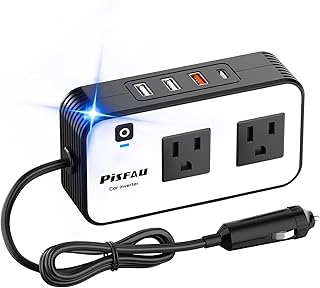
The PiSFAU is a vehicle power inverter described as converting DC 12V power to 110V AC. Its listed connections include two AC outlets and USB-A and USB-C ports with a stated combined USB output of 4.8A and 24W. The product name positions it for uses such as laptops, camping, and road trips.
Best for: Buyers seeking AC outlets and USB charging while using vehicle power. It offers a different port configuration from the other listed inverter, so compare the connections your devices need.
Limitation: Like the other inverter, it runs in the reverse direction from a wall-powered 12V adapter. It cannot be used to plug a 12V cigarette-lighter device into a home outlet.
Buying Guide: How To Choose A Wall Adapter For A Car Device
Do you need AC-to-DC or DC-to-AC conversion?
Start by identifying which power source you have and what the device requires. To use a car accessory at home, household AC must be converted to 12V DC. Look for an AC-to-DC converter with a cigarette-lighter socket. To use household-style outlets from a vehicle, choose a DC-to-AC inverter instead.
The word “inverter” is often used loosely in product searches, but the direction matters. A car inverter does not turn a wall outlet into a car socket. Check the input and output descriptions before buying: “100–240V AC input, 12V DC output” indicates the wall-to-car-device direction.
How much power does the device need?
Check the label or manual for the accessory’s voltage, current in amps, and power in watts. The adapter output must match the required voltage and meet or exceed the device’s current or wattage needs, while staying within the adapter’s limits. For these options, the stated capacities range from 10A/120W to 30A/360W.
- 10A, 120W: A lower-capacity option for compatible devices within those limits.
- 15A, 180W: A middle-capacity option for devices with higher requirements than a 10A adapter supports.
- 30A, 360W: The highest stated capacity among the listed AC-to-DC converters.
Do not assume that a device will work simply because it has a car-style plug. Its power draw, including any startup demand noted by the manufacturer, must be suitable for the converter. If the device’s requirements are unclear, consult its documentation before connecting it.
Which features matter for home and garage use?
For regular use, consider the converter’s stated input-voltage range, output rating, plug type, and safety features. The 15A converter lists 100–240V AC input and protections for overload, overheating, overvoltage, and short circuit. The other AC-to-DC product descriptions supplied here do not provide the same level of safety or input-range detail, so check their complete listings and labels.
Also confirm that the accessory’s plug fits the adapter’s socket and that the adapter can be placed in a suitable location during operation. Keep the product instructions and device instructions available, and follow any ventilation or operating guidance supplied by the manufacturers.
Is a car inverter an alternative?
No, not when the aim is to run a 12V car accessory from household power. The two listed 200W inverters are designed to take vehicle DC power and provide AC outlets, along with USB charging ports. They are useful for the opposite situation: powering or charging suitable electronics from a car.
Choose an inverter only if the vehicle is the power source and your device needs an AC outlet or a supported USB output. For a car refrigerator or similar 12V accessory plugged into a home outlet, choose an AC-to-DC converter instead.
What should you verify before connecting a device?
- Confirm that the car accessory is rated for 12V DC.
- Check the accessory’s maximum current or wattage and compare it with the converter rating.
- Make sure the product converts household AC to 12V DC, not vehicle DC to AC.
- Review the input-voltage range and safety information in the full product documentation.
- Do not exceed the converter’s stated output limits or use a damaged adapter or cord.
Frequently Asked Questions
Can I plug a car charger into a wall outlet?
Yes, if the car device uses 12V DC and you connect it through a compatible AC-to-DC converter with a cigarette-lighter socket. The converter must support the device’s voltage and power requirements.
Is a car inverter the same as a wall-plug adapter?
No. A car inverter uses vehicle DC power to produce AC power. A wall-powered car adapter uses household AC power to produce 12V DC for a car accessory.
How many amps should a 12V wall adapter provide?
Choose an adapter rated for at least the current required by the device, without exceeding the adapter’s limits. Check the accessory label or manual rather than estimating from its size or plug type.
Can a 120W adapter run any 12V car accessory?
No. It can only run a compatible 12V device whose power demand stays within the adapter’s stated 120W and 10A limits. Higher-demand accessories need an appropriately rated converter.
Can I use a 12V car refrigerator at home?
It may work if the refrigerator supports 12V DC and the AC-to-DC converter can supply its required current and power. Verify both products’ specifications before connecting them.