
The best microphones for recording guitar amps are dynamic mics designed to handle loud sources and capture a cabinet up close. The Sennheiser e 609 is best for a simple, cabinet-focused setup; the Behringer B 906 offers instrument and vocal versatility; the Shure SM57 is a flexible choice for close-miking; and the Pyle is a practical option when an included XLR cable matters. The FIFINE AM8PROT is a less specialized alternative based on the product information provided.
| Microphone | Best For | Key Detail |
|---|---|---|
| Sennheiser e 609 Silver | Close-miking guitar cabinets | Dynamic, supercardioid design |
| Behringer B 906 | Amps and other instruments | Supercardioid pattern |
| Shure SM57 | Versatile instrument recording | Cardioid pattern and presence boost |
| Pyle Dynamic Cardioid | Buyers needing a cable included | 15-foot XLR cable listed |
| FIFINE AM8PROT | PC users considering USB or XLR | Dynamic microphone kit |
Sennheiser e 609 Silver

The Sennheiser e 609 Silver is a dynamic supercardioid microphone identified specifically for guitar amplifiers. That focused purpose makes it a straightforward choice for players who want a mic selected for capturing an amp rather than a general-purpose vocal microphone.
Best for: Guitarists who want a dedicated instrument microphone for recording or amplifying a guitar cabinet. Its supercardioid pickup pattern is a useful match for close source capture where limiting pickup from other directions is a priority.
Why it stands out: The listed product feature directly identifies it as a dynamic supercardioid guitar amplifier microphone. It is therefore the most explicitly amp-focused option in this selection.
Consider: The supplied product details do not specify an included cable, mounting method, or frequency response. Check the listing and your recording setup for those details before choosing it.
Behringer B 906 Dynamic Microphone

The Behringer B 906 is a dynamic microphone for instrument and vocal applications. Its frequency response is described as designed for guitar amplifiers, percussion, and brass, making it a useful option for musicians who record more than guitar.
Best for: Home studios or live setups that need one microphone for guitar amps and other listed sources. The supercardioid polar pattern is intended to minimize background noise and feedback, which can help when isolating a source in a busy room or stage environment.
Why it stands out: Compared with a microphone described only for guitar amps, the B 906 is presented for several instrument categories as well as vocals. Its stated amp-oriented frequency response keeps it relevant to this guide.
Consider: The provided details do not give exact frequency-response figures or specify included accessories. If those affect your setup, verify them in the product listing.
Shure SM57 Instrument Microphone

The Shure SM57 is a dynamic instrument microphone with a cardioid pickup pattern. Its listed contoured frequency response and presence boost are intended to enhance attack, detail, and clarity. The product information specifically names guitar amps alongside snare drums, brass, and acoustic instruments.
Best for: Musicians who want a close-miking option that can also serve other instrument-recording tasks. The cardioid pattern is described as isolating the source while reducing background noise and bleed, which is useful when several sound sources are present.
Why it stands out: It combines amp relevance with broader instrument applications. Choose it if you want a microphone whose stated uses extend beyond guitar cabinets and whose response is described as emphasizing attack and detail.
Consider: The supplied information does not list a cable or other accessories. Plan to confirm what is included and whether your recording equipment has the required connection.
Pyle Dynamic Cardioid Microphone
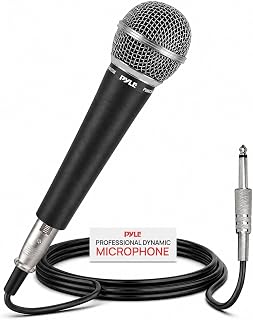
The Pyle is a unidirectional dynamic microphone with a cardioid pickup pattern and a listed 15-foot XLR cable. Its specifications include a 50 Hz–15 kHz frequency range, 600-ohm impedance, and a zinc-alloy body. The product is described for vocals and instruments in stage and studio settings.
Best for: Buyers who want a general-purpose dynamic mic and an XLR cable included. Its cardioid pattern is described as helping isolate the source and minimize background noise and feedback.
Why it stands out: The listed cable and rugged all-metal construction provide concrete setup and build details. Its passive design does not require power or batteries according to the product information.
Consider: Unlike the Sennheiser and Behringer options, the supplied features do not specifically identify it as a guitar-amp microphone. Choose it when general instrument use and included cable are priorities, rather than a stated amp-specific design.
FIFINE AM8PROT Dynamic Microphone Kit

The FIFINE AmpliGame AM8PROT is identified as a gaming microphone kit with a dynamic microphone and USB/XLR connectivity. The product name does not provide guitar-amp-specific pickup-pattern or frequency-response information, so its fit for cabinet recording is less clearly established than the other options in this list.
Best for: A PC user comparing a dynamic microphone kit that lists both USB and XLR connections and may want to consider it for more than one recording task.
Why it is included: Its dynamic design and XLR option make it relevant to shoppers considering a mic for recording, but the supplied details are limited. Confirm the connection and recording requirements for your particular setup before buying.
Consider: The available product information does not confirm an amp-focused design, pickup pattern, or included accessories. Choose a more specifically described instrument microphone if those factors are central to your decision.
Buying Guide: Choosing a Guitar Amp Microphone
A microphone for recording a guitar amp captures the sound coming from the speaker cabinet and sends it to a recording input, such as an audio interface or mixer. The right choice depends on the room, the recording equipment, and whether the microphone will also be used for other sources. Start by comparing the pickup pattern, microphone type, connection, and stated applications rather than relying on a product label alone.
Should you choose a dynamic microphone?
All five products in this selection are described as dynamic microphones or dynamic microphone kits. Dynamic models are common choices for close-miking loud sources, including guitar amplifiers. Consider the manufacturer’s stated applications and pattern as well as the dynamic design: a microphone explicitly described for guitar amps offers clearer evidence of intended use than a general-purpose model.
What pickup pattern should you look for?
A pickup pattern describes the directions from which a microphone is designed to capture sound. The e 609 and B 906 are listed as supercardioid, while the Shure and Pyle are listed as cardioid or unidirectional. Their product descriptions associate these patterns with focused source pickup and reduced background sound or bleed. Room reflections and nearby equipment can still affect a recording, so pattern alone does not guarantee isolation.
How do you connect a microphone to a recording setup?
Check whether the microphone uses an XLR connection, USB, or both, then confirm that your recording device accepts that connection. A microphone with XLR may require an appropriate cable and an audio interface or mixer with an XLR input. The Pyle product listing specifically says it includes a 15-foot XLR cable. The FIFINE product name identifies USB/XLR connectivity, but the supplied information does not describe its other setup requirements.
Do you need a microphone made specifically for guitar amps?
A specifically described guitar-amp microphone makes selection simpler when the main task is recording a cabinet. The Sennheiser e 609 is directly identified for guitar amplifiers, and the Behringer B 906 lists a frequency response designed for guitar amps, percussion, and brass. The SM57 also lists guitar amps among its uses. The Pyle is described for instruments generally, while the supplied FIFINE information does not confirm an amp-specific design.
How should you compare versatility and included accessories?
For recording several sources, consider the listed applications. The B 906 is described for instruments and vocals, and the SM57 is listed for guitar amps, drums, brass, and acoustic instruments. For setup convenience, check the package details: the Pyle listing names an included XLR cable, while the other supplied product features do not specify accessories. Avoid assuming that a cable, stand, or other gear is included unless the listing says so.
What should you check before recording?
- Confirm the microphone connection matches your interface or mixer.
- Check whether you need to buy a cable or stand separately.
- Look for an explicitly stated guitar-amp application if cabinet recording is the main purpose.
- Consider cardioid or supercardioid patterns when limiting pickup from other directions matters.
- Verify product details in the current listing, especially when the supplied information is incomplete.
Frequently Asked Questions
What is a good microphone type for recording guitar amps?
A dynamic microphone is a common choice for close-miking guitar amps. Compare the pickup pattern and the manufacturer’s stated applications to find a model suited to your cabinet and recording setup.
Which microphone in this list is most explicitly designed for guitar amps?
The Sennheiser e 609 is directly described as a dynamic supercardioid guitar amplifier microphone. The Behringer B 906 also lists a frequency response designed for guitar amplifiers.
Is a cardioid microphone suitable for a guitar cabinet?
It can be a suitable option when its listed applications include guitar amps or instruments. The Shure SM57 is described for guitar amps and has a cardioid pickup pattern; the Pyle is a general instrument microphone with a cardioid pattern.
Do I need an audio interface to record a guitar amp microphone?
An XLR microphone needs a compatible recording input, such as an interface or mixer with an XLR connection. Check your equipment’s inputs and the microphone’s connection before purchasing. The supplied product details do not establish every product’s included accessories.
Does the Pyle microphone include an XLR cable?
Yes. The listed Pyle features specify an included 15-foot XLR cable. Confirm the current package contents in the product listing before ordering.
Is the FIFINE AM8PROT specifically made for guitar amps?
The supplied product information identifies it as a dynamic gaming microphone kit with USB/XLR connectivity, but does not confirm a guitar-amp-specific design or pickup pattern. Buyers focused on cabinet recording may prefer a model with explicit amp-related features.