
The best 5.25-inch mid-bass speaker depends on whether you prioritize cone material, stated power handling, or vocal-focused midrange output. The SCBPAUD carbon-fiber model is a feature-rich option with a listed 50Hz–20kHz range, while the DS18 PRO-X5.4BM is the clearest choice for buyers seeking a dedicated midrange driver with specified RMS power. The WDiYA models offer aluminum or glass-fiber cone designs. The Edifier M60 is a desktop speaker, not a 5.25-inch car speaker, so it is included only as a contrast.
| Product | Best suited for | Key listed detail |
|---|---|---|
| SCBPAUD Carbon Fiber | Buyers comparing cone material and frequency range | 4 ohms; 90dB sensitivity; 50Hz–20kHz |
| DS18 PRO-X5.4BM | Vocal and midrange-focused car audio | 150W RMS; 300W max; sold as one speaker |
| WDiYA Aluminum Cone | Buyers who prefer an aluminum cone | 4 ohms; 600W maximum |
| WDiYA Glass Fiber | Buyers prioritizing the stated glass-fiber cone | 600W peak; high-sensitivity design |
| Edifier M60 | Desktop listening, not car installation | 3-inch mid-low driver; 66W RMS total |
SCBPAUD Carbon Fiber 5.25-Inch Speaker

Best for: Drivers comparing a 5.25-inch car speaker with a specified frequency range and sensitivity. The listing describes a carbon-fiber cone, 4-ohm impedance, 90dB sensitivity, and a 50Hz–20kHz response range. These details make it easier to compare its stated specifications with other candidates.
The seller describes the cone as lightweight and rigid, with the aim of reducing distortion and supporting mid-bass response. The listing also gives a 600W peak-power figure. Peak power is not the same as continuous RMS handling, and no RMS figure is provided in the supplied details.
Why it was selected: It combines the requested 5.25-inch size with several useful comparison specifications. Limitation: Confirm the speaker’s dimensions, mounting requirements, and power-handling information before purchase; the supplied feature list does not specify RMS power.
DS18 PRO-X5.4BM Midrange Speaker

Best for: Buyers who want a car-audio driver described specifically for midrange reproduction, including vocals and instruments. DS18 lists this 5.25-inch model at 150W RMS, 300W maximum, and 4 ohms. The distinction between RMS and maximum power makes its stated handling more useful for amplifier comparisons than a peak-only specification.
The speaker has a red aluminum bullet and a 1.5-inch high-temperature CCAW voice coil, according to the listing. DS18 says the voice coil is designed to withstand heat. The product is sold as one speaker, so buyers planning a stereo pair should account for that when checking the listing.
Why it was selected: Its stated midrange purpose and RMS rating are relevant to shoppers building a car-audio system around clear vocals and instruments. Limitation: The description emphasizes midrange rather than a full bass range; check whether it suits the role intended in the system.
WDiYA 5.25-Inch Aluminum Cone Speaker

Best for: Buyers who prefer an aluminum cone and want a 5.25-inch car-audio speaker listed at 4 ohms. The product description calls it an aluminum-cone woofer and states 600W maximum power handling. It presents a straightforward alternative to the carbon-fiber and glass-fiber cone designs in this comparison.
The listing associates the aluminum cone with bass response and durability. However, it does not provide an RMS power rating, sensitivity, or frequency range in the supplied features. Those missing details make it harder to compare amplifier requirements and expected output against models with more complete specifications.
Why it was selected: Its stated size, 4-ohm impedance, and aluminum construction match common comparison criteria for a car mid-bass speaker. Limitation: Do not treat the 600W maximum figure as a continuous rating; confirm RMS handling and fitment before choosing it.
WDiYA Glass-Fiber Cone 5.25-Inch Speaker

Best for: Car-audio shoppers who want a glass-fiber cone design and prioritize the seller’s stated focus on detailed vocals and punchy bass. The listing identifies the speaker as a 5.25-inch woofer and gives 600W peak power capacity. It also describes the design as high sensitivity, but does not provide a numeric sensitivity value in the supplied features.
The glass-fiber cone is presented as a way to minimize distortion. This is a seller description, not a measured performance result. The available information does not state impedance, RMS power, or a frequency range, so those specifications should be checked in the full product listing before matching the speaker to an amplifier.
Why it was selected: It is a directly relevant 5.25-inch car-audio option with a distinct cone material. Limitation: The feature list lacks several key system-matching specifications, including a numeric sensitivity rating and RMS handling.
Edifier M60 Desktop Multimedia Speakers
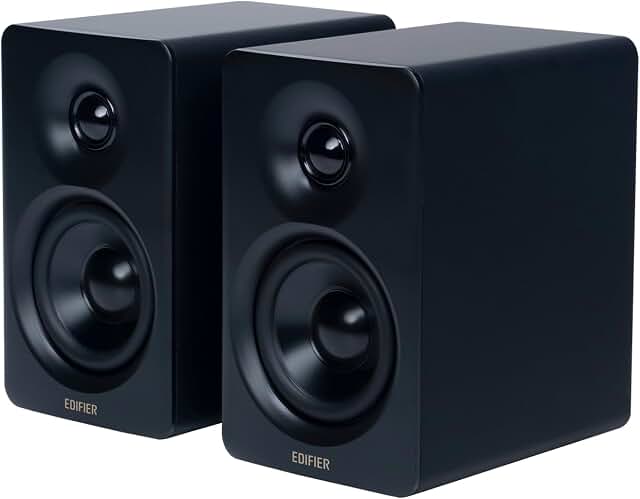
Best for: Desktop listeners who need a compact multimedia speaker system, not shoppers replacing a 5.25-inch car speaker. The M60 has a 3-inch mid-low driver and a 1-inch silk-dome tweeter in each speaker, with 66W RMS total output. Its listed connections include Bluetooth 5.3, USB-C, and AUX.
Edifier describes the M60 as a two-way active system with digital processing, Class-D amplification, and a built-in DSP. The listed dimensions are 100mm wide, 168mm high, and 147mm deep per speaker. Those details suit a desktop comparison, but they do not make it a standalone 5.25-inch car driver.
Why it is included: It is the remaining supplied product and helps clarify an important category difference. Limitation: Avoid this choice if you need a 5.25-inch car speaker; the product is a compact desktop speaker system with a smaller driver.
Buying Guide: How To Choose A 5.25-Inch Mid-Bass Speaker
Does 5.25 inches guarantee a fit?
No. A nominal speaker size alone does not confirm that the speaker will fit a vehicle’s opening. Check the product’s mounting depth, cutout diameter, frame shape, and any required adapter information against the space in the car. The supplied feature lists do not provide complete mounting dimensions for the four car-audio candidates, so verify those details before ordering.
What is the difference between RMS and peak power?
RMS power is generally the more useful figure for comparing continuous power handling with an amplifier’s output. Peak or maximum power describes a higher short-duration figure and should not be treated as equivalent to RMS. In this group, DS18 lists both 150W RMS and 300W maximum. The other car-speaker feature descriptions give 600W peak or maximum figures without a listed RMS rating.
How should impedance affect the choice?
Impedance is an electrical load that should be checked against the amplifier or head unit’s supported speaker load. SCBPAUD, DS18, and the WDiYA aluminum-cone model list 4 ohms. The supplied features for the WDiYA glass-fiber model do not state impedance, so confirm it before system matching. Do not assume that two similarly sized speakers have the same electrical requirements.
Which cone material should I choose?
The product descriptions distinguish carbon fiber, aluminum, and glass fiber, but the listed material alone cannot establish which speaker will sound best in a particular vehicle. Consider the complete specifications and intended system role. SCBPAUD provides a stated frequency range and numeric sensitivity. The aluminum model identifies its cone and impedance. The glass-fiber model emphasizes its cone material but leaves important numeric details unspecified in the supplied information.
Is a mid-bass speaker the same as a midrange speaker?
Not necessarily. “Mid-bass” generally refers to reproducing the lower part of the midrange along with some upper-bass content, while a product labeled “midrange” may focus more on voices and instruments. The DS18 listing explicitly describes a midrange driver. Compare the manufacturer’s intended role and frequency information with the rest of the audio system rather than relying on size alone.
Should I buy a pair or one speaker?
Check the product’s package quantity. The DS18 listing specifies one speaker, so a buyer planning a pair should confirm the quantity needed. The supplied feature details do not clearly establish package quantity for every other product. Also check whether the listing includes any mounting hardware or accessories instead of assuming they are included.
Frequently Asked Questions
What is the best 5.25-inch mid-bass speaker in this comparison?
For the most detailed listed comparison specifications, consider the SCBPAUD model: it lists 4-ohm impedance, 90dB sensitivity, and a 50Hz–20kHz response. For a stated RMS rating and a midrange-focused purpose, consider the DS18 PRO-X5.4BM.
Which option lists RMS power?
The DS18 PRO-X5.4BM lists 150W RMS and 300W maximum power. The other car-speaker feature descriptions supplied here do not state an RMS figure.
Are these speakers all 4 ohms?
No. SCBPAUD, DS18, and the WDiYA aluminum-cone model state 4-ohm impedance. The supplied details for the WDiYA glass-fiber model do not specify impedance. Check the full listing before purchase.
Is the Edifier M60 a 5.25-inch car speaker?
No. It is a compact desktop multimedia system with 3-inch mid-low drivers and 1-inch tweeters. It is not the right category for a 5.25-inch car-speaker replacement.
What should I verify before buying?
Confirm vehicle fit, mounting dimensions, impedance, RMS power handling, package quantity, and amplifier requirements. Where the listing does not provide a specification, do not infer it from the speaker size or peak-power number.