
D-Sub to TRS cables connect compatible multichannel audio equipment, such as a DB25 interface and gear with 1/4-inch TRS inputs or outputs. The Hosa DTP-803 is an eight-channel option for a longer run, while the Elite Core DB25Q5 suits shorter connections. D’Addario’s modular breakout is better for buyers who want configurable breakout options. Check the connector gender, channel count, and cable length against your equipment before ordering.
| Product | Best For | Listed Configuration |
|---|---|---|
| Hosa DTP-803 | Eight channels and a longer run | DB-25 male to eight 1/4-inch TRS male, 9.9 feet |
| Elite Core DB25Q5 | Shorter DB25-to-TRS connections | 25-pin male D-Sub to eight TRS male, 5 feet |
| LuckySlycyc 8-Channel Cable | Balanced TRS connections | 25-pin D-Sub to eight 1/4-inch TRS male, 9.84 feet |
| D’Addario Modular Snake | Custom breakout configurations | Modular TRS breakout; verify the specific configuration |
| Hosa DTP-802-2 | Buyers considering a compact snake | Listed as a cable snake; connector details are not supplied |
Hosa DTP-803 Eight-Channel Snake

The Hosa DTP-803 is a straightforward choice for connecting a compatible DB-25 interface to eight 1/4-inch TRS connections. Its listed configuration is DB-25 male to TRS male, and the cable is approximately 9.9 feet long. The eight-channel layout can help consolidate multiple audio connections into one cable assembly.
Best for: Recording or studio setups that need eight balanced TRS connections and a cable run close to 10 feet. It was selected because the product details clearly specify the connector types, channel count, and length.
Check before buying: This cable has male connectors at both ends. Confirm that the DB-25 port and individual TRS connections on your equipment accept those connector genders and use the same pinout. A DB-25 connector alone does not guarantee that two devices share a compatible audio wiring standard.
Elite Core DB25Q5 Five-Foot Breakout

The Elite Core DB25Q5 is a shorter DB25-to-TRS breakout snake. Its listed features include a 25-pin male D-Sub connector, eight TRS male connectors, a five-foot length, and molded stress relief at the split. The TRS connectors can be taken apart for access or exchange, according to the supplied product information.
Best for: Buyers placing compatible equipment close together who want eight TRS breakouts without an approximately 10-foot cable. The shorter length can help limit excess cable in a compact rack or workstation.
Check before buying: Five feet is less flexible for equipment positioned farther apart. Verify the required channel assignment and pinout, and consider whether the connector access or exchange feature is useful for your installation.
LuckySlycyc Eight-Channel Balanced Cable

This LuckySlycyc cable is listed as a 25-pin D-Sub connection to eight balanced 1/4-inch TRS male connectors. Its length is 9.84 feet. The product description also identifies oxygen-free copper conductors and states that the cable is intended to help suppress EMI and RFI interference when used for balanced TRS connections.
Best for: Buyers seeking an eight-channel breakout around 10 feet long who specifically want the listing to identify balanced TRS use. It was selected because the supplied details specify the connector layout, length, and intended balanced application.
Check before buying: The description does not provide a detailed pinout or channel map. Confirm those details with the seller or product documentation if your equipment requires a particular wiring standard. Do not assume that a physical DB-25 match guarantees signal compatibility.
D’Addario Modular Snake TRS Breakout
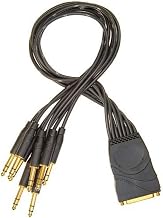
D’Addario’s Modular Snake TRS Breakout is designed around multiple breakout options, allowing buyers to configure custom cables rather than purchase a whole assortment of individual snakes. The listed materials include oxygen-free copper conductors and gold-plated Amphenol connectors, which the product description associates with signal transfer and sound reproduction.
Best for: Buyers who need a configurable breakout approach or expect their cable requirements to vary. It was selected because modular breakout options may suit custom setups better than a fixed eight-connector snake.
Check before buying: The supplied information does not specify the exact connector count, cable length, or complete end-to-end configuration for this listing. Confirm that the version being sold provides the D-Sub and TRS arrangement your equipment requires before ordering.
Hosa DTP-802-2 Compact Snake
The Hosa DTP-802-2 is listed as a cable snake, and the product name indicates a two-meter length. The supplied feature information does not identify its connector types, channel count, or whether its ends match a particular D-Sub-to-TRS setup. That makes it less directly specified than the eight-channel options above.
Best for: Buyers who have confirmed the exact DTP-802-2 configuration elsewhere and need a compact snake of the listed length. It is included as a possible option, but the available details are not enough to establish that it is a D-Sub-to-TRS cable.
Check before buying: Do not select it based on the word “snake” alone. Confirm both connector types, connector gender, channel layout, and wiring before purchase.
Buying Guide: How to Choose a D-Sub to TRS Cable
What does D-Sub to TRS mean?
D-Sub describes a family of connectors with a D-shaped metal shell and multiple pins. In multichannel audio, DB-25 is a common form factor, but the connector shape does not by itself define the signal wiring. TRS means tip-ring-sleeve, the three-contact design used by many 1/4-inch audio plugs. A cable described as D-Sub to TRS connects those formats, but the exact pinout and channel assignment still matter.
Check the manuals or technical specifications for both pieces of equipment. Look for the connector type, whether the port is an input or output, the pinout standard, and the number of channels carried. A cable may physically fit and still fail to route audio correctly if the equipment uses different wiring.
How many channels do you need?
Count the individual TRS connections required by your setup. The Hosa DTP-803, Elite Core DB25Q5, and LuckySlycyc cable are each listed as eight-channel options. A multichannel snake can organize several connections in one assembly, but it is important to match the channel count to the equipment rather than assume every DB-25 cable carries the same number or type of signals.
If you only need a small number of connections, a full eight-channel snake may leave unused connectors. If you expect to expand, a cable with additional channels may reduce the need to replace it later, provided your equipment supports the same configuration.
Which cable length is appropriate?
Measure the route between equipment, including the path around racks, furniture, or cable-management points. The Elite Core is listed at five feet, while the Hosa DTP-803 is approximately 9.9 feet and the LuckySlycyc cable is 9.84 feet. Choose a length that reaches comfortably without creating a large coil of excess cable.
A shorter cable is easier to manage when devices are close together, but it limits placement options. A longer cable offers more routing flexibility, though it may require additional organization. The Hosa DTP-802-2 name indicates two meters, but its connector details are not supplied here, so confirm its suitability separately.
Why do connector gender and pinout matter?
Connector gender describes whether a plug has pins or sockets. The listed Hosa DTP-803 and Elite Core products specify male connectors on the D-Sub end and TRS breakouts. Compare those details with the ports on your equipment. An adapter may be required if the genders do not match, but an adapter cannot correct an incompatible pinout.
Ask the equipment manufacturer or consult its manual if the pin assignment is unclear. For professional audio gear, confirm whether the DB-25 connection follows the same multichannel analog wiring standard at both ends. This check is more important than relying on connector appearance alone.
Do you need balanced TRS connections?
Balanced audio connections use a signal arrangement intended to help reject certain types of interference. The LuckySlycyc listing specifically identifies balanced 1/4-inch TRS connections and mentions EMI and RFI suppression. The Hosa DTP-803 is described as a balanced snake in its product name. Confirm that the connected equipment supports balanced audio and that the cable pinout matches its requirements.
A TRS plug can serve different purposes in different equipment, so its shape alone does not prove that a connection is balanced. Check the device documentation rather than assuming every TRS jack carries balanced mono audio.
When is a modular breakout useful?
A modular breakout may suit setups that need different cable arrangements or benefit from replaceable or configurable sections. D’Addario’s listing describes multiple breakout options and a custom-cable approach. However, the available product details do not state the exact configuration, length, or connector count. Confirm those specifics before deciding that it meets a particular DB-25-to-TRS requirement.
Frequently Asked Questions
Can any DB-25 cable connect to any TRS equipment?
No. The connector must fit, and the cable pinout, channel assignment, and signal direction must match the equipment. Check both devices’ documentation before buying.
Is an eight-channel DB-25-to-TRS snake one cable or eight separate cables?
It is a cable assembly that groups multiple TRS connections with a single D-Sub connection. The listed Hosa DTP-803, Elite Core DB25Q5, and LuckySlycyc options each specify eight TRS connections.
Which listed option is shortest?
The Elite Core DB25Q5 is listed at five feet. The Hosa DTP-803 and LuckySlycyc cable are each listed at approximately 10 feet.
Does a TRS connector always mean balanced audio?
No. TRS describes the connector’s contacts, not necessarily how a device uses them. Confirm whether the equipment uses the jack for balanced audio and verify the cable wiring.
Is the Hosa DTP-802-2 confirmed as D-Sub to TRS?
The supplied details identify it as a cable snake and indicate two meters in the product name, but do not specify its connector ends. Verify the exact configuration before treating it as a D-Sub-to-TRS option.