
A 50-watt-per-channel amplifier can power a compact stereo setup, a DIY speaker project, or a multi-speaker system, depending on its channel count and inputs. The Nobsound Mini is best for a small stereo system with several input options; the Fosi Audio BT10A is a straightforward Bluetooth stereo choice; and the Douk Audio M4 and Romicta are better suited to four-channel setups. The Daakro board is aimed at DIY users who want bass and treble controls.
| Amplifier | Channels | Best For | Listed Inputs Or Features |
|---|---|---|---|
| Nobsound Mini | 2 | Compact stereo systems | Bluetooth, AUX, USB |
| Fosi Audio BT10A | 2 | Bluetooth stereo listening | Bluetooth 5.0 |
| Douk Audio M4 | 4 | Four-channel speaker setups | Bluetooth |
| Romicta 4 Channel | 4 | Multi-input, four-channel use | Bluetooth 5.0, USB, SD, FM |
| Daakro ZK-502T | 2 | DIY amplifier projects | Bluetooth, AUX, bass and treble controls |
Nobsound Mini Bluetooth Stereo Amplifier

The Nobsound Mini is a 2.0-channel digital amplifier listed at 50 watts per channel. Its combination of Bluetooth 5.0, AUX, and USB inputs makes it a flexible option for a desktop or compact home stereo where more than one source may be useful.
- Best for: Listeners building a small stereo system around passive speakers and multiple input types.
- Why it was selected: It matches the 50-watt-per-channel search and offers Bluetooth, AUX, and USB connectivity in a compact amplifier format.
- Consider: It is a two-channel model, so it is not the right choice when four independently amplified channels are needed.
Choose this if you want a stereo amplifier that can take wireless and wired sources. Check your speaker specifications and the amplifier’s supplied documentation before purchase to confirm that the power and connection requirements suit your setup.
Fosi Audio BT10A Bluetooth Amplifier

The Fosi Audio BT10A is a two-channel Class D stereo amplifier rated in its product name at 50 watts by two channels. It uses Bluetooth 5.0 and is described as an integrated amplifier for passive home speakers.
- Best for: Buyers who want a Bluetooth-enabled stereo amplifier for passive speakers.
- Why it was selected: Its stated 50W x 2 output directly fits a 50-watt-per-channel search, while Bluetooth 5.0 provides a wireless input option.
- Consider: The listed description focuses on Bluetooth; buyers needing USB, SD, FM, or four-channel output should compare other options in this list.
Choose the BT10A if a simple two-channel Bluetooth setup is the priority. Avoid it if your system requires four amplified channels or a specific input that is not identified in the supplied product description.
Douk Audio M4 Four-Channel Amplifier
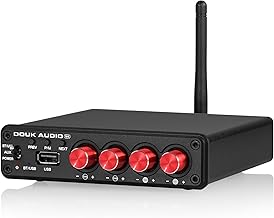
The Douk Audio M4 is a four-channel Bluetooth amplifier listed as 50 watts by four channels. Compared with the two-channel models here, it is intended for a setup that needs four amplified outputs rather than conventional left-and-right stereo alone.
- Best for: Buyers planning a four-channel home audio arrangement.
- Why it was selected: It combines the requested 50-watt-per-channel figure with four-channel output and Bluetooth connectivity.
- Consider: The supplied product name identifies Bluetooth but does not list other inputs. Confirm that its input and speaker connections meet your system needs.
Choose this model when channel count is a deciding factor. A four-channel label does not by itself establish how the amplifier should be connected to a particular speaker arrangement, so check the product instructions and speaker requirements before wiring it.
Romicta Four-Channel Bluetooth Receiver

The Romicta is a four-channel amplifier listed at 50 watts by four channels. Its product name also identifies Bluetooth 5.0, USB, SD, and FM inputs or functions, along with a remote and power adapter. That range of listed features makes it a more input-focused alternative to the Douk Audio M4.
- Best for: Buyers who want four-channel output and several listed source options.
- Why it was selected: It meets the stated channel-power search and lists Bluetooth, USB, SD, and FM, as well as an included remote and power adapter.
- Consider: It is a four-channel model; choose a two-channel amplifier instead if a simpler stereo configuration is all you need.
The product name also mentions home theater, car, and karaoke use. Confirm the intended installation, connection requirements, and speaker specifications in the manufacturer’s details before selecting it for a particular system.
Daakro ZK-502T DIY Amplifier Board

The Daakro ZK-502T is a 2.0-channel amplifier board rated at 50 watts plus 50 watts. It lists Bluetooth and AUX inputs, bass and treble controls, and a DC input range of 12–24 volts. Its board format makes it distinct from the other listed, ready-to-use amplifier products.
- Best for: DIY users assembling or modifying a speaker project who want onboard tone controls.
- Why it was selected: It specifies 50W + 50W stereo output and provides Bluetooth, AUX, and bass and treble adjustment.
- Consider: It is an amplifier board rather than a conventional finished receiver. Its listed DC 12–24V requirement means buyers need to plan for a suitable power source.
Choose this if you are comfortable working with a board and arranging the required power and installation. It is a less suitable choice if you expect a self-contained amplifier with a standard enclosure and simple setup.
Buying Guide: How To Choose A 50-Watt-Per-Channel Amplifier
How many channels does your system need?
For a basic left-and-right speaker system, a two-channel amplifier is usually the relevant category. The Nobsound Mini, Fosi Audio BT10A, and Daakro board are listed as 2.0-channel products. A four-channel model, such as the Douk Audio M4 or Romicta, is the better match when the system specifically requires four amplified channels. Do not assume that four channels automatically make an amplifier a better stereo choice.
Which inputs do you need?
List the audio sources you plan to use before comparing models. The Nobsound Mini names Bluetooth, AUX, and USB. The Fosi Audio BT10A is identified as a Bluetooth 5.0 amplifier. The Daakro board lists Bluetooth and AUX. The Romicta lists Bluetooth 5.0, USB, SD, and FM. The Douk Audio M4 product name identifies Bluetooth. Match the listed connections to your sources rather than paying attention to a feature you will not use.
What does 50 watts per channel tell you?
A stated 50 watts per channel is a useful starting point, but it does not describe every aspect of amplifier performance or guarantee a particular listening volume. The product descriptions provided do not specify all test conditions, such as the speaker load associated with the power figure. Compare the amplifier documentation with the speakers’ impedance and power requirements, and use compatible connections.
Should you choose a finished amplifier or a board?
A conventional amplifier product is generally the more direct option when you want a standalone component. The Daakro is explicitly a board and lists a DC input range of 12–24 volts, so installation and power planning matter. Confirm whether the necessary power supply and other items are included before ordering; do not assume that a board includes accessories unless the listing says so.
How should you compare convenience and controls?
Consider how the amplifier will be used day to day. Bluetooth can reduce the need for a wired source, while AUX or USB may suit a wired setup. Bass and treble controls are specifically listed for the Daakro. The Romicta lists a remote, USB, SD, and FM. These features are not listed for every product, so verify the selected model’s details if a particular control or input is essential.
What should you verify before buying?
- Confirm the amplifier has the correct number of channels for your speaker layout.
- Check the speaker’s impedance and power requirements against the amplifier documentation.
- Verify that the required source inputs are listed for the exact model.
- For the Daakro board, plan for a DC supply within its stated 12–24V range.
- Review the product listing for included accessories and installation requirements.
Frequently Asked Questions
What is a 50-watt-per-channel amplifier?
It is an amplifier described as delivering 50 watts to each channel under the conditions stated by its manufacturer. Check the product documentation for the load and other conditions attached to that rating.
Is a two-channel or four-channel amplifier better?
Neither is universally better. Choose two channels for a conventional stereo configuration; choose four when your system needs four amplified channels.
Can I connect passive speakers to these amplifiers?
The Fosi Audio BT10A is described as an amplifier for passive home speakers, and the Nobsound Mini is described as a power amplifier. For every model, confirm speaker compatibility and wiring instructions in its product documentation.
Which option has the most listed input types?
The Romicta product name lists Bluetooth 5.0, USB, SD, and FM. The Nobsound Mini lists Bluetooth, AUX, and USB.
Is the Daakro board ready to use as a standalone receiver?
The product is identified as an amplifier board with a 12–24V DC input, not as a conventional enclosed receiver. Buyers should plan for the required power and installation and check what is included in the listing.