
The best choice for an active-pickup bass is a wireless system that explicitly supports active pickups or offers an active/passive mode. Among these options, the Xvive AC58 and Xvive A58 state that they work with active or passive pickups. The JOYO and 2.4GHz models list bass compatibility, but their supplied product details do not specifically confirm active-pickup support, so check before buying.
| Product | Best For | Notable Listed Detail |
|---|---|---|
| Xvive AC58 | Players who want a stated active/passive mode | 5.8GHz; channel scan mode; charging case |
| Xvive A58 | Players seeking a 5.8GHz option with active/passive pickup support | Active or passive pickup compatibility |
| JOYO JW-06 | Players prioritizing a charging case and longer stated battery life | Up to 18 hours; four channels |
| 2.4GHz six-channel system | Players comparing a 2.4GHz system with multiple channels | Six channels; 24-bit/48kHz |
| JOYO JW-02S | Players wanting a straightforward 5.8GHz system | 65-foot stated range; six-hour battery |
Xvive AC58 Wireless Guitar System

Best for: Bass players who want the product description to explicitly address active pickups. The listing names active or passive pickup mode and identifies electric, acoustic, and bass guitar use. Those details make it the clearest match in this group for shoppers whose main concern is active-pickup compatibility.
The AC58 operates at 5.8GHz and includes channel scan mode and a charging case, according to its product name. Channel scanning may be useful to players who want a system with a stated way to scan channels, while the case is a practical feature for storing and charging the set.
Why it was selected: Its listed active/passive mode directly addresses the search requirement instead of leaving pickup support unstated. It also specifies bass use and a 5.8GHz connection.
Limitation: The supplied details do not state battery runtime, operating range, latency, or the exact setup steps for switching pickup modes. Confirm those details on the current listing if they affect your purchase.
Xvive A58 Wireless Guitar System
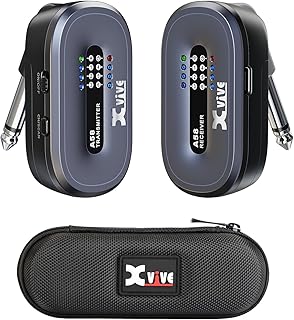
Best for: Bassists who want a 5.8GHz transmitter-and-receiver system whose listing specifically says it supports active or passive pickups. The product description also names electric, acoustic, and bass guitar, making its stated instrument and pickup coverage easy to compare.
Active basses have onboard electronics, so pickup support is an important detail when selecting a wireless system. The A58’s stated active/passive compatibility makes it a more directly documented option than products in this list whose supplied details mention bass but do not mention active pickups.
Why it was selected: It combines explicit active/passive pickup support with a 5.8GHz operating band and bass use in the product name. Choose it if those stated compatibility details matter more than features such as a listed charging case or a specified battery duration.
Limitation: The provided product information does not list a charging case, battery life, range, channel count, or latency. Do not assume those specifications; check the current product details if they are deciding factors.
JOYO JW-06 Wireless Guitar System

Best for: Players who value the listed charging case and stated battery life. The product name specifies up to 18 hours of battery life, four channels, plug-and-play operation, and use with electric guitar and bass. It also lists 48kHz/24-bit audio and low latency.
The JW-06 uses a 5.8GHz wireless connection. Its stated runtime and included charging case may suit players who want a system presented for extended use between charges. Four channels provide a stated channel count for comparison, although the supplied details do not explain channel selection or interference handling.
Why it was selected: It is explicitly described for bass and offers several clearly named specifications that help buyers compare it with simpler systems. It may be a useful candidate for active-bass owners who also prioritize battery life and a charging case.
Limitation: The supplied product details do not specifically state active-pickup compatibility or describe an active/passive mode. If your bass has active pickups, verify compatibility with the seller or manufacturer before choosing it.
Six-Channel 2.4GHz Wireless Guitar System
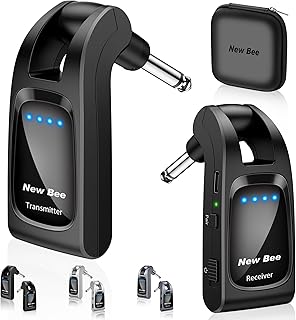
Best for: Buyers comparing a 2.4GHz system with six channels and stated high-resolution audio specifications. The product name identifies active-pickup bass among its intended uses, as well as a rechargeable transmitter and receiver, 24-bit/48kHz audio, and six channels.
This option stands out because its supplied description directly mentions active-pickup electric instruments and bass. That makes it relevant to this search, although the description does not spell out a separate active/passive switch or explain how it handles different output levels.
Why it was selected: It combines an explicit active-pickup reference with bass use and a six-channel design. Consider it if those listed features fit your needs and you prefer to compare a 2.4GHz option with the 5.8GHz systems in this roundup.
Limitation: The supplied details do not provide a specific battery runtime, range, latency, or channel-scanning feature. They also do not explain active-pickup setup, so confirm that the system works with your particular bass and intended signal chain.
JOYO JW-02S Wireless Guitar System

Best for: Bass players looking for a 5.8GHz system with a stated 65-foot range and six-hour battery life. The product name also lists four channels, low latency, rechargeable operation, 48kHz/24-bit audio, and use with electric guitar and bass.
The JW-02S gives shoppers several concrete specifications to compare. Its range and runtime are stated in the product name, while the four-channel design and audio format provide additional listed details. These specifications can help buyers decide whether it fits their intended practice or performance setup.
Why it was selected: It is explicitly listed for bass and provides more stated operating details than some basic wireless systems. It is a reasonable comparison option when 5.8GHz operation and a specified range are priorities.
Limitation: The supplied details do not specifically confirm active-pickup support. Active-bass owners should verify compatibility rather than treating the general bass listing as proof that the system supports their instrument’s output.
Buying Guide: How To Choose A Wireless System For Active Bass
Does the product explicitly support active pickups?
Start with the manufacturer’s compatibility wording. “For bass” confirms that a bass is an intended instrument, but it does not always explain whether the system supports active electronics. Look for a direct statement such as “active or passive pickups,” “active/passive mode,” or explicit active-pickup use.
In this selection, the Xvive AC58 and Xvive A58 explicitly name active or passive pickup support. The six-channel 2.4GHz product specifically mentions active-pickup instruments. The supplied JOYO details mention bass but do not confirm active-pickup support, so verify before purchasing.
What is the difference between 2.4GHz and 5.8GHz here?
The listed systems use either 2.4GHz or 5.8GHz wireless connections. Frequency alone does not establish which system will perform better in your room or venue. Wireless conditions depend on the surrounding environment and other equipment, and the product details provided do not give a controlled comparison.
Choose based on the complete feature set and your intended setup, not on frequency by itself. If you play in spaces with other wireless equipment, check whether the product provides channel scanning or other channel-management information. The AC58 listing specifically mentions channel scan mode.
How much battery life do you need?
Compare stated runtime with the length of your typical practice or performance, and consider whether you can recharge between sessions. The JOYO JW-06 lists 18 hours and a charging case. The JOYO JW-02S lists six hours. The other supplied product details do not state a runtime, so consult the current listing rather than estimating.
A charging case may help with storage and charging, but check what the product description says it includes and how it is intended to be used. Do not assume that every transmitter-and-receiver set includes a case just because another model does.
Which range, channel count, and audio details matter?
Range is relevant if you move away from your amplifier or receiver. The JW-02S lists a 65-foot range, while the supplied details for other models do not state a distance. Treat a stated range as a manufacturer-listed specification, not a guarantee of identical performance in every location.
Channel count can be useful when comparing systems or coordinating equipment, but a higher number does not by itself guarantee less interference. The JW-06 and JW-02S list four channels, while the 2.4GHz model lists six. Check the instructions for how channels are selected and whether devices need to be paired on the same channel.
Will the system connect to my bass and rig?
Check the physical connector arrangement and fit with your bass, especially if its output jack is recessed or positioned in a way that could obstruct a plug-in transmitter. The supplied product descriptions do not provide enough connector detail to confirm fit for every bass model. Confirm the dimensions and connection design before ordering.
Also consider how the receiver will connect to your amplifier, pedalboard, or other equipment. The products are described as transmitter-and-receiver systems, but the details supplied here do not establish every possible connection or signal-chain arrangement. Check the product instructions for your intended setup.
How should you compare the short list?
- Choose the clearest pickup-support documentation: Compare the Xvive AC58 and A58, which state active or passive pickup compatibility.
- Choose a stated long runtime and case: Consider the JOYO JW-06, while confirming active-bass compatibility separately.
- Compare a 2.4GHz option: Review the six-channel system if its active-pickup reference and channel count suit your needs.
- Prioritize a stated range and runtime: Compare the JOYO JW-02S specifications, but verify active-pickup support before purchase.
Frequently Asked Questions
Can I use a wireless guitar system with an active bass?
Yes, if the system supports the bass’s active-pickup signal. Check for explicit active-pickup compatibility or an active/passive mode. A general bass-use listing alone may not answer that question.
Which listed products explicitly mention active or passive pickups?
The Xvive AC58 and Xvive A58 state support for active or passive pickups. The six-channel 2.4GHz system also mentions active-pickup instruments in its product name. The supplied JOYO details do not specifically state active-pickup support.
Is 5.8GHz automatically better than 2.4GHz for bass?
No. The frequency specification alone does not prove better performance. Compare pickup compatibility, channel features, battery details, range, and the wireless conditions where you plan to play.
Does “for bass” mean a system is confirmed for active pickups?
Not necessarily. It confirms that bass is listed as an intended instrument, but active-pickup support should be checked separately when the product description does not state it.
What should I check before buying a plug-in wireless transmitter?
Confirm active-pickup compatibility, connector fit on your bass, receiver connections for your rig, battery runtime, and any channel setup requirements. Use the current product details or manufacturer instructions for specifications not listed in the description.