
The best harmonica microphone depends on whether you want vintage-style tone, onboard volume control, or a focused dynamic pickup. Of the listed products, the Hohner HB52 is best for players seeking a vintage-inspired dynamic mic, while the SUZUKI HMH-200 is a strong fit for shoppers who want a stated frequency range and volume knob. No amplifier is included in the product list, so this guide also explains what to check when pairing a harmonica mic with an amp.
| Product | Best suited for | Key listed feature |
|---|---|---|
| Hohner HB52 Harp Blaster | Vintage-inspired dynamic microphone buyers | Gold-plated XLR connector and Bourns potentiometer |
| SUZUKI HMH-200 | Players who want mic-side volume control | Unidirectional dynamic capsule; 80–15,000 Hz range |
| Hohner MZ20201 | Players seeking a vintage-mic sound design | High-impedance dynamic capsule |
| Superlux D112/C | Players who want a cable and volume control included | 6-meter cable and volume control |
| CONJURER 10-Hole Harmonica | Buyers who also need a diatonic harmonica | Key of C; phosphor bronze reeds |
Hohner HB52 Harp Blaster Dynamic Microphone

The Hohner HB52 is a dynamic harmonica microphone designed around the sound of legendary vintage microphones. Its listed features include a high-quality gold-plated XLR connector and a high-end Bourns potentiometer. Those details make it a relevant option for players comparing dedicated harp microphones with a vintage-inspired design.
Best for: Harmonica players who want a purpose-designed dynamic mic with an onboard control component and an XLR connection. Choose this if the vintage-mic design and connector details are priorities.
Limitation: The supplied product details do not state a frequency range, cable length, or amplifier pairing requirements. Check the full listing and the input specifications of your intended setup before buying.
SUZUKI HMH-200 Harmonica Microphone

The SUZUKI HMH-200 is a unidirectional dynamic microphone tuned especially for harmonicas. It includes a volume control knob, and its stated frequency range is 80 to 15,000 Hz. The directionality and harmonica-specific tuning are useful comparison points for players who want a mic described for this instrument rather than a general-purpose model.
Best for: Players who want to adjust microphone volume at the mic and prefer a product with a published frequency range. Choose this if those specifications match your intended performance setup.
Limitation: The provided details do not identify the connector type or cable length. Confirm these before purchase, particularly if you need a specific connection to your amp or other equipment.
Hohner MZ20201 Dynamic Harmonica Microphone

The Hohner MZ20201 is a dynamic, high-impedance microphone designed in cooperation with professional players to reproduce the sound of legendary vintage microphones. The listed specifications also include a gold-plated XLR connector with standard pole assignment. Its high-impedance capsule is an important detail to compare with the input requirements of the equipment you plan to use.
Best for: Players seeking a vintage-inspired sound concept and a stated high-impedance capsule. It was selected as a dedicated harmonica microphone with connector information included in the product details.
Limitation: The provided information does not state a frequency range or include details about an onboard volume control. Verify the listing and your amp’s input compatibility before choosing it.
Superlux D112/C Dynamic Harmonica Microphone
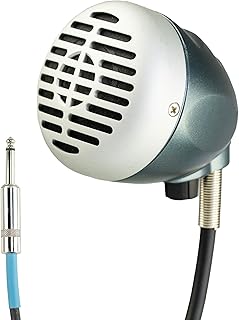
The Superlux D112/C is a dynamic harmonica microphone with a volume control and a listed 6-meter cable. Those included features can simplify setup for players who want a mic with a cable rather than sourcing one separately. Its stated controls also give the player a way to adjust the microphone’s volume during use.
Best for: Buyers who value an included cable and mic-side volume control. Choose this if the listed cable length suits your stage or practice arrangement.
Limitation: The provided product information does not specify the connector type, impedance, or frequency response. Confirm these details if your amplifier has a particular input requirement.
CONJURER 10-Hole Diatonic Harmonica In C

This CONJURER product is a harmonica, not a microphone or amplifier. It is included as a complementary instrument for shoppers assembling a harmonica setup. The listing describes a 10-hole diatonic blues harmonica in C, with a brass reed plate, phosphor bronze reeds, a brass body plate, and stainless-steel components. It is described for blues, rock, country, folk, and jazz.
Best for: Buyers who need a C-key diatonic harmonica as well as a mic-and-amp setup. Its listed construction details offer concrete points to compare when choosing an instrument.
Limitation: This product does not record, amplify, or connect the harmonica to an amplifier. It is not a substitute for a microphone or amp.
Buying Guide: How To Choose A Harmonica Mic And Amp
A harmonica microphone captures the instrument’s sound and sends it to an amplifier or audio system. The microphone and amp must work together: connector type, impedance, and input design can affect whether the equipment connects directly or needs an additional device. The products listed here are mostly microphones, and none is an amplifier, so check the amp separately before placing an order.
Do You Need A Dedicated Harmonica Microphone?
A dedicated harmonica mic is designed or described for use with harmonicas. In this list, the Hohner HB52, Hohner MZ20201, SUZUKI HMH-200, and Superlux D112/C are all presented as harmonica microphones. The SUZUKI listing specifically describes a unidirectional dynamic microphone tuned for harmonicas, while the Hohner models emphasize vintage-inspired sound design.
A general-purpose microphone may also work in some setups, but its connector, impedance, size, and handling style need to suit the player and amp. The supplied product details are not enough to make a direct technical comparison with microphones not listed here.
Should You Choose A Dynamic Or High-Impedance Mic?
Three listed models are explicitly described as dynamic microphones: the Superlux D112/C, Hohner HB52, and SUZUKI HMH-200. The Hohner MZ20201 is described as a dynamic high-impedance microphone. These descriptions are useful, but “dynamic” and “high impedance” are not interchangeable specifications.
Before buying, check the microphone’s complete specifications and compare them with the amplifier’s input. If the mic and amp have different connection or impedance requirements, you may need compatible intervening equipment. The product details provided here do not establish which amp will work with every microphone.
When Is Onboard Volume Control Useful?
A volume knob on the microphone can let a player adjust its output without reaching for the amplifier. The Superlux D112/C and SUZUKI HMH-200 explicitly list volume control. The Hohner HB52 lists a Bourns potentiometer, but the provided details do not describe its specific function, so confirm that point in the product listing.
Choose a mic with an onboard control if you value direct access to a level adjustment. If you prefer to manage volume at the amp or another device, compare the mic’s other specifications instead.
What Should You Check Before Pairing A Mic With An Amp?
- Connector: Confirm the microphone’s connector and whether the amp has a matching input. The Hohner MZ20201 and HB52 list gold-plated XLR connectors; the other supplied details do not specify connector type.
- Impedance: Compare the microphone’s impedance with the amp input. The MZ20201 is described as high impedance, but the other product information does not provide full impedance specifications.
- Cable: Check whether a cable is included and whether its length fits your setup. The Superlux listing specifies a 6-meter cable.
- Controls: Decide whether you want a volume control on the mic, on the amp, or both.
- Amplifier input: Review the amp manual or product details instead of assuming that any harmonica microphone connects directly.
How Do You Compare The Four Microphones?
For a vintage-inspired design, compare the two Hohner models: the HB52 lists a Bourns potentiometer and gold-plated XLR connector, while the MZ20201 specifies a high-impedance capsule and standard-pole-assignment XLR connector. For an explicitly stated frequency range and unidirectional pickup, consider the SUZUKI HMH-200. For a listed cable and volume control, compare the Superlux D112/C.
These distinctions come from the supplied product descriptions. They do not establish that one microphone sounds better than another. Check complete specifications and choose according to your connection needs, preferred controls, and intended use.
Should You Buy The Harmonica And Mic Together?
A harmonica and microphone serve different purposes. The CONJURER model is a C-key diatonic instrument; the four other products in this list are microphones. If you already own a harmonica, focus on the microphone and amp connection. If you need an instrument too, confirm that a C-key, 10-hole diatonic harmonica suits the music you want to play.
Frequently Asked Questions
Do These Products Include A Harmonica Amplifier?
No amplifier is listed among the supplied products. The list includes four harmonica microphones and one C-key diatonic harmonica. Choose and verify an amplifier separately.
Which Listed Microphone Has A Volume Control?
The Superlux D112/C and SUZUKI HMH-200 explicitly list a volume control. The Hohner HB52 lists a Bourns potentiometer, but the supplied description does not explain its function.
Which Microphone Lists A Cable?
The Superlux D112/C lists a 6-meter cable. Cable details are not provided for the other microphones in the supplied product information.
Which Product Lists A Frequency Range?
The SUZUKI HMH-200 lists a frequency range of 80 to 15,000 Hz. No frequency range is supplied for the other listed microphones.
Can Any Of These Microphones Connect Directly To Any Amp?
The available product details do not confirm universal compatibility. Check the microphone connector and impedance against the amplifier’s input specifications, and verify whether an adapter or other equipment is required.