
The best floor standing speaker system depends on whether you prioritize home-theater bass, detailed stereo sound, a full-size cabinet, or flexible receiver connections. The Polk Audio T50 is best suited to cinematic listening, while the Sony SS-CS3 offers a three-way design with stated 145W peak power. The Dayton Audio T65 is a full-size option, and the Elimavi and BASAPUBU pairs offer multiple-driver designs for room-filling playback. Compare driver layouts, power specifications, and whether your setup includes an amplifier or AV receiver before choosing.
| Speaker | Best suited for | Standout details |
|---|---|---|
| Polk Audio T50 | Movies, music, and gaming | Dual bass radiators and 6.5-inch driver |
| Sony SS-CS3 | Three-way speaker design | 145W peak power and 6-ohm impedance |
| Elimavi 120W Black | Two-way sound and MDF cabinet | Dual 6.5-inch woofers and stated 40Hz–21kHz response |
| BASAPUBU 150W | Receiver-based custom setups | Binding posts and ported bass-reflex design |
| Dayton Audio Classic T65 | Full-size tower speaker format | Cabinet over 39 inches tall and dual bass drivers |
Polk Audio T50 Tower Speaker

The Polk Audio T50 is a floor-standing speaker designed for home theater and stereo listening. Its listed driver arrangement includes a 1-inch tweeter, one 6.5-inch Dynamic Balance driver, and two 6.5-inch bass radiators. The radiators are intended to add low-frequency output, which makes this model a practical choice for buyers seeking a fuller sound from a tower speaker.
Best for: Buyers who want one speaker design for movies, music, and gaming. Polk describes the T50 as delivering crisp highs, detailed mids, and deep bass for both cinematic and hi-fi stereo use. The combination of a dedicated tweeter, mid/bass driver, and dual bass radiators is the main reason to consider it for mixed entertainment.
- Includes dual 6.5-inch bass radiators to reinforce low-end output.
- Designed for use in a home-theater or stereo setup.
- Polk lists 150W in the product name.
Limitation: The supplied product details do not state impedance or provide a complete amplifier-matching specification. Check your receiver’s requirements before connecting it, especially if you are building a multi-speaker system.
Sony SS-CS3 3-Way Tower Speaker
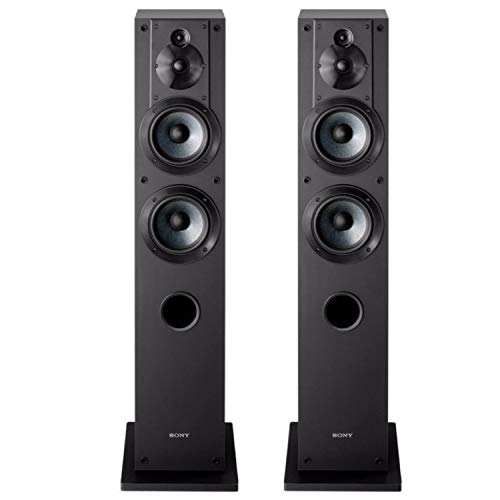
The Sony SS-CS3 is a three-way, four-driver floor-standing speaker. The listed features include a 1-inch polyester main tweeter, a ¾-inch super tweeter, 145W peak power, and 6-ohm impedance. Its three-way design and cabinet construction are presented as contributing to rich acoustics.
Best for: Buyers comparing tower speakers by design and stated electrical specifications. The dual-tweeter arrangement distinguishes it from the two-way options in this selection, while the 6-ohm impedance gives shoppers a specific figure to compare with their amplifier or receiver documentation.
- Three-way design with four drivers, according to the listing.
- Includes a main tweeter and a smaller super tweeter.
- Rated at 145W peak power with 6-ohm impedance.
Limitation: The stated power figure is peak power, not a continuous or RMS rating. The product information provided does not specify a frequency-response range, so buyers seeking that exact comparison should verify it in the current product documentation.
Elimavi 120W Tower Speakers

This black Elimavi pair uses dual 6.5-inch woofers and a 1-inch silk dome tweeter in a two-way crossover design. The listing specifies 120W RMS power handling and a frequency response of 40Hz–21kHz, with a stated tolerance of plus or minus 3dB. Its MDF cabinet is described as helping reduce unwanted resonance and coloration.
Best for: Buyers who want a pair of two-way towers with stated RMS handling and frequency-response figures. These specifications provide more direct comparison points than listings that only supply a peak-power figure. The dual woofers target bass output, while the tweeter handles high frequencies.
- 120W RMS power handling, as stated in the product details.
- Dual 6.5-inch woofers and a 1-inch silk dome tweeter.
- Two-way crossover and MDF cabinet construction.
- Listed frequency response: 40Hz–21kHz, ±3dB.
Limitation: The provided specifications do not state impedance or connection type. Confirm the speaker’s electrical requirements and terminals before planning a receiver connection.
BASAPUBU 150W Tower Speaker Pair

The BASAPUBU pair is described as a passive speaker system with 150W peak power and a 40Hz–20kHz frequency response. Its listed configuration includes four 6.5-inch woofers and two 3-inch tweeters. A ported bass-reflex design is intended to extend low-frequency output, and heavy-duty binding posts accept banana plugs, spade connectors, or bare wire.
Best for: Buyers assembling a custom system around an external amplifier or AV receiver. The range of supported wire and connector types offers connection flexibility, while the multi-driver arrangement and ported design are aimed at music, movies, and gaming.
- 150W peak power and listed 40Hz–20kHz frequency response.
- Four 6.5-inch woofers and two 3-inch tweeters, per the listing.
- Binding posts accept banana plugs, spade connectors, or bare wire.
- Passive design; an amplifier or AV receiver is not included.
Limitation: This is not a powered speaker system. Buyers need an appropriate external amplifier or AV receiver, and should check its specifications before use. The stated power is peak, so it should not be compared directly with RMS ratings without additional information.
Dayton Audio Classic T65 Tower Pair

The Dayton Audio Classic T65 is a full-size tower pair with a bass-reflex cabinet that stands over 39 inches tall. The product details say the cabinet’s internal volume supports room-filling bass and places the tweeter at ear level. Each speaker uses dual 6½-inch custom poly bass drivers and a 1-inch silk dome tweeter.
Best for: Buyers who specifically want a tall tower cabinet with dual bass drivers. The listed design is intended to handle varied entertainment, including action sequences and subtle musical details. The silk dome tweeter is described as reproducing treble detail without sounding harsh or abrasive.
- Cabinet height is over 39 inches, according to the listing.
- Bass-reflex enclosure with dual 6½-inch bass drivers.
- 1-inch silk dome tweeter for treble reproduction.
- Listed as a pair in the product name.
Limitation: The supplied features do not give a power-handling rating, impedance, or frequency-response range. Buyers who need to match a speaker to a specific receiver should check those specifications before purchasing.
Buying Guide: How to Choose Floor Standing Speakers
Floor-standing speakers can provide a large driver array and a full-size cabinet without requiring separate speaker stands. However, model names and power claims do not tell the whole story. Compare the system’s driver configuration, connection needs, cabinet dimensions, and published specifications with your room and existing equipment.
Do you need passive or powered speakers?
Check whether the speaker has a built-in amplifier or requires external amplification. The BASAPUBU listing explicitly identifies its speakers as passive and says that the receiver is not included. For other products in this selection, the supplied details do not consistently specify powered or passive operation. Verify the current listing and manual rather than assuming that every tower connects directly to a TV or phone.
A passive speaker system generally needs an amplifier or AV receiver to drive the speakers. If you already own a receiver, compare its supported impedance and output requirements with each speaker’s specifications. If you do not have amplification, account for that equipment when choosing a system.
How should you compare power ratings?
Do not treat peak power and RMS power as interchangeable. The Sony SS-CS3 listing states 145W peak, while the Elimavi pair lists 120W RMS power handling. Polk’s product name states 150W, and BASAPUBU lists 150W peak. Those figures describe different rating types or may have different definitions, so they do not establish a simple performance ranking.
Look for the complete power specification and match it to the guidance for your receiver or amplifier. A higher number by itself does not guarantee better sound, greater clarity, or better suitability for a particular room.
Which driver configuration fits your listening?
Driver layouts help explain how a speaker is designed to reproduce different frequency ranges. The Sony is listed as a three-way, four-driver model. The black Elimavi uses a two-way crossover with dual woofers and a tweeter. Polk combines a 6.5-inch driver with two bass radiators, while the Dayton T65 uses dual bass drivers and a tweeter.
More drivers do not automatically mean a better match. Consider the sound characteristics you want and compare clearly stated specifications. If bass output is a priority, note whether the design includes bass radiators, a ported enclosure, or multiple woofers. If vocal and treble detail matters most, compare the tweeter type and crossover information.
How important is frequency response?
A listed frequency-response range can help you compare products, but it does not describe the entire listening experience. The Elimavi pair specifies 40Hz–21kHz, ±3dB, while BASAPUBU lists 40Hz–20kHz. The other selected listings do not provide a comparable range in the supplied features. Treat missing data as unknown rather than assuming that the speaker has a particular response.
Frequency response also does not tell you how the speaker will sound in every room. Room dimensions, placement, furniture, and the rest of the system can affect perceived bass and balance.
What room and placement factors should you consider?
Measure the intended space before selecting a tower. The Dayton T65 is over 39 inches tall, so its height and footprint should be considered alongside furniture, walkways, and listening position. Leave enough space to place the speakers securely and follow any placement guidance supplied by the manufacturer.
Think about how many speakers you need. Some products in this selection are explicitly named as pairs, while the Sony and Polk product names describe a speaker rather than a pair. Check the package contents before planning a stereo setup or a multi-channel home theater.
Should you choose a bass-enhanced design?
Polk’s dual bass radiators, BASAPUBU’s ported bass-reflex enclosure, and Dayton’s bass-reflex cabinet are relevant to buyers who want low-frequency output from tower speakers. These design details can guide comparison, but they do not prove that a separate subwoofer will be unnecessary in every room or system. The BASAPUBU listing says its design can deliver bass without an external subwoofer; evaluate that claim against your listening needs and system layout.
Frequently Asked Questions
Are floor-standing speakers suitable for movies and music?
Yes. The selected models are described for entertainment uses that include music, movies, gaming, or home theater. Choose based on the driver design, receiver requirements, and the type of listening you do most often.
Do floor-standing speakers need an AV receiver?
Some systems require an external amplifier or AV receiver, particularly passive speakers. BASAPUBU explicitly states that its receiver is not included. Confirm the connection and amplification requirements for any other model before purchase.
Is RMS power the same as peak power?
No. RMS and peak power are different rating types and should not be compared as if they were identical. Use the speaker’s complete specifications and your amplifier’s documentation to assess a match.
Do more woofers guarantee deeper bass?
No. Woofer count is one design detail, not a complete measure of bass performance. Enclosure design, driver characteristics, room placement, and system setup also matter. Compare published specifications and avoid relying on driver count alone.
Can tower speakers replace a subwoofer?
That depends on the speaker, room, and listener’s preferred bass level. Some listings describe bass-enhancing designs, but the supplied product details do not establish that every tower will replace a subwoofer in all setups.
What should I check before buying a speaker pair?
Check the package quantity, power-handling type, impedance, connection terminals, and whether an amplifier or receiver is required. Also confirm the cabinet dimensions and whether the stated specifications meet your system’s requirements.