
A bow hair comb is the most direct match for buyers searching for a violin bow hair cleaner: it helps separate and groom bow hairs, but it is not a substitute for professional rehairing or careful rosin removal. The compact wood-and-resin comb is best for portable, basic grooming; the two-pack is better for players who want a spare. For broader care, the cleaning kit includes several maintenance supplies, while the rosin spreader focuses on separating hairs and working with rosin. The low-dust rosin is a related accessory, not a hair-cleaning tool.
| Product | Best suited for | Primary role |
|---|---|---|
| Professional Violin Bow Comb | Players seeking a compact single comb | Grooming and aligning bow hair |
| Bow Comb Rosin Spreader | Players addressing stuck hairs and rosin buildup | Separating hairs and helping remove old rosin |
| Violin Cleaner Care Kit | Beginners who want several care supplies together | General instrument and bow maintenance |
| ibasenice 2-Pack Bow Hair Combs | Players or luthiers who want two combs | Detangling and straightening bow hair |
| WOGOD Low-Dust Rosin 2-Pack | Players who need rosin rather than a cleaning tool | Adding friction between bow hair and strings |
Professional Violin Bow Comb

This single bow comb is designed to groom and align bow hairs. Its listed materials are wood and resin, and its compact dimensions are approximately 2.32 by 2.32 by 0.59 inches. At about 21 grams, it is small enough to carry in an instrument-care kit or case.
Best for: Violin, viola, or cello players who want one portable tool for light bow-hair grooming. It was selected because it directly addresses the need to smooth and align bow hair without requiring a larger maintenance set.
Limitation: The package contains one comb, and the product details do not describe it as a liquid or chemical cleaner. It is a grooming tool, so it should not be treated as a replacement for rehairing or specialist bow care.
Bow Comb Rosin Spreader
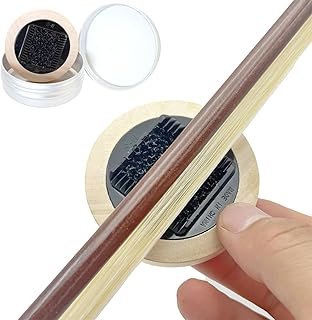
This two-in-one tool is described as a bow comb and rosin spreader for violin, viola, and cello. Its listed functions include separating hairs that have stuck together and helping remove old rosin. The product description also says it can help integrate new rosin into the bow hair, making it more specific to players who want a grooming tool with a rosin-related use.
Best for: Players who want to address tangled or stuck bow hairs and are interested in a tool intended to help manage rosin on the bow. It was selected because its stated features cover both hair separation and old-rosin removal.
Limitation: The provided details do not specify the tool’s material, dimensions, or a cleaning solution. Use it as a comb-style accessory, and follow appropriate bow-care practices rather than assuming it can clean every kind of buildup.
Violin Cleaner Care Kit

This kit bundles several violin-care supplies: cleaner, 60 grams of beeswax, string oil, liquid rosin, rosin remover, a cleaning cloth, a string brush, and a violin humidifier. The listed case measures approximately 20 by 30 by 6 centimeters. Its contents make it a broader maintenance option rather than a dedicated bow-hair comb.
Best for: Beginners or instrument owners who want multiple care items in one kit. It was selected because it includes rosin remover and a string brush alongside other supplies, giving buyers more than a single grooming accessory.
Limitation: The product details do not list a bow hair comb, so this is not the closest match for someone whose only need is detangling bow hair. The kit includes different products for different care tasks; check each item’s intended use before applying it to an instrument or bow.
ibasenice 2-Pack Bow Hair Combs

This set contains two pocket-size bow hair combs intended to detangle and straighten horsehair. The listed size is 2.16 inches. The product description says the combs are made from sturdy materials designed to resist breaking and deformation, and names violin, cello, and erhu bow hair as suitable uses.
Best for: Players who want a spare comb or people maintaining bow hair for more than one string instrument. It was selected for its two-piece package and stated multi-instrument use.
Limitation: The listing describes grooming and detangling, not a liquid cleaning method or a rosin-removal solution. Choose another product if you specifically need a bundled cleaner or rosin remover.
WOGOD Low-Dust Rosin 2-Pack

This two-pack of natural rosin is intended for violin, viola, cello, and other string instruments. The product description identifies it as low-dust rosin and says it is used to keep bow hair dry and increase friction between bow hair and strings. It is included here as a related bow-care supply, not as a cleaner or comb.
Best for: Players who need rosin to use with a bow after grooming or maintenance. It was selected because rosin is closely related to bow-hair care, and the listing specifically identifies its role in creating friction for playing.
Limitation: Rosin adds playing grip; it does not detangle or clean bow hair. Choose a comb or a suitable rosin-removal product if cleaning is the main goal.
Buying Guide: How To Choose A Violin Bow Hair Cleaner
Do you need a comb, a cleaner, or rosin?
These products serve different purposes, so start by identifying the problem. A bow hair comb is intended to separate, align, or detangle hairs. A rosin remover is a separate care product intended for rosin residue. Rosin itself is applied to bow hair to increase friction against the strings; it is not a cleaner. A kit may include several categories of supplies, but it may not include a bow comb.
For ordinary grooming, a comb is the closest match to a search for a violin bow hair cleaner. If the concern is old rosin, look for a product that explicitly lists rosin removal. If the goal is to prepare a bow for playing, rosin may be needed, but applying more rosin will not clean the hair.
Should you buy one comb or a two-pack?
A single comb is a straightforward choice for a player who wants one compact grooming tool. A two-pack can suit buyers who want a spare or maintain multiple bows or instruments. Compare the listed dimensions when portability matters: the professional comb is about 2.32 inches across, while the ibasenice combs are listed as 2.16 inches.
Do not assume that every comb has the same design or material. The professional comb’s listing specifies wood and resin. The ibasenice listing emphasizes sturdy construction but does not identify the materials in the supplied details. Choose based on the described use and package size rather than on unlisted specifications.
When is an all-in-one care kit a better choice?
A kit can be useful if you need several kinds of violin-care supplies and want them packaged together. This one lists cleaner, beeswax, string oil, liquid rosin, rosin remover, a cloth, a string brush, and a humidifier. That variety may be more useful for general instrument maintenance than a comb alone.
However, a broad kit is not automatically the best choice for bow-hair grooming. The listed contents do not include a bow comb. If your main task is separating tangled hair, prioritize a comb; if you need several maintenance products, compare the kit’s contents with the items you already own.
How should you compare rosin-related products?
First decide whether you need to remove old rosin or apply rosin for playing. The bow comb rosin spreader is described as helping remove old rosin and separate stuck hairs. The WOGOD product is rosin intended to increase friction between bow hair and strings. Those are different tasks, so they are not direct substitutes.
Use product labels and instructions to determine where a liquid or remover is intended to be applied. The supplied details do not establish that every listed cleaning product is suitable for direct use on bow hair. When in doubt, ask a qualified instrument technician or bow specialist before applying a cleaner to delicate bow materials.
What should you check before grooming bow hair?
Look for visible tangles and handle the bow carefully. A comb is a small grooming tool, not a repair tool. Avoid pulling hard on hairs or assuming that a comb can fix broken, badly tangled, or uneven bow hair. If hair is damaged or the bow needs rehairing, consult a qualified professional rather than trying to correct a structural problem with a grooming accessory.
Also keep the task specific: use a comb for grooming, a product labeled for rosin removal for residue, and rosin for playing. Keeping those purposes separate helps prevent confusion when selecting supplies and following their instructions.
Frequently Asked Questions
Is a violin bow hair comb the same as a bow hair cleaner?
No. A comb is a grooming tool for separating or aligning hairs. A cleaner or rosin remover is a different product category. Check the product description to confirm which task it is designed to perform.
Which product is the closest match for detangling bow hair?
The Professional Violin Bow Comb and the ibasenice 2-Pack are both described as grooming bow hair. The ibasenice listing specifically mentions detangling and straightening, while the professional comb listing emphasizes alignment and smoothness.
Can rosin clean violin bow hair?
No. Rosin is used to increase friction between bow hair and strings. It is not a cleaning product and should not be treated as a substitute for a comb or a rosin remover.
Which option includes rosin remover?
The Violin Cleaner Care Kit lists rosin remover among its contents. The provided details do not say that the kit includes a bow hair comb.
Are these combs intended only for violin bows?
Not all of them. The Professional Violin Bow Comb is described for violin or cello maintenance, and the ibasenice comb listing names violin, cello, and erhu bow hair. Check each product’s stated uses before choosing it for another instrument.