
The right XLR-to-1/4-inch cable depends on connector gender, cable length, and whether the connection needs a balanced TRS signal. The Monoprice cable is best for connecting an XLR male end to a TRS input; the tisino and Cable Matters male-to-female cable suit setups that need an XLR female end. Smithok is the two-cable choice, while the Cable Matters male-to-male model is explicitly not for microphone use.
| Product | Connector configuration | Best for |
|---|---|---|
| Monoprice 6-foot cable | XLR male to 1/4-inch TRS male | Connecting to a TRS input |
| tisino 3.3-foot cable | XLR female to 1/4-inch TRS male | Short balanced connections |
| Cable Matters 6-foot cable | 1/4-inch TRS male to XLR female | Standard TRS-to-XLR connections |
| Smithok 2-pack | 1/4-inch TRS to XLR male | Buyers needing two cables |
| Cable Matters male-to-male | 1/4-inch TRS male to XLR male | Compatible line-level connections, not microphones |
Monoprice XLR Male To TRS Male Cable

This 6-foot Monoprice cable has an XLR male connector and a 1/4-inch TRS male connector. Its listed features include gold-plated connectors, 16AWG construction, and a design described as intended to help eliminate noise in recording studios and on stage.
Best for: Connecting equipment with an XLR female input or output to equipment with a 1/4-inch TRS jack, when the connector genders and signal path match. It is a useful option when six feet of cable is suitable and the XLR male end is specifically required.
Limitation: This cable has male connectors at both ends. Avoid it if the XLR socket in your setup requires a female connector, or if you need a longer cable.
tisino XLR Female To TRS Cable

The tisino cable is 3.3 feet long and connects an XLR female end to a 1/4-inch TRS male plug. Its product name describes it as a balanced signal interconnect cable and identifies the 1/4-inch connector as 6.35 mm.
Best for: Buyers who need an XLR female connector and a shorter cable for nearby equipment. Choose this model when the 3.3-foot length fits the setup and the receiving 1/4-inch connection is a TRS jack.
Limitation: Its short length may not provide enough reach for equipment placed farther apart. Check the available space and connector genders before choosing it.
Cable Matters TRS To XLR Female Cable

This Cable Matters cable is six feet long, with a 6.35 mm 1/4-inch TRS male plug on one end and an XLR female connector on the other. The product name also identifies it as an XLR-to-1/4-inch cable.
Best for: A buyer who needs a six-foot cable with an XLR female end and a TRS male plug. It is a direct match for setups that have an available TRS jack and an XLR male connector.
Limitation: The XLR end is female, so it will not directly fit an XLR female socket. Confirm the gender of the XLR connection before ordering.
Smithok Two-Pack TRS To XLR Male Cables
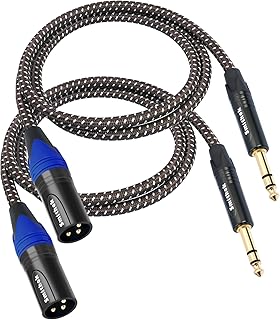
This Smithok listing is for two 6.6-foot cables. Each is described as a balanced 1/4-inch TRS-to-XLR male patch cable, with a heavy-duty nylon-braided exterior and gold-plated plug. The 1/4-inch connector is listed as 6.35 mm.
Best for: Buyers who need two matching cables or want an extra cable available for a compatible setup. Its XLR male connector is the key distinction from the XLR-female options in this list.
Limitation: The XLR male ends will not connect directly to XLR male sockets. Check that the receiving equipment has the corresponding XLR female connection.
Cable Matters TRS To XLR Male-To-Male Cable

This six-foot Cable Matters cable has a 1/4-inch TRS male connector and an XLR male connector. The product name specifically says it is not for microphone use, an important limitation when comparing it with other XLR-to-TRS cables.
Best for: Buyers whose compatible equipment requires a male TRS plug and a male XLR connector, and who have confirmed the intended signal application.
Limitation: Do not select this cable for microphone use; the product listing explicitly excludes that application. It also will not fit an XLR female connector.
Buying Guide: How To Choose An XLR-To-Quarter-Inch Cable
An XLR-to-quarter-inch cable connects equipment with different connector formats. The phrase “XLR to 1/4-inch cable” alone does not identify the right product: buyers also need to check the connector gender at each end, the 1/4-inch plug type, cable length, and intended use.
Which connector genders do you need?
Look at the actual ports on both pieces of equipment. A plug has a gender, and the port it connects to must accept that plug. XLR cables are commonly described as male or female at the XLR end; 1/4-inch plugs in these listings are described as TRS male.
For example, an XLR male plug needs an XLR female socket. An XLR female connector needs an XLR male plug. The products here include both XLR genders, so do not choose based only on the words “XLR to 1/4-inch.”
Does the 1/4-inch end need to be TRS?
All five products in this selection are listed with a 1/4-inch TRS connector. TRS means tip, ring, and sleeve: the plug has three contact sections. A TRS connector can carry a balanced mono signal in suitable equipment, or stereo in other setups. The connector shape alone does not establish which signal a device uses.
Check the device manual or port label to confirm whether it calls for a TRS connection. A 1/4-inch TS plug has two contact sections and is not the same as a TRS plug. Do not assume that any quarter-inch cable will provide a balanced connection.
How long should the cable be?
Choose a length that reaches between the devices without pulling tight, while avoiding excessive slack that could tangle or obstruct a workspace. The listed options include a 3.3-foot cable, two 6-foot options, and a 6.6-foot two-pack. Measure the route between the ports, including any path around furniture or rack equipment.
A shorter cable can suit nearby devices, while a longer one may provide more placement flexibility. The available product information does not establish that one length is appropriate for every room or stage layout.
Is the cable intended for microphones or line-level equipment?
Do not infer the intended application from the XLR and TRS connector names alone. The Cable Matters male-to-male model specifically states that it is not for microphone use. For the other products, the supplied names describe their connectors and some signal characteristics, but do not establish compatibility with every microphone, mixer, interface, or instrument.
Check the requirements of both connected devices before buying. In particular, verify whether the signal is balanced, which connector the equipment expects, and whether the product is identified for the intended use.
What product details matter beyond the connectors?
Compare the details that are explicitly listed rather than assuming all cables are built the same way. The Monoprice listing specifies 16AWG, gold-plated connectors, and a six-foot length. Smithok lists a two-pack, 6.6-foot length, nylon braiding, and gold-plated plugs. The tisino cable is 3.3 feet long, while both Cable Matters options are listed as six feet.
These details can help narrow the choice, but they do not replace connector matching. A braided exterior or particular connector finish does not make a cable suitable for a port or signal type it does not match.
How can you avoid ordering the wrong cable?
- Identify the connector on each device: XLR or 1/4-inch.
- Check whether each port accepts a male plug or requires a female connector.
- Confirm that the 1/4-inch port calls for TRS rather than TS.
- Measure the distance and compare it with the listed cable length.
- Review stated use limitations, including the male-to-male Cable Matters model’s microphone restriction.
- Compare the complete cable configuration, not just the direction implied by the product title.
Connector descriptions may be written in either direction, such as “XLR to TRS” or “TRS to XLR.” The order of those words does not change the ends. Use the listed male and female connector details to determine whether the cable physically fits your devices.
Frequently Asked Questions
Can an XLR-to-1/4-inch cable carry balanced audio?
A cable with a 1/4-inch TRS connector can be used for balanced audio when the connected equipment supports a balanced TRS connection and the XLR connection is appropriate. Confirm the requirements of both devices; the plug type alone does not guarantee a balanced signal path.
Is a 1/4-inch TRS plug the same as a quarter-inch stereo plug?
Both descriptions may refer to a plug with tip, ring, and sleeve contacts, but the signal application depends on the equipment. TRS can carry balanced mono or stereo signals in different setups. Check the device documentation rather than assuming the cable’s signal use.
Which cable has an XLR female connector?
The tisino 3.3-foot cable and the Cable Matters six-foot TRS-to-XLR cable are listed with XLR female connectors. The Monoprice and Smithok products have XLR male ends, as does the Cable Matters male-to-male cable.
Which option includes two cables?
The Smithok product is listed as a two-pack. Its cables are 6.6 feet long and have 1/4-inch TRS-to-XLR male connectors.
Can I use any of these cables for a microphone?
Do not assume that every cable in this category is appropriate for a microphone. The Cable Matters male-to-male product explicitly says it is not for microphone use. For the others, verify the microphone and connected equipment requirements before choosing a cable.
Does “XLR to 1/4-inch” tell me which end is male?
No. That wording identifies connector types, not necessarily connector gender. Check the product’s full description for XLR male or female and for the 1/4-inch connector type before buying.