
The best wireless XLR lav mic depends on what you need to connect: a camera, a mixer, or a PA system. The COMICA CVM-WM100PLUS is best suited to camera and smartphone recording, while the TONOR and Phenyx Pro kits are designed for sound systems with 1/4-inch microphone inputs. The Donner CV-2 is different: it makes a compatible wired microphone with an XLR connection wireless, but it is not a lavalier microphone kit.
| Product | Best suited for | Connection detail |
|---|---|---|
| COMICA CVM-WM100PLUS | Interviews and camera recording | Camera- and smartphone-oriented system |
| TONOR Single-Bodypack System | One speaker or presenter | Receiver connects to 1/4-inch mic input |
| TONOR Two-Bodypack System | Two speakers needing hands-free mics | Receiver connects to 1/4-inch mic input |
| Donner CV-2 | Making a wired XLR microphone wireless | XLR plug-on transmitter and receiver |
| Phenyx Pro PTU-52-2B | Two presenters and event sound | Receiver connects to compatible sound equipment |
COMICA CVM-WM100PLUS Dual Wireless Lavalier
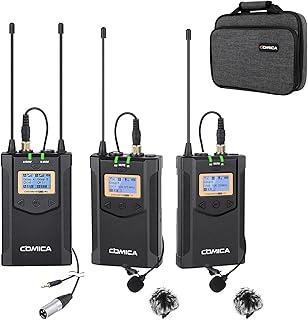
Best for: Video creators, interviewers, and streamers who need two wireless transmitters and a receiver for camera- or smartphone-oriented recording. It is the most directly relevant lavalier-focused option in this group.
The CVM-WM100PLUS has 48 selectable UHF channels and an auto-scan function for finding a stable channel. Its dual-channel system includes two transmitters and one receiver, with mono and stereo output modes. Those modes give users options for recording two people and handling audio in post-production.
Real-time monitoring helps users check the signal during recording, and a one-button mute function makes it possible to silence a transmitter without disconnecting it. These features are useful for interviews, vlogging, and live-streaming where a quick audio check or mute may be needed.
Limitation: The supplied information does not specify an XLR output. Choose this system for the camera and smartphone use described by the product, but confirm the receiver’s connector and your device’s input before buying if you specifically need an XLR connection.
TONOR UHF Single-Bodypack Lavalier System

Best for: A single presenter, speaker, or event host who wants a hands-free microphone for a PA system, mixer, or amplifier with a 1/4-inch microphone input. The package includes a bodypack, lavalier mic, and headset mic, so users can choose between lapel and headset placement.
TONOR specifies a line-of-sight operating range of up to 200 feet. The bodypack has an LCD, individual volume controls, and an ON/MUTE/OFF switch. The receiver automatically pairs with the bodypack when powered on, according to the product information.
If audio becomes intermittent or disconnects, the manufacturer’s instructions say to use the SET button to change frequencies or consult the manual to re-pair the system. For feedback, TONOR advises avoiding pointing the microphone directly at a speaker and keeping at least 3 meters of distance.
Limitation: This is not a Bluetooth system, and the receiver is intended for a 6.35 mm (1/4-inch) mic input. It does not connect directly to a soundbar or TV, and an adapter may be needed if the speaker input differs. It is not the clearest match for a buyer who requires an XLR receiver output.
TONOR UHF Two-Bodypack Lavalier System

Best for: Two speakers who need separate hands-free microphones for a presentation, event, or family gathering. The package includes two bodypacks, two lapel microphones, and two headset microphones, making it more appropriate than the single-bodypack TONOR system when two people need to speak wirelessly.
The system has a stated line-of-sight range of up to 200 feet. Each bodypack includes an LCD display, individual volume controls, and an ON/MUTE/OFF switch. The receiver and bodypacks automatically pair when turned on, and the receiver connects to a 6.35 mm (1/4-inch) microphone input on compatible sound equipment such as a mixer, speaker, karaoke machine, or power amplifier.
Having both lavalier and headset microphones allows each user to select a wearing style for the situation. A headset can keep the microphone near the mouth, while a lapel mic offers a less prominent setup.
Limitation: The listed connection is a 1/4-inch input, not a stated XLR output. Check your mixer or speaker’s input and the exact receiver connections before purchasing if an XLR connection is essential.
Donner CV-2 Wireless XLR Microphone Adapter

Best for: Users who already own a compatible wired microphone with an XLR connection and want to transmit its signal wirelessly. The CV-2 is the most explicitly XLR-oriented product in this selection, but it is a plug-on transmitter-and-receiver adapter rather than a complete lavalier microphone system.
Donner lists a 2.4 GHz wireless frequency band, a working range of up to 100 feet, and latency under 5 milliseconds. The product also specifies 24-bit depth, a 192 kHz sampling rate, a 20 Hz–20 kHz frequency range, and a 110 dB signal-to-noise ratio. These are stated product specifications, not a guarantee of performance in every environment.
The compact metal design is intended to match professional microphones and make wired microphones wireless. It is the better choice for someone prioritizing an XLR microphone connection over an included lavalier mic and bodypack kit.
Limitation: The listed features do not describe an included lavalier microphone. Confirm that your microphone and receiving equipment have the connections and requirements this system supports before choosing it for a lavalier setup.
Phenyx Pro PTU-52-2B Dual-Bodypack System

Best for: Two presenters, instructors, or performers who need both lapel and headset microphone options for an event or public-speaking setup. The package includes two bodypacks, two lapel microphones, and two headset microphones.
The receiver is described as having a metal build, and the system offers 30 tunable frequency groups in the 500 MHz band. The manufacturer says up to three units can operate at the same time without interference, and lists an operating distance of up to 200 feet in open space with line of sight. The bodypacks include a mute button, and AA batteries are included, according to the product details.
The listed 3-pin mini XLR design is on the bodypack transmitter. That detail should not be confused with an XLR output on the receiver; the supplied features do not identify the receiver’s output connector. Confirm the receiver connection suits your sound system before ordering.
Limitation: This is a UHF bodypack system, not a plug-on XLR adapter. The stated range is for open line-of-sight use, so obstacles and the operating environment may affect performance.
Buying Guide: How to Choose a Wireless XLR Lav Mic
Do you need a lavalier microphone or an XLR wireless adapter?
These are different product types. A wireless lavalier system generally pairs a small lapel microphone with a bodypack transmitter and a receiver. A plug-on XLR adapter, such as the Donner CV-2, is intended to make a compatible wired XLR microphone wireless. It does not automatically provide a lavalier microphone, clip, or bodypack-style wearing setup.
Start by identifying what you already own. If you need a complete hands-free kit, look for included lavalier microphones and bodypacks. If you already have an XLR microphone, compare plug-on transmitters and receivers instead.
Which connection does your camera, mixer, or speaker require?
Check the input on the device that will receive the audio. The products here do not all list the same connection. The TONOR systems specify a 6.35 mm (1/4-inch) receiver connection. The COMICA is described for camera and smartphone use, but the supplied features do not identify its receiver output. Donner is explicitly described as an XLR wireless adapter, while Phenyx Pro’s listed mini XLR connection is on the bodypack transmitter.
Do not assume that a product with “XLR” in its description has an XLR output for every component. Confirm the connector type, direction, and input requirements in the full product documentation. An adapter may change a physical connection, but it does not guarantee electrical compatibility.
How many people need microphones at the same time?
For one presenter, the single-bodypack TONOR system provides one bodypack, a lapel microphone, and a headset microphone. For two speakers, the dual-bodypack TONOR and Phenyx Pro systems include two bodypacks. The COMICA includes two transmitters and one receiver, which can suit interview-style recording with two people.
Check whether the receiver can output separate channels or a combined signal in the way your recording workflow requires. COMICA specifically lists mono and stereo modes. The other supplied feature descriptions do not provide the same output-mode detail, so verify the manual if channel separation matters.
Should you choose UHF or 2.4 GHz?
UHF products in this selection include the COMICA, TONOR, and Phenyx Pro systems. COMICA lists selectable channels and auto-scanning, while Phenyx Pro lists tunable frequency groups. These options can help users respond to frequency interference, but they do not eliminate the need to check local conditions and follow setup instructions.
Donner uses the 2.4 GHz band and lists a range of up to 100 feet. The product information describes its transmission as having anti-interference ability, but wireless results depend on the recording location and other devices in use. Choose based on the receiving equipment, system design, and intended environment rather than frequency band alone.
What range and monitoring features matter?
TONOR and Phenyx Pro list a line-of-sight range of up to 200 feet, while Donner lists up to 100 feet. Treat these as stated maximums under the described conditions, not guaranteed distances through walls or in every venue. For a room with obstacles, test the setup in the locations where people will move.
For video recording, real-time monitoring can help identify a problem before a long take is finished. COMICA lists real-time monitoring and a mute button. For speaking events, consider bodypack controls, LCD information, and how quickly a user can mute or change settings.
Which microphone style fits the wearer?
A lavalier mic clips to clothing and can be less visible than a headset. A headset holds the microphone near the mouth and may suit movement or a presenter who turns their head. TONOR and Phenyx Pro include both styles in the listed packages. Follow each product’s placement and volume guidance to reduce feedback or uneven audio.
Before purchase, confirm what is included in the exact package, whether the receiver matches your device, how many transmitters are needed, and whether the stated operating band is suitable for your location. These checks help separate a true wireless lavalier kit from an XLR adapter or a system designed for a different sound input.
Frequently Asked Questions
Is a wireless XLR lav mic the same as a wireless lavalier system?
No. A wireless lavalier system typically includes a lapel microphone, a bodypack transmitter, and a receiver. A wireless XLR adapter transmits audio from a compatible wired XLR microphone and may not include a lavalier mic.
Which product here is specifically described as a wireless XLR adapter?
The Donner CV-2 is described as a 2.4 GHz wireless transmitter and receiver for dynamic microphones and other equipment. It is intended to make a wired microphone wireless, rather than provide a complete lavalier kit.
Which option includes microphones for two speakers?
The COMICA CVM-WM100PLUS includes two transmitters and one receiver. The dual-bodypack TONOR and Phenyx Pro systems also list two bodypacks, along with lapel and headset microphone options.
Can the TONOR systems connect to an XLR input?
The supplied TONOR product information specifies a 6.35 mm (1/4-inch) microphone input for the receiver. It does not establish that the receiver has an XLR output, so check the product documentation and your equipment’s input requirements.
Does the TONOR system use Bluetooth?
No. The single-bodypack TONOR listing explicitly says it does not support Bluetooth. It is designed to connect its receiver to compatible sound equipment through a microphone input.
Are advertised wireless ranges guaranteed indoors?
No. The listed TONOR and Phenyx Pro ranges are specified for line-of-sight conditions, and Donner’s range is a stated maximum. Walls, interference, and the venue can affect the usable distance.