
A 20dB XLR inline pad reduces the level of a microphone signal before it reaches connected audio equipment, making it useful when a signal is too strong for the next input. The Whirlwind IMP Pad is a straightforward fixed 20dB option; the Shure A15AS offers three attenuation settings and states that it passes phantom power. For more adjustment, the MA-123 and StudioMan MB123 list 10dB, 20dB, and 30dB settings. The comparison below highlights each option and the buyer it best suits.
| Product | Listed attenuation | Best suited for |
|---|---|---|
| Whirlwind IMP Pad | 20dB | Buyers seeking a fixed 20dB pad |
| Shure A15AS | 15dB, 20dB, 25dB | Buyers who want selectable attenuation and phantom-power pass-through |
| MA-123 | 10dB, 20dB, 30dB | Buyers who want three reduction choices |
| StudioMan MB123 | -10dB, -20dB, -30dB | Buyers seeking an adjustable microphone signal reducer |
| 20db Balanced XLR Attenuator | 20dB | Buyers seeking a fixed 20dB balanced XLR attenuator |
Whirlwind IMP Pad – 20 dB

The Whirlwind IMP Pad is a fixed 20dB inline pad. Its stated reduction matches buyers who already know they need to lower a microphone-level signal by 20dB and do not need a choice of attenuation settings.
Best for: A user who wants a simple, specified 20dB reduction rather than a variable pad. It is selected because its product name identifies both the inline pad format and the exact 20dB attenuation value.
Choose this if a fixed reduction is appropriate for the signal path. A fixed pad can make setup decisions simpler when the same attenuation is needed consistently.
Limitation: The listed product information identifies a 20dB setting only. It does not specify selectable levels or phantom-power handling, so verify those requirements before choosing it for a setup that needs either feature.
Shure A15AS Switchable Attenuator

The Shure A15AS is a switchable attenuator with 15dB, 20dB, and 25dB settings. Its listed features also state that it passes phantom power. Those details distinguish it from fixed 20dB models when attenuation flexibility and phantom-power pass-through matter.
Best for: Buyers who may need more or less than 20dB of reduction, or who specifically need a pad listed as passing phantom power. The 20dB setting covers the central requirement, while the 15dB and 25dB options allow a different amount of attenuation.
Choose this if you want three stated reduction choices instead of a single fixed value. Phantom-power pass-through is an explicitly listed feature, but it does not by itself establish compatibility with every microphone or signal-chain configuration.
Limitation: This model does not offer a listed 10dB or 30dB setting. If either amount is essential, compare it with the MA-123 or StudioMan MB123 instead.
MA-123 Microphone Signal Attenuator Pad
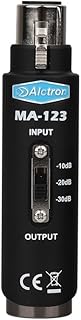
The MA-123 is listed with 10dB, 20dB, and 30dB attenuation choices. It is a flexible alternative to a fixed 20dB XLR pad for buyers who want to select among several signal-reduction levels as their needs change.
Best for: Users who want a 20dB option but also want 10dB and 30dB settings available. It was selected because its listed attenuation range directly includes 20dB while providing two additional choices.
Better for a buyer who is comparing different levels of reduction than a fixed pad, based on the listed settings. Choose a fixed 20dB model instead if you do not need other attenuation options and prefer to avoid a setting choice.
Limitation: The supplied product details do not state whether the pad passes phantom power. If phantom power is part of the signal chain, confirm that specific requirement before purchase rather than assuming it from the microphone-pad description.
StudioMan MB123 Adjustable XLR Pad

The StudioMan MB123 is described as an adjustable microphone signal reducer with -10dB, -20dB, and -30dB settings. The listing describes it as a compact inline audio attenuator and names dynamic and condenser microphones as intended microphone types.
Best for: Buyers who want multiple attenuation choices and a product listing that specifically names dynamic and condenser microphones. Its -20dB setting suits the central search need, while its other listed settings offer alternatives.
Choose this if adjustability is more important than having a single fixed 20dB reduction. The stated microphone types may help with initial screening, but buyers should still check the full product information for their particular setup.
Limitation: The supplied details do not specify phantom-power pass-through. Do not treat the mention of condenser microphones as confirmation that phantom power passes through the attenuator.
20db Balanced XLR Attenuator

This product is identified as a 20dB balanced XLR attenuator. The listed name makes it a direct match for a buyer searching for a balanced XLR connection and a fixed 20dB reduction.
Best for: Buyers who want a clearly named 20dB balanced XLR attenuator without stated multiple attenuation settings. It is included as a direct fixed-level comparison against the Whirlwind IMP Pad.
Choose this if the balanced XLR description and fixed 20dB value match your intended connection and signal reduction. Compare its product details with the Whirlwind if you are deciding between two fixed 20dB choices.
Limitation: The supplied product information does not give additional details about phantom-power handling, selectable settings, or microphone types. Confirm any such requirements in the full listing before ordering.
Buying Guide: Choosing a 20dB XLR Inline Pad
What does a 20dB inline pad do?
An inline pad reduces the level of a signal traveling through an audio connection. A 20dB pad is intended to provide a specified 20dB reduction; it does not amplify a quiet signal. Buyers typically consider a pad when the incoming signal is too strong for the connected input or when they need to reduce level before that signal reaches the next device.
Check the signal path before buying. Identify where the level needs to be reduced and confirm that an XLR inline attenuator is appropriate for that point. A pad does not replace gain controls, input selection, or other adjustments elsewhere in an audio system.
Should you choose a fixed or switchable pad?
A fixed 20dB model is a straightforward choice when that is the reduction you want and you do not need other settings. The Whirlwind IMP Pad and the 20db Balanced XLR Attenuator are both named as fixed 20dB options.
A switchable or adjustable model offers alternatives. The Shure A15AS lists 15dB, 20dB, and 25dB, while the MA-123 and StudioMan MB123 list 10dB, 20dB, and 30dB. Compare the actual settings rather than relying only on the word “adjustable”; the available amounts differ by model.
Does the pad need to pass phantom power?
Check this requirement if your setup uses phantom power. Among these five product descriptions, the Shure A15AS explicitly states that it passes phantom power. The supplied details do not confirm that feature for the other products, so do not assume they pass phantom power based only on an XLR connection or a microphone-related name.
Also distinguish phantom-power pass-through from microphone compatibility. A listing that mentions a microphone type does not necessarily confirm every power or wiring requirement. Verify the specific details for the microphone and connected equipment you intend to use.
Which attenuation settings should you compare?
Start with the reduction you need. If 20dB is the required value, all five products are relevant based on their names or listed settings. If you may need a different amount, compare the alternatives: 15dB and 25dB are listed for the Shure, while 10dB and 30dB are listed for the MA-123 and StudioMan MB123.
Do not treat a larger reduction as automatically better. Choose a setting that fits the signal-level problem you are addressing. If you are unsure which value is appropriate, consult the documentation for the connected audio equipment or ask a qualified audio professional.
What should you verify before ordering?
- Confirm that the product is intended for the XLR connection and signal type in your setup.
- Check whether you need fixed 20dB attenuation or multiple selectable levels.
- Verify phantom-power handling if your equipment requires phantom power.
- Review the product listing for any specifications not provided in the product name or supplied details.
- Consider whether you prefer a simple fixed option or the flexibility of multiple settings.
Frequently Asked Questions
Is a 20dB XLR pad the same as a preamp?
No. An attenuator reduces signal level; it does not function as a device for raising a quiet microphone signal. A preamp is used to add gain.
Which listed product offers exactly 20dB?
All five products include a stated 20dB value in their product name or listed attenuation settings. The Whirlwind and 20db Balanced XLR Attenuator are fixed 20dB options; the other three list additional settings.
Which option explicitly passes phantom power?
The Shure A15AS is the only product in this comparison whose supplied name explicitly states that it passes phantom power. Check the full listing if this feature is essential.
Which models list 10dB and 30dB settings?
The MA-123 lists 10dB, 20dB, and 30dB. The StudioMan MB123 lists -10dB, -20dB, and -30dB.
Does a condenser microphone mention confirm phantom-power support?
No. The StudioMan MB123 listing names condenser microphones, but the supplied information does not state that it passes phantom power. Verify power handling separately.