
The best 1/4-inch-to-XLR male cable depends on the connectors, cable length, and whether you need a single cable or a compact pair. The Cable Matters 10-foot cable is a practical all-around choice; Monoprice suits short, balanced connections; Suanqi is best for compact patching with two cables; and Tisino and Disino offer short, shielded options for nearby equipment. Check that your 1/4-inch jack is TRS and that the connection direction matches your setup before buying.
| Product | Best For | Length Or Pack |
|---|---|---|
| Cable Matters TRS to XLR | General studio and live connections | 10 feet |
| Monoprice XLR to TRS | Short balanced cable runs | 6 feet |
| Suanqi TRS to XLR | Compact patching and two connections | Two 8-inch cables |
| Tisino XLR to TRS | Nearby equipment and robust construction | 3.3 feet |
| Disino TRS to XLR | Short studio or stage connections | 3.3 feet |
Cable Matters 10-Foot TRS To XLR Cable

Best for: Buyers who want a versatile cable for linking equipment across a moderate distance. This male-to-male cable connects a 1/4-inch TRS jack and an XLR connector, with listed applications including studio monitors, mixers, audio interfaces, and other professional audio gear.
The cable uses oxygen-free copper conductors and copper braided shielding. Its product features describe the shielding as helping reduce hum and noise, while polyethylene insulation is intended to support high-frequency response. Those details make it a reasonable option for recording or live setups where a balanced connection is needed.
Why it was selected: The 10-foot length is more flexible than a short patch cable without being as long as the 25-foot version. Choose this if the connected devices are not directly beside each other and you want the listed shielding and OFC conductor construction.
Limitation: It requires a TRS 1/4-inch connection for a balanced signal; a 1/4-inch TS jack is not the same connector type. Measure the route before choosing a cable length.
Monoprice 6-Foot XLR To TRS Cable

Best for: A short balanced connection between nearby audio equipment. The Monoprice cable has an XLR male connector and a 1/4-inch TRS male connector, making its connector arrangement relevant to mixers, recording studios, and stage signal paths that use those sockets.
Monoprice lists a separate braided shield designed to provide additional resistance to interference. The product description also identifies the cable as balanced and says it is intended to provide high-fidelity audio and reduce noise in studio and live applications. Its length is six feet, and the listed construction includes 16AWG cable and gold-plated connectors.
Why it was selected: This is a straightforward choice when six feet is enough and the buyer wants a balanced cable with a separate braided shield. It is better suited to short equipment-to-equipment runs than to connections that need extra reach.
Limitation: The six-foot length may not reach equipment positioned farther apart. Confirm the 1/4-inch side is TRS-compatible before ordering.
Suanqi Two-Pack 8-Inch TRS To XLR Cables

Best for: Compact patching where the devices or connectors sit close together. The Suanqi listing includes two 8-inch cables, each described as a 1/4-inch TRS-to-three-pin XLR patch cable. A two-pack can suit a buyer who needs two short signal paths rather than one long cable.
The stated features include gold-plated connectors and a flexible PVC jacket designed to resist twisting, kinking, and tangling. Its short format can help keep a nearby setup tidy, such as connections within a rack or between adjacent pieces of equipment. The listing describes the cable as a balanced signal interconnect.
Why it was selected: It is the most compact option in this selection and the only listed two-pack. Choose it if cable length and clutter are more important than reach, and you need two connections.
Limitation: Eight inches is too short for equipment separated by more than a small distance. The product description calls it a stereo adapter, so confirm that a balanced TRS-to-XLR cable is the intended use in your particular setup.
Tisino 3.3-Foot Nylon-Braid XLR Cable

Best for: A nearby balanced connection where a short cable and reinforced construction are priorities. Tisino describes this cable as converting a balanced 1/4-inch TRS output to a balanced XLR input, and lists active speakers, mixers, and studio or live audio applications.
The construction features include shielded 20 AWG 4N oxygen-free copper, gold-plated XLR and 6.35 mm connectors, and a copper shell intended to block interference. The nylon-braid exterior is part of the product name. Together, those specifications make it a useful candidate for a short run that may be handled or moved during setup.
Why it was selected: Tisino offers a clearly described balanced signal path and a 3.3-foot length for connecting close equipment. It is a better fit than a longer cable when excess slack would be inconvenient.
Limitation: At 3.3 feet, it is not intended for a long reach. The listing describes a particular signal direction, so check the output and input sides of your equipment.
Disino 3.3-Foot Shielded TRS To XLR Cable
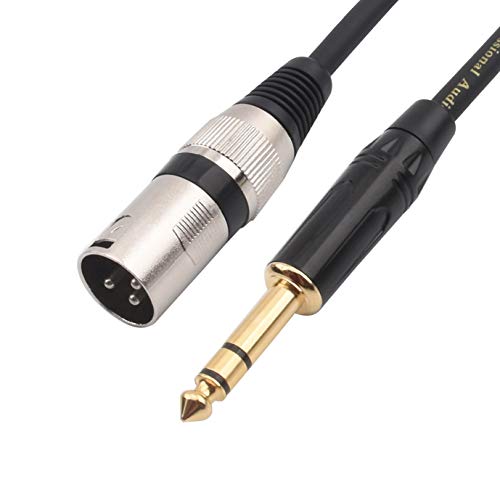
Best for: Short balanced links in a studio or on stage. Disino states that its cable converts a balanced 1/4-inch TRS output to a balanced XLR input, and describes uses including active speakers and general stage and studio signal connections.
The listed construction includes a 20 AWG oxygen-free copper core, gold-plated connections, an aluminum-alloy die-cast housing, and multiple shielding layers. The product description says the shielding is intended to minimize interference and hum. The 3.3-foot length makes it suitable when the two devices are positioned close to one another.
Why it was selected: This model combines a short cable length with specific connector, core, housing, and shielding details. Choose it if those construction features matter and a little over three feet is sufficient.
Limitation: The short length limits placement flexibility. Its listed signal direction is from a balanced TRS output to an XLR input, so confirm that matches your equipment connection.
Buying Guide: How To Choose A 1/4-Inch-To-XLR Male Cable
Does your 1/4-inch connector need to be TRS?
Check the 1/4-inch jack and the signal type before buying. A TRS connector has two insulating rings and three contacts; a TS connector has one ring and two contacts. The products in this selection are described as TRS cables or balanced cables. A balanced connection generally requires compatible balanced connections at both ends. Do not assume that every 1/4-inch socket supports balanced audio just because the plug fits.
Also distinguish a cable from a simple adapter. A cable has a length of wire between its connectors, while a compact patch cable is intended for closely spaced equipment. If the source or destination uses a different connector, such as a 1/4-inch TS jack, verify the equipment documentation rather than relying on the connector size alone.
Which connector direction do you need?
The phrase “1/4 inch to XLR male” can refer to the connector types without clearly stating which device is the output. Several listings describe a balanced 1/4-inch TRS output connected to an XLR input. The Monoprice and Cable Matters product names specify XLR male to 1/4-inch TRS male. Before ordering, identify the output socket on the source and the input socket on the destination, then match each cable end to those sockets.
XLR connectors are gendered. This selection includes XLR male cables, but the XLR socket on your equipment may require a different connector gender. Check the equipment panel or manual. A cable with the correct connector size but wrong XLR gender will not connect directly.
How long should the cable be?
Measure the planned route, including space around equipment and any path that avoids walkways or sharp bends. A short 3.3-foot cable works when devices are close together; the 8-inch Suanqi cables are for very compact patching. Six- and 10-foot options allow more placement flexibility. Longer cables can reduce the need for extensions, but excess cable may add clutter.
For equipment that needs to sit farther apart, compare the measured route with the available length rather than selecting by guesswork. The provided options include 6 feet, 10 feet, and 25 feet for Cable Matters, though the 25-foot version is not included in the five product comparisons above. Choose a length that reaches without placing unnecessary strain on connectors.
What construction details are useful to compare?
Shielding is relevant when a cable runs near other equipment or power cables. Product descriptions here mention braided shielding, multiple shielding layers, or copper shielding. Conductors, connector plating, and jacket materials are additional details to compare, but they do not replace checking the cable type and signal direction. Treat manufacturer statements about noise reduction as listed product claims, not a guarantee that every source of hum will disappear.
For frequent setup changes, consider the cable’s listed jacket or construction. The Suanqi product features a flexible PVC jacket, and the Tisino product name specifies a nylon braid. If a cable will remain installed, length and connector fit may be more important than exterior style.
Do you need one cable or a pair?
Choose a single cable when you are making one connection. The Suanqi listing includes two short cables, which may be useful for two nearby signal paths. Do not assume that a two-pack is a stereo cable: the listing describes two individual patch cables. For a left-and-right setup, confirm how many outputs and inputs you need and whether each connection must be balanced.
When connecting powered speakers or other equipment, follow the equipment manufacturer’s instructions for the appropriate output and input. A cable carries the signal; it does not convert an unbalanced signal into a balanced one or change the capabilities of the connected devices.
Frequently Asked Questions
Can I connect a 1/4-inch output to an XLR input?
Yes, if the cable connector types and signal requirements match the equipment. For a balanced connection, use compatible balanced TRS and XLR connections, and verify the cable’s connector gender and signal direction.
Is a 1/4-inch TRS cable the same as a 1/4-inch TS cable?
No. TRS has three contacts and is commonly used for balanced mono audio or stereo signals, depending on the equipment. TS has two contacts and is commonly used for unbalanced audio. Confirm which type your device requires.
Does an XLR male cable always connect to an XLR input?
No. Check the connector on the equipment. An XLR male plug needs a compatible XLR female socket; connector gender and signal direction both matter.
Which cable length is best for studio monitors?
Choose a length that reaches from the audio source to the monitor along the actual route. Six or 10 feet may suit nearby equipment, while a short 3.3-foot cable is better when the devices sit close together.
Can a balanced cable remove all audio hum?
No cable can guarantee that all hum will disappear. Balanced cables and shielding can help resist interference, but noise may also come from equipment, wiring, grounding, or the signal source.