
A 3-way speaker crossover network separates an audio signal into frequency ranges for a woofer, midrange driver, and tweeter. The options here are passive crossover boards described for 4–8-ohm speakers, with listed power ratings from 200W to 800W. The HiQltyla PUV-W3 is a straightforward choice for a two-pack build; the 400W model is listed with one high-frequency and two low-frequency outputs; and the 800W model highlights its component types. Compare impedance, power handling, wiring layout, and crossover frequencies before choosing.
| Product | Listed power | Best suited for |
|---|---|---|
| HiQltyla PUV-W3, listing one | 200W | Buyers seeking a two-pack passive crossover |
| 400W adjustable crossover | 400W | Buyers who need the listed one-high, two-low layout |
| 800W crossover | 800W | Builds where the higher stated power rating is a priority |
| 250W crossover | 250W | Buyers matching a system to a midrange power rating |
| HiQltyla PUV-W3, second listing | 200W | Buyers comparing the same model across listings |
HiQltyla PUV-W3 200W Crossover
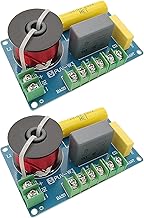
This passive HiQltyla crossover is listed as a 200W, 4–8-ohm frequency divider for home audio. Its title specifies a two-pack and identifies bass, midrange, and tweeter speaker use. That makes it a practical candidate for builders sourcing crossover boards for a stereo pair or another two-speaker project.
Best for: A home-audio builder who wants two passive boards and whose drivers fall within the stated 4–8-ohm range. It was selected because its listing identifies the three speaker ranges and includes two units.
Check before buying: The provided product details do not state crossover frequencies or adjustment options. Confirm those specifications and the power rating against the drivers and amplifier in the intended system.
400W Adjustable Three-Way Crossover

This two-piece crossover is listed for 400W and 4–8-ohm systems. Its title describes an adjustable, three-way frequency divider with one high-frequency output and two low-frequency outputs. That unusual output description is important: buyers should check the board’s connections and intended driver arrangement rather than assume it uses the conventional one-output-per-driver layout.
Best for: Builders whose design specifically calls for the stated one-high, two-low arrangement and who want the listed 400W rating. It was selected for its distinct output configuration and adjustable description.
Check before buying: The supplied information does not explain what is adjustable, provide adjustment ranges, or list crossover frequencies. Verify the wiring diagram and settings before connecting drivers.
800W Three-Way Audio Crossover

This board is listed as an 800W, 4–8-ohm crossover for treble, alto, and bass speaker units. The product description says it separates the audio signal into those three ranges. It also identifies wire-wound ceramic resistors and metal-film capacitors as components, describing them as intended to handle load power and support durability.
Best for: A buyer who prioritizes the highest stated power rating among these options and wants the component types identified in the listing. It was selected for its 800W claim and the product description’s additional component information.
Check before buying: A high stated power rating alone does not establish compatibility. The provided details do not specify crossover frequencies, slopes, or a wiring diagram, so confirm these match the drivers and system design.
250W Treble-Alto-Bass Crossover

This three-way speaker crossover is listed for 250W and 4–8-ohm systems. Its title identifies treble, alto, and bass as the three frequency ranges and describes it for HiFi home speakers. The stated rating places it between the 200W and 400W options in this selection, which can help narrow comparisons when system requirements are already known.
Best for: A home-speaker builder seeking a listed 250W passive frequency divider for drivers within the stated impedance range. It was selected as a middle-rated option for comparison with the other boards.
Check before buying: The available product information does not give crossover points, adjustability, component details, or package quantity. Confirm those details with the seller before planning a build.
HiQltyla PUV-W3 200W, Alternate Listing

This listing names the HiQltyla PUV-W3, a passive 200W crossover described for 4–8-ohm bass, midrange, and tweeter speakers. The supplied title also identifies it as a two-pack for HiFi home audio. Its model and headline specifications match the other PUV-W3 listing in this roundup, so it is most useful as a listing to compare rather than as a different crossover design.
Best for: Buyers comparing availability or listing details for the PUV-W3 two-pack. It was selected because it represents the same named model and stated use as the first PUV-W3 option.
Check before buying: No distinguishing technical difference between the two PUV-W3 listings is provided here. Compare the current listing details, included quantity, and specifications before deciding which to purchase.
Buying Guide: How To Choose A Three-Way Crossover
What Does A Three-Way Crossover Do?
A three-way crossover divides an audio signal into separate frequency bands and routes them to speaker drivers intended for those ranges. A typical design has outputs for a woofer or bass driver, a midrange driver, and a tweeter. The crossover helps keep each driver focused on its assigned range, but the correct network depends on the drivers and the speaker design.
Do not choose a crossover based only on the phrase “three-way.” Product listings may describe their outputs differently. For example, one product here is titled as having one high-frequency and two low-frequency outputs. Read the connection labels and instructions to confirm that the board matches the exact driver layout you plan to use.
How Should You Match Impedance?
Several products in this selection are listed for 4–8-ohm speakers. Check the nominal impedance of every driver and compare it with the crossover’s stated range. A range in a product title is not a substitute for confirming the specifications of the individual board, especially when the system uses drivers with different impedances.
Also check whether the listing describes the impedance expected at each output or gives only a general range. If that information is not clear, ask the seller or consult the manufacturer’s documentation before wiring the crossover.
How Much Power Handling Do You Need?
The products here state ratings of 200W, 250W, 400W, and 800W. Treat these figures as listing claims to verify, not as a guarantee that a crossover will suit any amplifier or speaker. Power handling depends on the complete system and how it is used. Compare the crossover’s documented rating with the amplifier output and the drivers’ specifications.
A larger number is not automatically the better choice. If the product does not explain how its power rating is measured or whether it refers to continuous or peak power, avoid assuming that those ratings are directly comparable across models.
Why Do Crossover Frequencies Matter?
Crossover frequencies determine where one driver’s assigned range ends and another driver’s range begins. They affect how the drivers work together, so they should be selected to suit the specific speakers. The supplied descriptions for these products do not provide crossover points. Buyers who need a particular transition frequency should verify it before purchasing rather than infer it from the product’s wattage or three-way label.
Other useful technical details include filter slope, circuit layout, and whether settings can be changed. These details are not provided for every product in this roundup. If precise tuning matters, look for a datasheet or product documentation that states them clearly.
Should You Choose An Adjustable Board?
An adjustable crossover may be useful when its available controls match the changes required for a particular build. The 400W option is described as adjustable, but the supplied information does not say what can be adjusted or show its range. Confirm the control function and instructions before treating it as a flexible tuning solution.
For a fixed crossover, check that its frequency points and impedance suit the drivers. For either type, make sure the terminals, wiring instructions, and physical board dimensions fit the planned enclosure and installation.
What Should You Verify Before Wiring?
- Confirm the crossover is passive and suitable for the intended speaker system.
- Match the listed impedance range to the nominal impedance of the drivers.
- Verify the crossover frequencies and output labels against the speaker design.
- Check the stated power rating and clarify how it is specified if needed.
- Confirm package quantity, terminal layout, board size, and wiring instructions.
- Disconnect the amplifier while installing or changing speaker wiring.
Frequently Asked Questions
What Is A Three-Way Speaker Crossover Network?
It is a circuit that divides an audio signal into three frequency ranges and sends each range to a suitable speaker driver, commonly bass, midrange, and treble drivers.
Can I Use A 4–8-Ohm Crossover With Any Speaker?
No. Check the impedance of each driver and the crossover’s documented requirements. The general 4–8-ohm description does not confirm compatibility with every speaker configuration.
Is The 800W Crossover Automatically The Best Choice?
No. Its listing states the highest power rating in this selection, but power alone does not determine fit. Crossover frequencies, impedance, wiring layout, and driver requirements also matter.
Are The Two HiQltyla PUV-W3 Listings Different Models?
Both supplied titles name the PUV-W3 and list a passive 200W, 4–8-ohm, two-pack crossover for bass, midrange, and tweeter speakers. No technical difference between the listings is provided.
What If A Listing Does Not State Crossover Frequencies?
Do not assume the board will suit your drivers. Find product documentation or ask the seller for the crossover points and other relevant specifications before buying.